
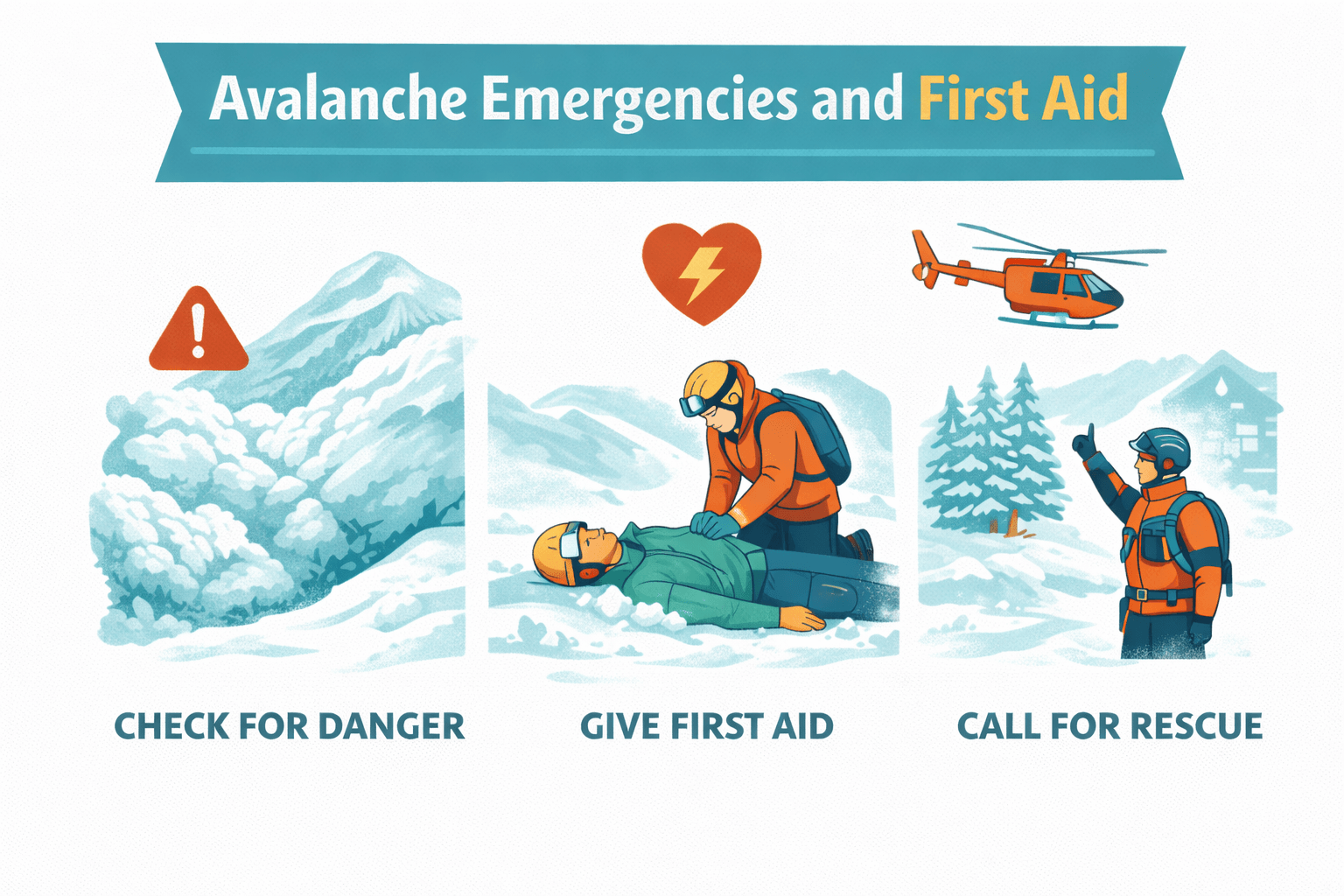
 Avalanches occur when a large mass of snow rapidly slides down a mountain slope. These events can be triggered by natural snowpack instability, weather conditions, or human activity in backcountry terrain.
In British Columbia, including areas popular with Vancouver backcountry skiers and snowboarders, avalanche awareness is an important part of outdoor safety. Mountain regions such as the Kootenays, Whistler backcountry, and other alpine areas can experience unstable snow conditions during the winter months.
For people travelling in remote terrain, knowledge of wilderness first aid and emergency response can be critical because rescue teams may take time to reach the scene.
Wilderness Safety and Outdoor Recreation in BC
British Columbia is known worldwide for backcountry skiing and snowboarding opportunities. However, remote environments present unique challenges during emergencies.
Outdoor safety training programs and wilderness first aid courses commonly emphasize:
-
Travelling in groups
-
Monitoring snow and weather conditions
-
Carrying emergency communication equipment
-
Understanding avalanche awareness and rescue basics
-
Learning first aid and CPR for remote environments
Preparedness can help outdoor enthusiasts respond more effectively if an accident occurs.
Avalanche Rescue in Southeastern British Columbia
A serious avalanche incident in southeastern British Columbia demonstrates how quickly conditions can change in remote mountain terrain.
A group of four skiers was travelling through a high backcountry section of Kootenay Pass, located between the communities of Salmo and Creston. While moving through the area, the group was caught in a powerful avalanche that swept two of the skiers over a cliff.
According to search manager Chris Armstrong, the two remaining members of the group were able to ski to a nearby highway to contact emergency services.
Meanwhile, six other skiers who were near the avalanche area began immediate rescue efforts and attempted to assist the victims.
Emergency responders organized a large rescue operation. Although a helicopter was initially dispatched, poor weather conditions and fading daylight prevented it from being used safely.
Search and rescue teams from several surrounding communities were mobilized, bringing the total number of rescuers involved in the operation to 26 people.
The rescue teams conducted a lengthy evacuation effort lasting approximately seven and a half hours. During the rescue, a 27-year-old woman who had been injured received first aid before being transported to a healthcare facility in Trail.
The 27-year-old man who had been caught in the avalanche was later confirmed deceased at the scene.
Incidents like this highlight both the risks of backcountry travel and the dedication of search and rescue teams who respond to emergencies in difficult terrain.
Recognizing Avalanche Emergency Situations
Avalanche accidents can cause several types of serious injuries or life-threatening conditions. People caught in avalanches may experience:
-
Burial in deep snow
-
Breathing difficulties due to snow obstruction
-
Trauma from collisions with trees or rocks
-
Hypothermia from prolonged exposure to cold conditions
Because of these risks, immediate assistance from companions or nearby skiers can be important until rescue teams arrive.
First Aid in Wilderness Emergencies
In remote outdoor environments, first aid may need to be provided by companions or other nearby individuals.
Wilderness first aid training commonly teaches participants to:
-
Assess safety before approaching the scene
-
Check responsiveness and breathing
-
Contact emergency services if possible
-
Provide basic care for injuries or breathing problems
-
Help protect the injured person from cold exposure
Search and rescue teams rely on early information and assistance from those on scene to help guide rescue operations.
Prevention and Avalanche Safety Practices
Avalanche safety education encourages outdoor travellers to take several precautions when entering mountain terrain:
-
Check avalanche forecasts before travelling
-
Carry avalanche safety equipment such as transceivers, probes, and shovels
-
Travel with experienced partners in backcountry areas
-
Maintain awareness of snowpack conditions and slope stability
-
Learn wilderness first aid and emergency response skills
Preparedness can help individuals make safer decisions and respond effectively during emergencies.
Frequently Asked Questions
What is an avalanche?
An avalanche is a rapid flow of snow down a mountain slope. Avalanches can occur naturally or be triggered by weather changes or human activity in unstable snow conditions.
Why is first aid important in avalanche situations?
Avalanche incidents often occur in remote locations where emergency responders may take time to reach the area. First aid knowledge can help companions provide early assistance while waiting for rescue teams.
What injuries can occur during an avalanche?
People caught in avalanches may experience breathing problems from snow burial, injuries from impacts, or cold-related conditions such as hypothermia.
Are avalanche rescues common in British Columbia?
Search and rescue teams in British Columbia respond to avalanche incidents each winter, particularly in popular backcountry recreation areas.
How can outdoor enthusiasts prepare for avalanche risks?
Preparation may include checking avalanche forecasts, travelling with trained partners, carrying safety equipment, and learning wilderness safety and first aid skills.
Educational Note
This article is intended for general first aid awareness and outdoor safety education. Wilderness first aid and CPR training can help individuals better understand how to respond during emergencies while waiting for trained search and rescue or emergency medical services.
About The Author

Mark Kascha
First Aid Instructor Trainer with 30+ years of experience in CPR, emergency response, and safety training across Canada.
👉 [View full credentials]🔗 View LinkedIn Profile
Last reviewed: March 2026