
Motor vehicle collisions can sometimes result in serious injuries that require immediate emergency response. When someone becomes unresponsive and is not breathing normally, bystanders or first responders may attempt cardiopulmonary resuscitation (CPR) while waiting for paramedics to arrive.
Across Canada, including Vancouver and British Columbia, CPR and first aid training are often included in workplace safety programs, driver safety courses, and community education. These skills help people recognize emergencies and respond during the critical minutes before professional medical responders reach the scene.
A Realistic Roadside Emergency Scenario
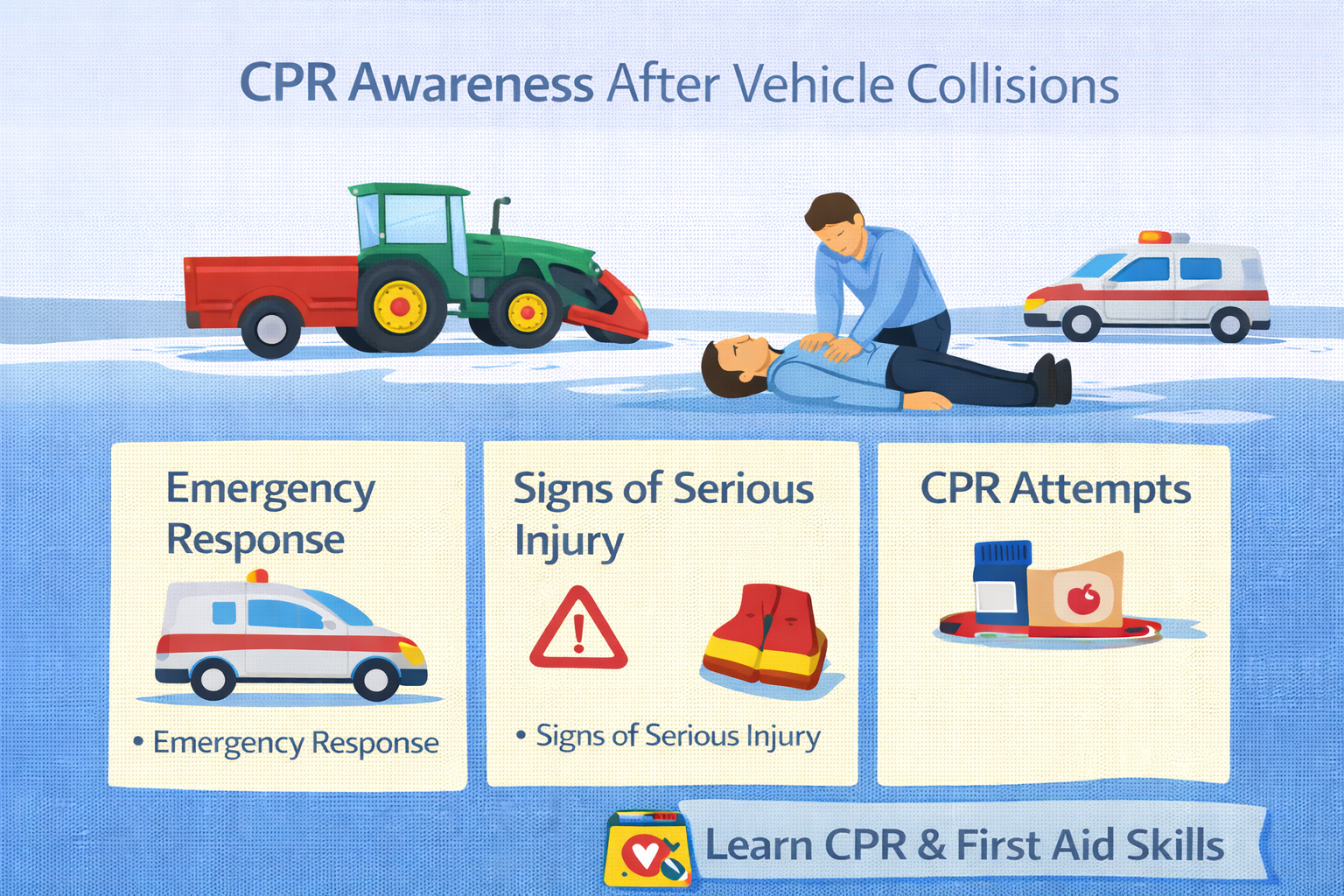 In a widely reported incident in Iowa, United States, emergency responders investigated a rural road collision involving a pickup truck and a farm tractor.
Reports indicated that the truck struck the tractor from behind on a roadway, causing serious injuries to the tractor operator. After the collision, efforts were made to assist the injured individual while emergency services were contacted.
According to later legal filings related to the case, the driver of the pickup truck reportedly attempted CPR on the injured farmer until it became clear that the situation required advanced medical care.
Investigators later examined the circumstances surrounding the collision and the events that followed. Situations like this illustrate how people involved in traffic incidents may attempt emergency first aid while waiting for paramedics and police to arrive.
Signs Someone May Need Immediate Medical Assistance
Following a serious crash, an injured person may require urgent help if they show signs such as:
-
Unresponsiveness or inability to wake
-
Not breathing normally or only gasping
-
Severe visible injuries
-
Pale or bluish skin tone
-
No response to voice or touch
Recognizing these signs and contacting emergency services immediately is a critical step in the emergency response process.
Why CPR May Be Attempted After a Collision
Severe injuries can sometimes interrupt breathing or circulation. When this occurs, trained responders or bystanders may attempt CPR to help maintain oxygen flow to vital organs until advanced medical care is available.
Situations where CPR may be attempted include:
-
Traumatic injuries following a collision
-
Loss of consciousness with no normal breathing
-
Medical emergencies triggered by trauma
-
Situations where breathing cannot be detected
Emergency responders are trained to quickly assess these conditions and begin appropriate care.
Emergency Response and First Aid Awareness
In many roadside emergencies, bystanders are the first people present. First aid training programs across Vancouver and British Columbia emphasize several important safety steps:
-
Ensure personal safety before approaching the scene
-
Call emergency services immediately
-
Provide assistance within your level of training
-
Follow instructions from emergency dispatchers if available
Once firefighters, paramedics, and police arrive, they take over medical care and manage the scene.
Prevention and Rural Road Safety
Many rural road collisions involve unique hazards that drivers may not encounter in urban areas.
Examples include:
-
Slow-moving agricultural equipment on roadways
-
Reduced lighting or visibility
-
Narrow or uneven road conditions
-
Limited shoulder space for passing vehicles
Drivers can improve safety by remaining attentive, adjusting speed, and maintaining a safe following distance when approaching farm equipment or slow-moving vehicles.
Workplaces that require employees to drive in rural areas often include driver safety awareness and emergency preparedness training as part of occupational health and safety programs.
Frequently Asked Questions
Why might CPR be used after a vehicle collision?
CPR may be attempted when a person becomes unresponsive and is not breathing normally after a crash.
Who typically performs CPR at crash scenes?
CPR may be performed by trained bystanders, emergency responders, or individuals involved in the incident until paramedics arrive.
Does CPR always save a life?
CPR does not guarantee survival, but it can help maintain circulation while professional medical care is on the way.
Why is personal safety important at crash scenes?
Traffic hazards, vehicle damage, and unstable conditions can create additional risks. Ensuring the scene is safe helps prevent further injuries.
Why do workplaces encourage CPR training?
Workplaces promote CPR training to help employees respond safely to emergencies that may occur on the job or in public settings.
Educational Note
This article is intended for general public education about first aid awareness and emergency response. Learning CPR and basic first aid can help individuals recognize emergencies and provide assistance safely until trained medical responders arrive.
About The Author

Mark Kascha
First Aid Instructor Trainer with 30+ years of experience in CPR, emergency response, and safety training across Canada.
👉 [View full credentials]🔗 View LinkedIn Profile
Last reviewed: March 2026