
 Cardiopulmonary resuscitation (CPR) is a lifesaving first aid skill used when a person is not breathing normally or has no signs of circulation. The goal of CPR is to help maintain blood flow and oxygen to vital organs until trained emergency responders arrive.
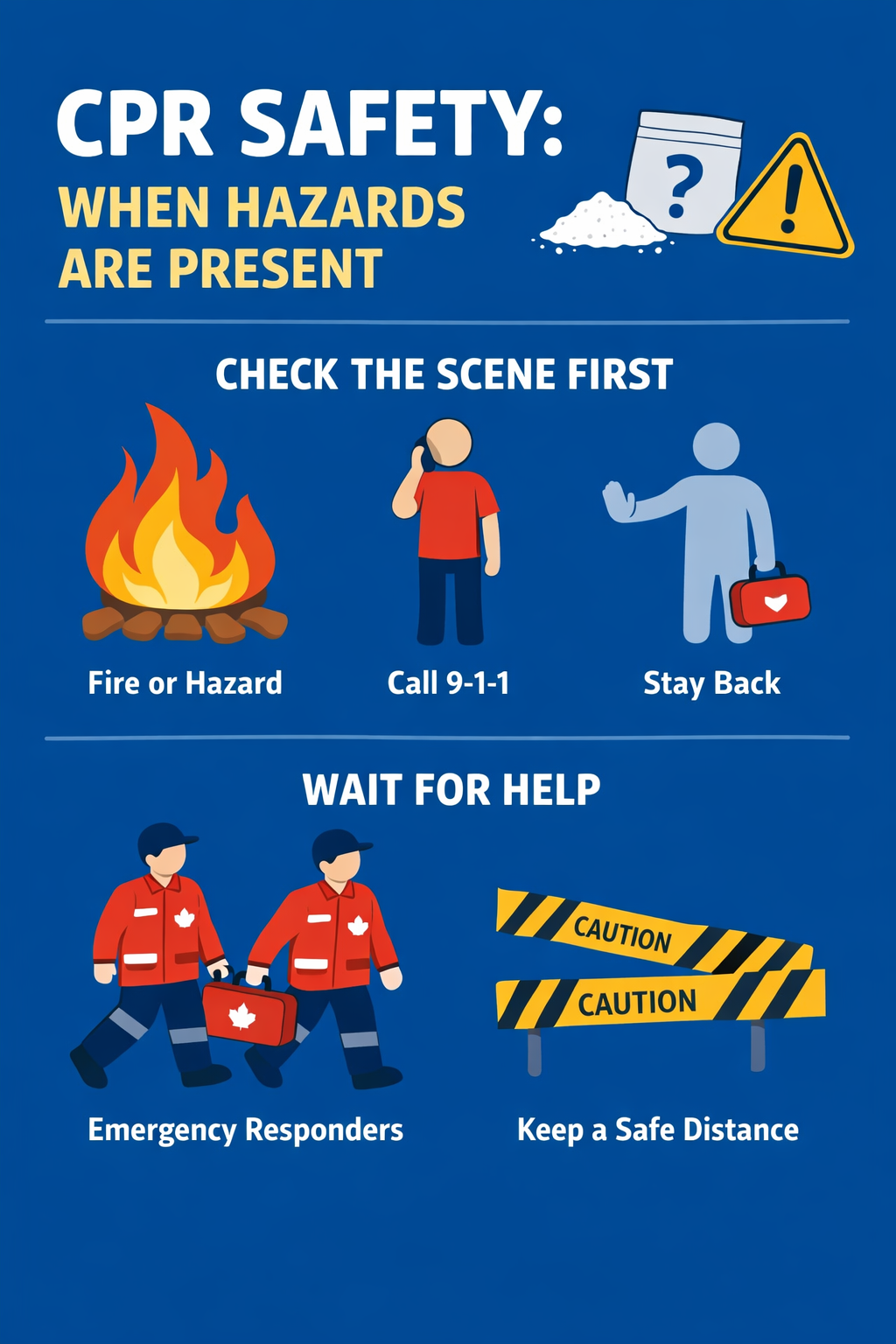
In Canada, CPR training programs emphasize that rescuer safety always comes first. Before helping someone who is unconscious or unresponsive, the person providing assistance should first check that the environment is safe. Hazards such as traffic, fire, sharp objects, or unknown substances can pose risks to rescuers.
For people working in public-facing roles in Vancouver, British Columbia — including delivery workers, building staff, and office employees — basic first aid awareness helps individuals recognize when it is safe to assist and when emergency services should take over.
A Real-World Scenario
In Winnipeg, a mail carrier discovered an unconscious woman in the hallway of an apartment building while delivering mail. After trying to get a response and receiving none, he called emergency services.
While speaking with the dispatcher, he reported that the woman was not breathing. However, he also noticed a white powder on her clothing, which raised concerns that the substance could be an opioid such as fentanyl.
Because of the potential hazard, he hesitated to approach closely and did not begin CPR. Emergency responders arrived several minutes later and took over care.
The situation highlights an important question often discussed in first aid training: What should a bystander do if helping someone might expose them to danger?
Why Unknown Substances Can Be a Concern
Many workplaces in Canada are increasingly aware of potential hazards related to unknown powders or substances. These could include medications, chemical residues, or other materials that may require protective equipment to handle safely.
Public discussion about synthetic opioids such as fentanyl has also raised awareness about accidental exposure. In most situations, casual contact with fentanyl powder does not easily cause serious harm, but unknown substances should still be treated cautiously.
For untrained bystanders without protective equipment, the safest approach is often to avoid direct contact until emergency responders arrive.
Recognizing Signs That Someone May Need CPR
A person may require CPR if they show the following signs:
-
Unresponsive to voice or gentle touch
-
Not breathing or only gasping
-
No obvious signs of circulation or movement
-
Collapsing suddenly and remaining unconscious
If these signs are present, emergency services should be contacted immediately.
Dispatchers in Canada may guide callers through hands-only CPR instructions when it is safe to do so.
First Aid Considerations When Hazards Are Present
First aid training teaches a simple principle: check the scene for safety before approaching.
If a potential hazard is present, rescuers may take several safer actions:
-
Call emergency services immediately
-
Follow dispatcher instructions
-
Keep a safe distance if a substance or hazard is unknown
-
Guide responders to the scene when they arrive
-
Monitor the situation from a safe location
In workplaces such as offices, residential buildings, and delivery environments across Vancouver and British Columbia, employees are often trained to report hazards and wait for appropriately equipped responders.
Prevention and Workplace Safety Awareness
Situations involving unconscious individuals or unknown substances can occur in many public environments, including apartment buildings, workplaces, and transit areas.
Workplace safety planning may include:
-
Basic first aid and CPR training
-
Awareness of hazard recognition
-
Procedures for contacting emergency services
-
Training in scene safety and risk assessment
-
Knowing when to wait for trained responders
These skills help workers respond calmly and appropriately in unexpected situations.
FAQ
Why is scene safety important before performing CPR?
First aid training emphasizes that rescuers should avoid placing themselves in danger. Hazards such as unknown substances, fire, or unstable environments can create additional emergencies if rescuers become injured.
What should a bystander do if they see an unconscious person?
The recommended first step is to check for responsiveness and call emergency services. Dispatchers can provide guidance based on the situation and help determine whether CPR should begin.
Can unknown powders be dangerous to rescuers?
Unknown substances may pose risks depending on their composition. Without protective equipment or training, it is generally safer to avoid direct contact until emergency responders arrive.
Does everyone have to perform CPR in an emergency?
Many people choose to help during emergencies, but first aid guidelines emphasize that assistance should not put the rescuer at risk. Calling for help and staying nearby to guide responders can still be valuable assistance.
Why do workplaces encourage CPR and first aid training?
Training helps people recognize emergencies, understand safe response steps, and communicate effectively with emergency services until professional help arrives.
Educational Note
This article is intended for general first aid awareness and workplace safety education. Learning CPR and first aid through certified training programs can help individuals understand how to assess emergencies, recognize hazards, and respond safely until emergency services arrive.
About The Author

Mark Kascha
First Aid Instructor Trainer with 30+ years of experience in CPR, emergency response, and safety training across Canada.
👉 [View full credentials]🔗 View LinkedIn Profile
Last reviewed: March 2026