 Cardiopulmonary resuscitation (CPR) is a first aid technique used when a person becomes unresponsive and is not breathing normally. CPR helps maintain circulation of oxygen-rich blood to the brain and vital organs until professional medical care becomes available.
Across Vancouver and throughout British Columbia, CPR and first aid training are commonly taught in workplace safety programs and community courses. These skills prepare individuals to respond quickly when emergencies occur in public areas such as sidewalks, transit stations, workplaces, or residential neighbourhoods.
Emergency responders, including paramedics and police officers, are also trained to begin CPR when someone is found unresponsive.
Emergency Preparedness in Urban Communities
Busy urban areas can experience medical emergencies at any time. Locations near transit stations, residential buildings, and commercial districts often have many people nearby who may witness an incident.
Workplace and community first aid training programs emphasize the importance of:
-
Recognizing when someone is unresponsive
-
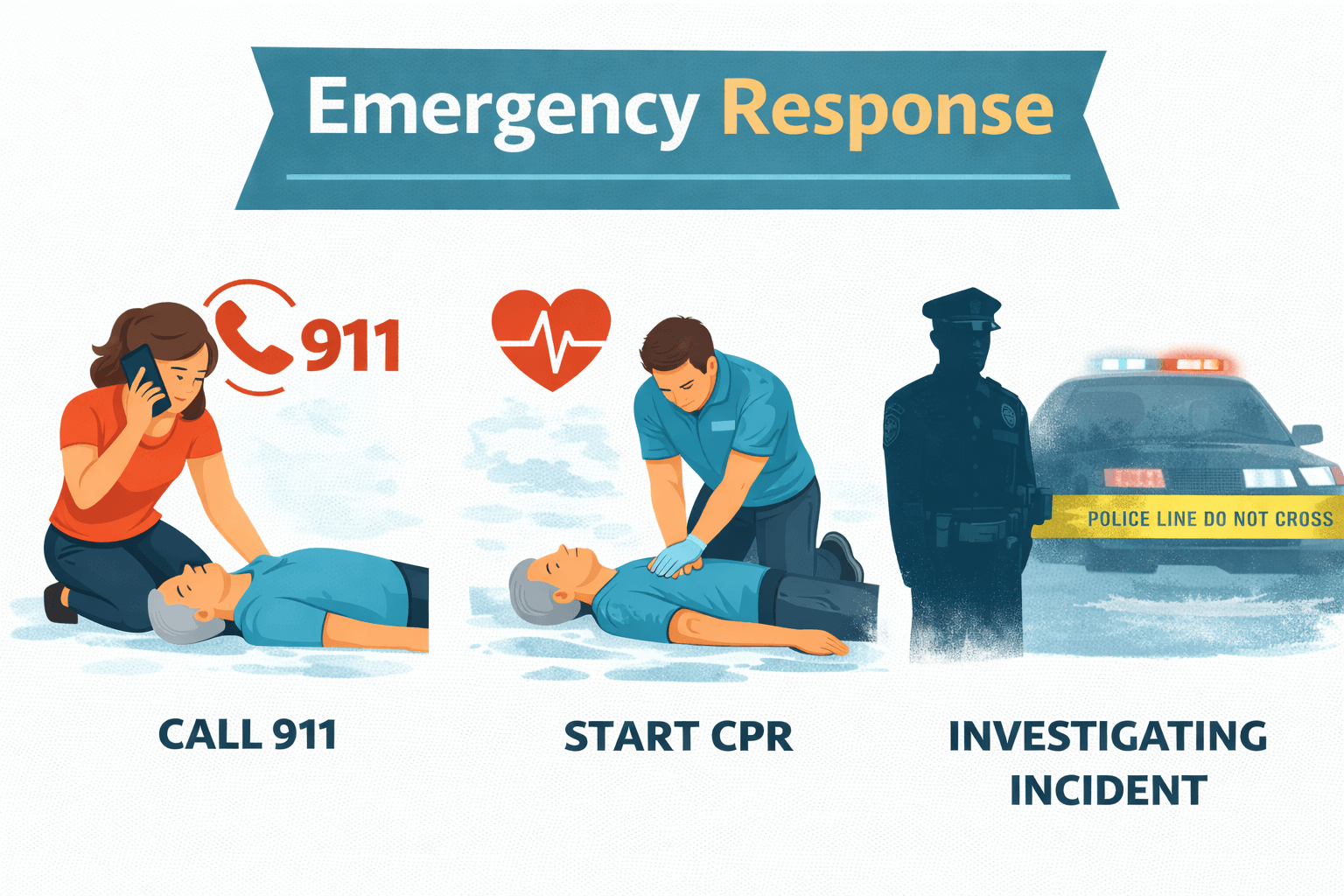
Contacting emergency services immediately
-
Beginning CPR if breathing has stopped or is abnormal
-
Continuing assistance until emergency responders arrive
Early recognition and response can help support individuals during the critical first minutes of an emergency.
A Serious Incident in Surrey, British Columbia
An investigation was launched after a man was found seriously injured outside an apartment complex in Surrey’s Whalley neighbourhood.
Police received a 911 call reporting a man down near the intersection of 132 Street and 108 Avenue, close to the Gateway SkyTrain Station.
Emergency responders arrived at the scene and began providing medical assistance. Paramedics initiated CPR in an attempt to revive the man before transporting him to a healthcare facility.
Despite these efforts, the man later died from his injuries.
The case was taken over by the Integrated Homicide Investigation Team (IHIT). According to investigators, it was initially unclear whether the injuries occurred at that location or elsewhere, and authorities continued to examine the circumstances surrounding the incident.
Situations like this demonstrate how emergency responders and medical teams may provide immediate care while investigations into the cause of an incident proceed separately.
Recognizing Situations That May Require CPR
CPR may be necessary when a person:
-
Is unresponsive
-
Is not breathing normally
-
Shows no signs of circulation
When these signs are present, emergency services should be contacted immediately while trained individuals begin CPR.
Recognizing these symptoms quickly is a key skill taught in Canadian first aid and CPR training programs.
Why Early CPR Can Be Important
During cardiac arrest or severe medical emergencies, the heart may stop pumping blood effectively. Without circulation, the brain and other organs begin to lose oxygen.
CPR helps maintain blood flow during this critical period until advanced medical care becomes available.
Public health organizations across Canada emphasize that early CPR combined with professional emergency care can improve survival outcomes in certain emergencies.
Prevention and Community Preparedness
Communities and workplaces can improve emergency preparedness by encouraging public awareness and training.
Important preparedness steps may include:
-
Encouraging residents and employees to learn CPR and first aid
-
Installing automated external defibrillators (AEDs) in public spaces
-
Promoting emergency response education in communities
-
Supporting workplace safety training programs
Prepared individuals and communities are often better equipped to respond quickly when medical emergencies occur.
Frequently Asked Questions
What is cardiopulmonary resuscitation (CPR)?
CPR is a first aid technique used when someone becomes unresponsive and stops breathing normally. It helps maintain circulation until emergency medical professionals arrive.
Who performs CPR during emergencies?
CPR may be performed by trained bystanders, workplace first aid attendants, police officers, firefighters, or paramedics depending on who arrives at the scene first.
Why is CPR important during medical emergencies?
CPR helps maintain blood circulation and oxygen flow to the brain and organs while waiting for professional medical care.
Can CPR be performed in public places?
Yes. CPR can be performed wherever an emergency occurs, including homes, workplaces, parks, and public spaces.
Where can people learn CPR in British Columbia?
CPR training is available through workplace safety programs, community organizations, and certified first aid training providers across British Columbia.
Educational Note
This article is intended for general first aid awareness and public safety education. Learning CPR and first aid can help individuals better understand how to respond during emergencies while waiting for trained emergency medical services.
About The Author

Mark Kascha
First Aid Instructor Trainer with 30+ years of experience in CPR, emergency response, and safety training across Canada.
Last reviewed: March 2026
 Support local, Canadian-owned businesses, with no connections to American corporations or partnerships.