
Vehicle collisions can sometimes involve medical emergencies that occur before or during the crash itself. When a driver becomes unresponsive and stops breathing normally, bystanders or first responders may begin cardiopulmonary resuscitation (CPR) while waiting for paramedics to arrive.
Across Canada, including communities in British Columbia such as Vancouver and Surrey, first aid and CPR awareness are important parts of workplace safety and public education. Many emergencies begin suddenly, and the actions of nearby witnesses can help support emergency response during the critical first minutes.
Driver Pulled from Vehicle After Collision
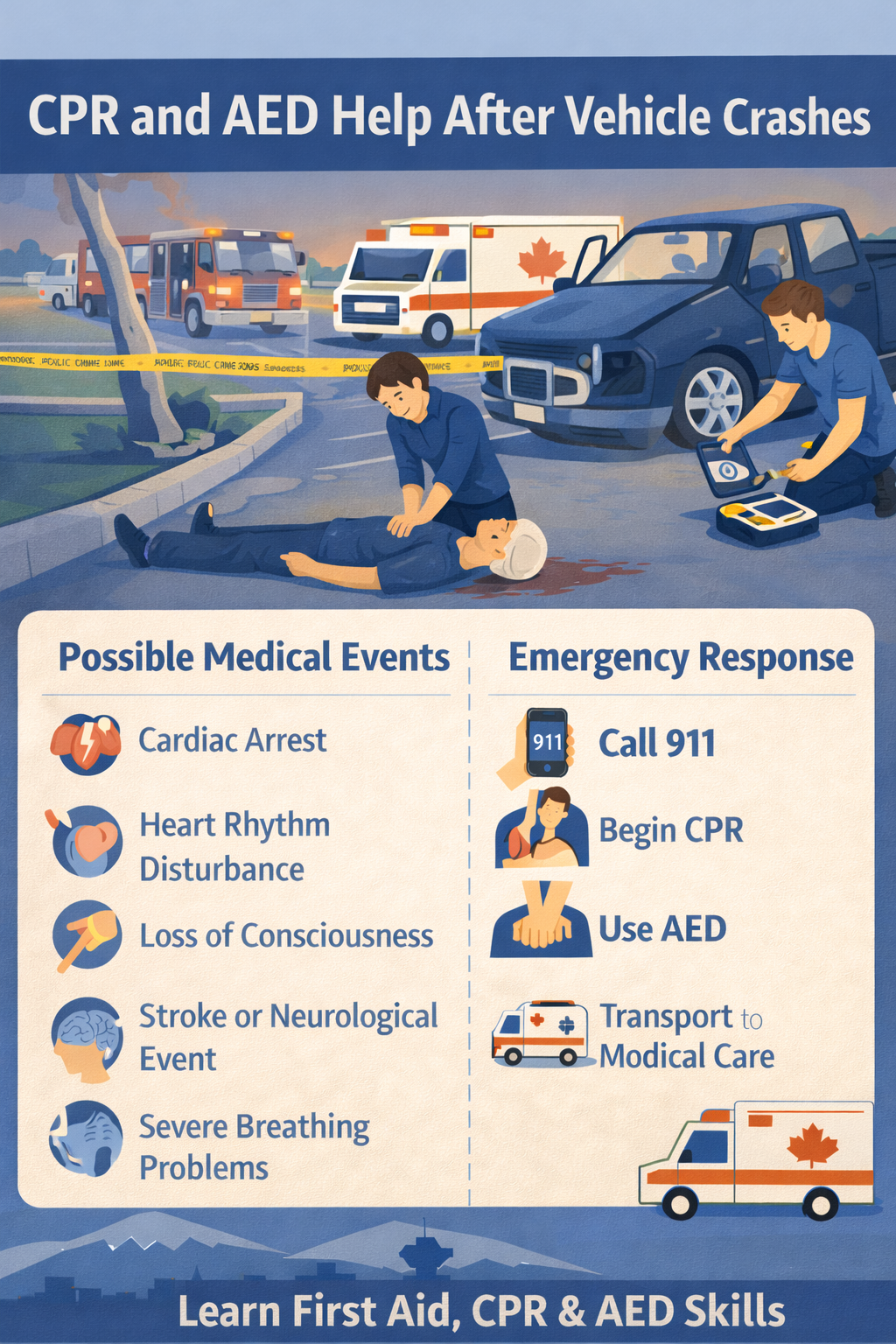 Emergency responders in Calgary, Alberta attended a serious collision involving a pickup truck and a roadside pole.
The incident occurred along John Laurie Boulevard near Brisebois Drive. According to reports, the driver — believed to be a man in his 70s — was travelling eastbound when the vehicle suddenly veered across the roadway.
The pickup truck crossed the median into the westbound lanes before striking a light pole along the shoulder.
Witnesses who arrived at the scene discovered the driver unconscious and unresponsive behind the wheel. Bystanders quickly pulled the man from the vehicle and began performing CPR while waiting for emergency services.
When paramedics arrived, they found the driver in critical condition and continued providing medical care at the scene.
Police temporarily closed roads in the area while emergency crews worked and investigators examined the circumstances of the crash.
Situations like this highlight how witnesses may become the first people able to provide assistance during emergencies before professional responders arrive.
Possible Medical Causes of Vehicle Collisions
In some crashes, the driver may experience a sudden medical event that leads to loss of control of the vehicle.
Possible causes can include:
-
Cardiac arrest
-
Heart rhythm disturbances
-
Loss of consciousness (syncope)
-
Stroke or neurological events
-
Severe breathing problems
When a person becomes unresponsive and stops breathing normally, CPR may be required while emergency services are on the way.
CPR and AED Use During Roadside Emergencies
Cardiopulmonary resuscitation (CPR) is a first aid technique used when someone is not breathing normally and is unresponsive.
The goal of CPR is to:
-
Maintain blood circulation
-
Deliver oxygen to the brain and vital organs
-
Provide support until paramedics can deliver advanced care
In some public locations, an automated external defibrillator (AED) may also be used. AEDs are designed to analyze heart rhythms and can deliver an electrical shock if a life-threatening rhythm is detected.
Emergency dispatchers across Canada can provide step-by-step CPR instructions by phone while emergency responders are travelling to the scene.
Emergency Response After Vehicle Crashes
Major traffic incidents often require multiple emergency services working together.
Typical response actions may include:
-
Calling emergency services (911)
-
Assessing responsiveness and breathing
-
Providing CPR if necessary
-
Securing the crash scene
-
Transporting the injured person to hospital
Police may temporarily close roadways to allow emergency crews to work safely and to conduct investigations.
Prevention and Community Preparedness
While not all medical emergencies can be prevented, awareness and training can improve response during unexpected situations.
Community preparedness may include:
-
Learning first aid and CPR
-
Knowing how to contact emergency services quickly
-
Understanding how to recognize breathing emergencies
-
Supporting workplace and community emergency response plans
First aid and CPR training programs across Vancouver and British Columbia help prepare individuals to respond safely during medical emergencies.
Frequently Asked Questions
Why might CPR be needed after a vehicle crash?
CPR may be required if a person becomes unresponsive and stops breathing normally due to injury or a sudden medical emergency.
Can bystanders safely perform CPR during roadside emergencies?
If the scene is safe and the person is not breathing normally, bystanders may begin CPR while emergency services are on the way. Dispatchers can provide instructions over the phone.
What does an AED do during a cardiac emergency?
An automated external defibrillator (AED) analyzes heart rhythms and can deliver an electrical shock when certain life-threatening rhythms are detected.
Why do police sometimes close roads after collisions?
Road closures help protect emergency responders and allow investigators to examine the cause of the crash safely.
Why is CPR training recommended for the public?
CPR training helps people recognize life-threatening emergencies and understand how to provide assistance until professional responders arrive.
Educational Note
This article is intended for general first aid awareness and public safety education. First aid, CPR, and AED training help individuals recognize emergencies and provide initial assistance until professional emergency responders arrive.
About The Author

Mark Kascha
First Aid Instructor Trainer with 30+ years of experience in CPR, emergency response, and safety training across Canada.
👉 [View full credentials]🔗 View LinkedIn Profile
Last reviewed: March 2026