CPR and AED Save a Life: Abbotsford Cardiac Arrest Survival Story
Understanding Sudden Cardiac Arrest at Home
 Sudden cardiac arrest can occur without warning, even in individuals with no known history of heart conditions. When a person becomes unresponsive and stops breathing normally, immediate CPR and the use of an automated external defibrillator (AED) can help restore a normal heart rhythm.
Early action in the first few minutes is critical.
First Aid & Workplace Relevance in Vancouver and the Lower Mainland
Across Abbotsford, Surrey, Vancouver, and the Lower Mainland, many cardiac emergencies occur at home rather than in hospitals.
This highlights the importance of:
-
AED accessibility in communities
Knowing what to do before paramedics arrive can make a significant difference.
Real Incident Overview
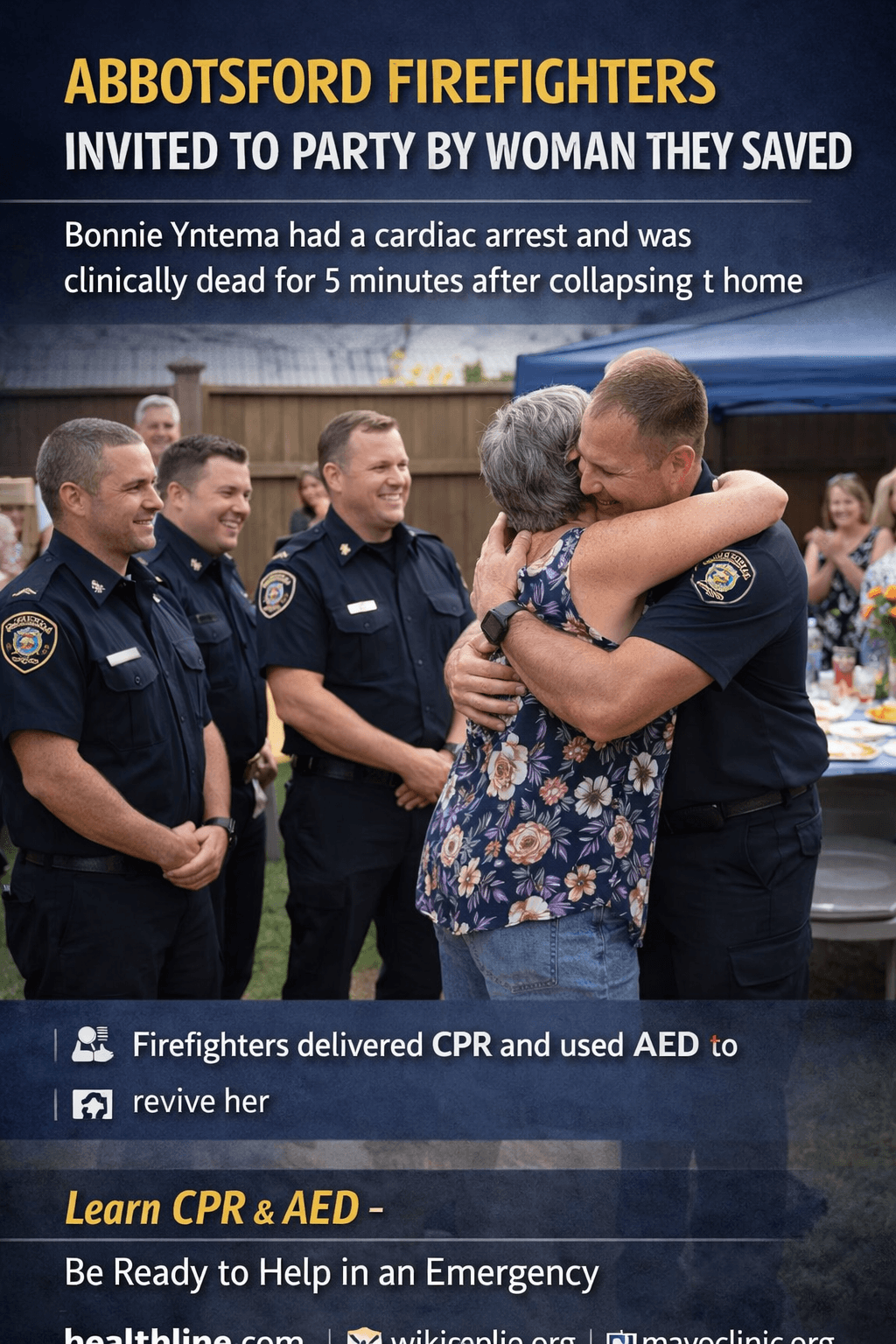
In Abbotsford, firefighters were later invited to a backyard gathering to celebrate a life they helped save—marking a very different outcome from their initial emergency call.
A year earlier, 60-year-old Bonnie Yntema suffered a sudden cardiac arrest at home. Her husband, Remko, woke to unusual sounds and quickly realized something was wrong.
He immediately called 911 and began CPR on his wife.
Within approximately five minutes, Abbotsford firefighters arrived and took over emergency care. They continued CPR and used an AED to help restore her heart rhythm.
Bonnie was stabilized after an extended resuscitation effort—reported to be around 40 minutes—before being transported to a healthcare facility.
While in hospital, she experienced a second cardiac arrest and was again revived using defibrillation. She was placed in a medically induced coma for a short period as part of her care.
Her family was uncertain about her recovery, particularly whether she would regain awareness. Fortunately, she regained consciousness and recognized her loved ones the following day, beginning her recovery journey.
To show their gratitude, Bonnie and her family later invited the firefighters to their home, where they were welcomed with applause and appreciation for their life-saving actions.
Signs of Cardiac Arrest
A person experiencing cardiac arrest may:
-
Collapse suddenly
-
Be unresponsive
-
Not breathe normally
-
Have no detectable pulse
Recognizing these signs quickly allows for early intervention.
First Aid Response: CPR and AED at Home
If someone collapses at home:
-
Call 911 immediately
-
Check responsiveness and breathing
-
Begin CPR (chest compressions)
-
Use an AED if available
-
Continue CPR until help arrives
Early CPR and defibrillation are key steps in emergency response.
Why Early Action Matters
This incident highlights:
-
The importance of immediate CPR by bystanders
-
The role of fast emergency response teams
-
The effectiveness of AED use in cardiac emergencies
-
The potential for recovery even after serious events
Every minute counts during cardiac arrest.
Prevention and Safety Considerations
While not all cardiac events can be predicted:
-
Learn CPR and AED use
-
Know emergency procedures at home and work
-
Encourage community awareness
-
Support access to AEDs in public spaces
Preparedness improves response and outcomes.
Frequently Asked Questions
What should I do if someone collapses at home?
Call 911, check breathing, and begin CPR if needed.
Why is CPR important before emergency services arrive?
It helps maintain circulation to vital organs.
What does an AED do?
It helps restore a normal heart rhythm during cardiac arrest.
Can someone recover after cardiac arrest?
Recovery is possible, especially with early intervention.
Should households consider CPR training?
Yes. It prepares individuals to respond in emergencies.
Educational Note
This article is intended for general first aid awareness and workplace safety education in Canada. CPR and AED training can help individuals respond effectively in emergencies.
Serving the Vancouver Lower Mainland with the lowest priced, highest quality safety, CPR, food safe and first aid training since 2010.
 Support local, Canadian-owned businesses, with no connections to American corporations or partnerships.