 An opioid overdose occurs when drugs such as fentanyl, heroin, morphine, oxycodone, or similar substances slow or stop a person’s breathing. When breathing becomes severely impaired, the body and brain may not receive enough oxygen, which can lead to a life-threatening medical emergency.
Across Vancouver and British Columbia, communities and workplaces are increasingly aware of opioid-related emergencies. Public health programs have expanded training on CPR, overdose recognition, and naloxone awareness so that bystanders can respond safely while waiting for emergency services.
In many situations, early bystander intervention—including CPR and emergency assistance—can help support someone experiencing an overdose until paramedics arrive.
A Realistic Scenario: Rapid Action During an Overdose Emergency
In one reported incident in Saskatoon, a young man received an urgent call from a friend asking for help. Two individuals inside a home appeared to be experiencing drug overdoses.
Knowing that he had a naloxone kit, he rushed to the location. When he arrived, one person was unconscious and another was showing signs of serious distress.
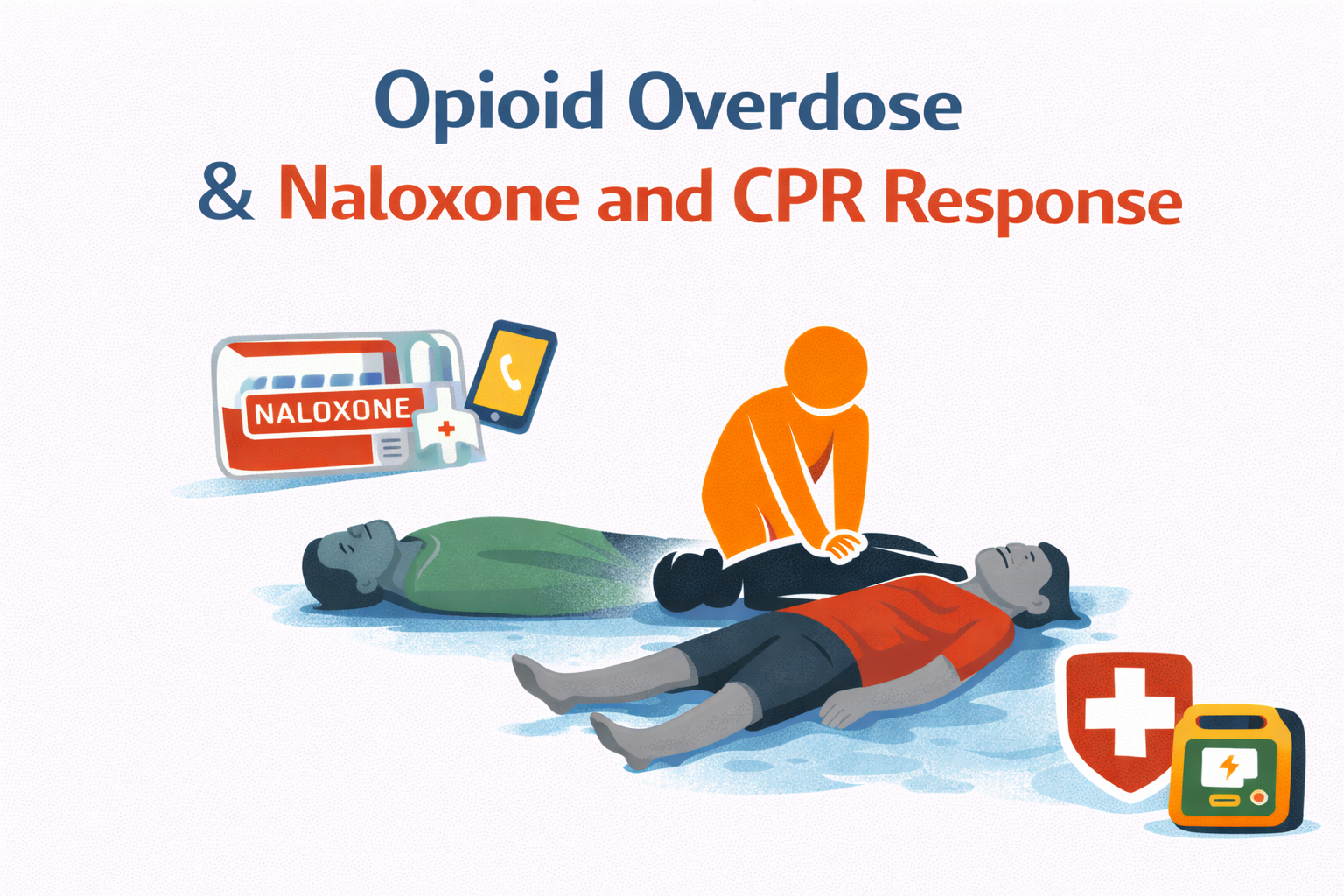
He administered naloxone from his kit and asked someone nearby to call emergency services. While waiting for paramedics, he began CPR on one of the individuals who was not breathing normally.
Paramedics soon arrived and continued emergency care. According to reports, both individuals regained breathing before being transported to hospital.
The quick actions taken by the bystander—including calling for help, administering naloxone, and providing CPR—played a key role in supporting the individuals during the emergency.
Signs of a Possible Opioid Overdose
Recognizing the signs of an opioid overdose is important so that emergency assistance can be requested quickly.
Possible warning signs include:
-
Unresponsiveness or inability to wake the person
-
Slow, shallow, or stopped breathing
-
Bluish lips or fingernails
-
Gurgling or choking sounds
-
Very small pupils
-
Pale or clammy skin
If these signs are present, emergency services should be contacted immediately.
How Opioids Affect Breathing
Opioid drugs affect the brain areas responsible for breathing and consciousness. When too much of the substance is present in the body, breathing can slow down or stop.
Possible effects of opioid overdose include:
-
Reduced breathing rate
-
Loss of consciousness
-
Lack of oxygen to vital organs
-
Cardiac arrest in severe cases
Because oxygen is essential for the brain and heart to function, rapid emergency response is critical.
First Aid Response: CPR and Overdose Awareness
When someone appears to be experiencing an overdose and is unresponsive or not breathing normally, emergency response actions may be necessary.
First aid training often teaches individuals to:
-
Ensure the environment is safe
-
Call emergency services immediately
-
Check responsiveness and breathing
-
Begin CPR if the person is unresponsive and not breathing normally
-
Follow dispatcher instructions while waiting for paramedics
In some communities, trained individuals may also have access to naloxone kits, which can temporarily reverse the effects of certain opioid drugs. Emergency medical services should always be contacted during suspected overdose incidents.
Community Preparedness and Public Health Awareness
Communities across British Columbia and Canada have increased awareness efforts to reduce opioid-related harm.
Public health programs often focus on:
-
Education about overdose recognition
-
Distribution of naloxone kits in some communities
-
First aid and CPR training for the public
-
Encouraging individuals to call emergency services during medical emergencies
Prepared individuals and informed communities can help support emergency response during critical situations.
FAQ
What is naloxone?
Naloxone is a medication designed to temporarily reverse the effects of certain opioid drugs. It works by blocking the opioid receptors in the body that affect breathing.
Why is CPR important during an overdose emergency?
If a person stops breathing or becomes unresponsive, CPR can help circulate oxygenated blood to the brain and vital organs while emergency services are on the way.
Can opioid overdoses happen suddenly?
Yes. Overdoses can occur unexpectedly due to strong substances, unknown drug strength, or interactions with other medications.
Why should emergency services always be called during an overdose?
Even if someone begins breathing again, medical professionals should evaluate the individual because the effects of opioids can return after the medication wears off.
Why is first aid and CPR training recommended for the public?
Training helps individuals recognize life-threatening emergencies and respond safely while waiting for professional medical assistance.
Educational Note:
This article is intended for general first aid awareness and public safety education. Learning CPR and emergency response skills can help individuals recognize medical emergencies and provide supportive assistance until trained emergency services arrive.
About The Author

Mark Kascha
First Aid Instructor Trainer with 30+ years of experience in CPR, emergency response, and safety training across Canada.
Last reviewed: March 2026
 Support local, Canadian-owned businesses, with no connections to American corporations or partnerships.