Understanding CPR and AED Training
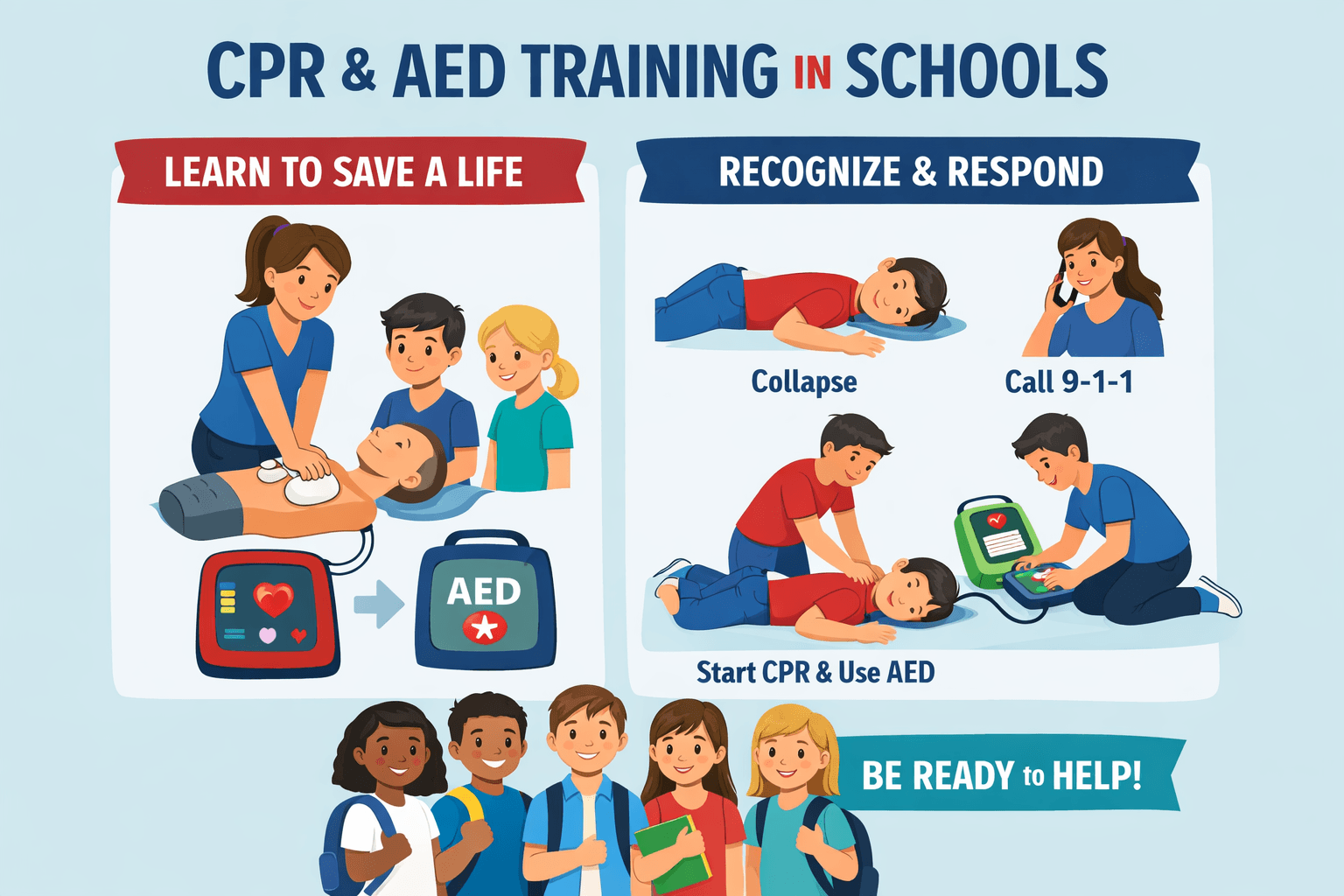 Cardiopulmonary resuscitation (CPR) and automated external defibrillators (AEDs) are essential first aid tools used when a person experiences sudden cardiac arrest, a condition where the heart suddenly stops beating effectively. CPR helps maintain blood circulation to the brain and vital organs, while an AED can deliver an electrical shock that may help restore a normal heart rhythm.
Across Canada, including British Columbia and the Lower Mainland, there is growing recognition that teaching CPR and AED skills in schools and workplaces can significantly improve community emergency response. When more people know how to respond quickly during a cardiac emergency, survival rates can improve while waiting for paramedics to arrive.
First Aid and Workplace Relevance in Vancouver and British Columbia
In Vancouver, Burnaby, Richmond, and throughout the Lower Mainland, first aid training is commonly included in workplace safety programs and community education initiatives. CPR and AED awareness is particularly important in schools, sports facilities, offices, and public venues where large groups gather.
Many organizations in British Columbia encourage early first aid education because bystanders are often the first people available to help during a medical emergency. Teaching these skills to students helps build a generation of individuals who are prepared to respond calmly and confidently in emergencies at school, at home, or in future workplaces.
A School Community Responds After a Cardiac Emergency
At St. George’s School in Montreal, a new initiative was created after a serious incident during a school sporting event. During a semifinal baseball game, a student named Benjamin Silverman collapsed from cardiac arrest on the field. In the moments that followed, another parent at the game, Robert Sibthorpe, quickly began CPR until the student regained consciousness.
The experience deeply affected the school community. In response, families and community members helped create the First Responders Fund, an initiative designed to ensure students receive training in CPR and AED use before graduating.
Two years after the incident, a group of Grade 11 students became the first class to receive mandatory CPR and AED instruction at the school. The program aims to give every student practical knowledge that could help them respond if someone nearby experiences a cardiac emergency.
Supporters of the initiative explained that the goal was not only to honour the experience that brought the community together, but also to teach young people that anyone can play a role in helping during an emergency.
Why Quick Action Matters During Cardiac Arrest
Sudden cardiac arrest requires rapid recognition and immediate action. Health organizations often emphasize that the chances of survival decrease with each minute that passes without assistance.
In many cases, survival depends on the chain of response, which may include:
-
Recognizing that a person has collapsed and is unresponsive
-
Calling emergency medical services
-
Beginning CPR to help circulate blood
-
Using an AED if one is available
-
Continuing care until paramedics arrive
Community training programs focus on teaching people how to recognize emergencies and begin these steps safely.
Signs That May Indicate Sudden Cardiac Arrest
Sudden cardiac arrest can occur unexpectedly and may involve the following signs:
-
Sudden collapse
-
Unresponsiveness
-
No normal breathing or only gasping breaths
-
Loss of consciousness
-
Absence of a detectable pulse
Because these signs may occur quickly, immediate bystander response is important while emergency services are contacted.
Common Causes of Cardiac Arrest
Cardiac arrest may be related to several underlying conditions or factors, including:
-
Abnormal heart rhythms (arrhythmias)
-
Structural heart conditions
-
Heart disease
-
Electrical disturbances in the heart
-
Rare congenital heart abnormalities
In young athletes or students, cardiac arrest is uncommon but can sometimes occur due to previously undiagnosed heart conditions.
First Aid Response and Early Intervention
When cardiac arrest occurs, trained bystanders may begin CPR and use an AED while emergency services are contacted. AED devices are designed to guide users through the process with clear voice prompts.
Public education programs in Canada often emphasize:
-
Calling emergency services immediately
-
Beginning chest compressions if trained
-
Using an AED when available
-
Continuing assistance until professional help arrives
CPR and AED training courses teach participants how to recognize emergencies and respond safely within the limits of their training.
Prevention and Workplace Safety Considerations
Although cardiac arrest cannot always be predicted, several safety strategies can help communities and workplaces prepare:
-
Providing CPR and AED training for staff and students
-
Installing AED devices in schools, recreation facilities, and workplaces
-
Practicing emergency response procedures
-
Encouraging awareness of heart health and physical activity safety
-
Ensuring clear access to emergency medical services
Across Vancouver and the Lower Mainland, many organizations include CPR training as part of broader workplace safety education programs.
Teaching these skills early helps build confidence and preparedness in both school and workplace environments.
Frequently Asked Questions
Why is CPR training important for students?
CPR training helps students understand how to respond during a cardiac emergency. Early training builds awareness and confidence so that young people may feel more prepared to assist in emergencies at school, at home, or in their future workplaces.
What is the purpose of an AED?
An automated external defibrillator (AED) is a portable device that can analyze the heart’s rhythm and deliver a controlled electrical shock if needed. AEDs are designed for use by trained bystanders and provide voice instructions to guide users through the process.
How common are AEDs in public places in Canada?
AEDs are increasingly available in locations such as schools, community centres, sports arenas, airports, and workplaces. Many Canadian communities encourage public access to AEDs as part of emergency preparedness.
Can young people learn CPR effectively?
Many educational programs show that teenagers can successfully learn CPR and AED skills. Schools across Canada have begun introducing first aid education to help students become more prepared to respond in emergencies.
Why is early intervention important during cardiac arrest?
During cardiac arrest, blood circulation stops or becomes ineffective. Immediate assistance from bystanders can help maintain circulation until emergency medical services arrive.
Educational Note
This article is intended for general first aid awareness and public education. First aid and CPR training courses provide hands-on instruction that helps individuals learn how to recognize emergencies and respond safely within their level of training.
About The Author

Mark Kascha
First Aid Instructor Trainer with 30+ years of experience in CPR, emergency response, and safety training across Canada.
Last reviewed: March 2026
 Support local, Canadian-owned businesses, with no connections to American corporations or partnerships.