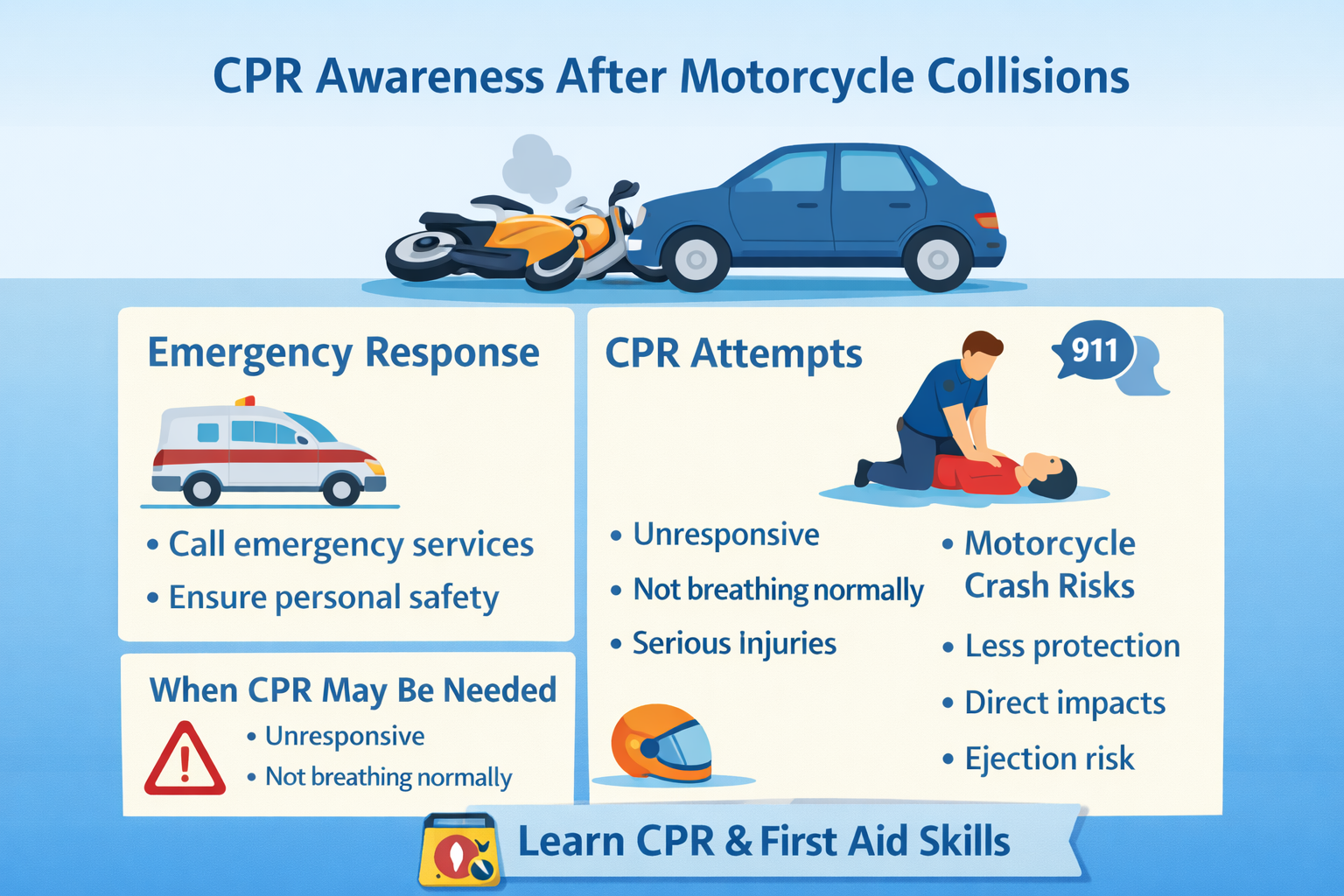
Motorcycle collisions can result in serious injuries because riders have less physical protection than occupants in enclosed vehicles. In situations where someone becomes unresponsive following a crash, cardiopulmonary resuscitation (CPR) may be attempted by trained responders or bystanders until emergency medical services arrive.
Across British Columbia, including Vancouver, the Saanich Peninsula, and communities around Sidney and North Saanich, CPR awareness and first aid training are important parts of workplace safety education and community preparedness. Quick recognition of a medical emergency and calling for help can play an important role in emergency response.
A Realistic Roadside Emergency Scenario
 In one reported incident, emergency responders attended a motorcycle collision on Mills Road in North Saanich, near the entrance to the Fickle Fig farm market.
According to Sidney/North Saanich RCMP, the crash occurred on a Sunday afternoon at approximately 12:30 PM when a motorcycle was involved in a collision with a car.
Firefighters and paramedics arrived quickly and attempted life-saving measures, including CPR, after the motorcyclist was found unresponsive. Despite these efforts, the 65-year-old North Saanich man later died at the scene.
Two occupants of the other vehicle — a 66-year-old driver and a young child — were not injured in the collision.
Police temporarily closed the road while investigators from RCMP, North Saanich Fire Department, BC Ambulance Service, the BC Coroners Service, and Victim Services examined the scene and spoke with witnesses. Authorities also indicated they had received information from a witness who had left before officers arrived.
Incidents like this highlight how emergency responders may attempt CPR when someone becomes unresponsive following a serious collision.
Signs Someone May Need Immediate Medical Assistance
After a crash or traumatic event, a person may require urgent help if they show signs such as:
-
Unresponsiveness or inability to wake
-
Absence of normal breathing or only gasping
-
Severe visible injuries
-
Pale, bluish, or grey skin tone
-
Confusion or inability to respond to voice
Recognizing these warning signs and calling emergency services immediately is a critical step in the emergency response process.
Why Motorcycle Collisions Can Lead to Severe Injuries
Motorcyclists face unique risks on the road due to the limited protection provided by motorcycles.
Factors that may contribute to severe injuries include:
-
Direct exposure to impact during a collision
-
Ejection from the motorcycle
-
Contact with the road surface or other vehicles
-
Higher vulnerability during head-on or side-impact crashes
-
Reduced visibility of motorcycles to other drivers
Investigators reviewing collisions often consider roadway conditions, vehicle movement, driver behaviour, and other contributing factors.
Emergency Response and First Aid Awareness
When someone becomes unresponsive after a collision, trained responders may begin CPR while waiting for additional medical support.
First aid training programs in Vancouver and throughout British Columbia teach several important priorities for roadside emergencies:
-
Ensure personal safety before approaching a crash scene
-
Call emergency services immediately
-
Provide assistance only if it is safe and within your level of training
-
Follow guidance from emergency dispatchers if available
Professional responders such as firefighters, paramedics, and police typically take over care when they arrive.
Prevention and Road Safety Considerations
Although not all crashes can be prevented, many road safety practices help reduce the risk of collisions involving motorcycles.
These include:
-
Drivers checking carefully for motorcycles when turning or changing lanes
-
Maintaining safe speeds and following distances
-
Avoiding distracted or impaired driving
-
Wearing appropriate protective equipment when riding
-
Remaining alert at intersections and rural roadways
Workplaces where employees travel frequently often include driver awareness and safety education as part of occupational health and safety planning.
Frequently Asked Questions
Why might CPR be attempted after a motorcycle crash?
CPR may be attempted if a person becomes unresponsive and is not breathing normally. It helps maintain circulation while emergency medical services are on the way.
Should bystanders always approach a crash scene?
Personal safety should always come first. Roadways may have traffic hazards or damaged vehicles, so calling emergency services and assessing safety before assisting is important.
Are motorcycle crashes typically more dangerous than car collisions?
Motorcyclists generally have less protection than drivers in enclosed vehicles, which can increase the risk of serious injury during a collision.
What should someone do if they witness a crash?
Contact emergency services immediately and provide clear information about the location and situation. Dispatchers may provide guidance while responders are on the way.
Why is CPR training encouraged in communities and workplaces?
CPR training helps individuals recognize emergencies and respond appropriately until professional medical responders arrive.
Educational Note
This article is intended for general public education about emergency response awareness and first aid training. Learning CPR and basic first aid can help individuals recognize emergencies and provide assistance safely until trained responders arrive.
About The Author

Mark Kascha
First Aid Instructor Trainer with 30+ years of experience in CPR, emergency response, and safety training across Canada.
Last reviewed: March 2026
 Support local, Canadian-owned businesses, with no connections to American corporations or partnerships.