
Multiple Overdose Emergencies Reported at Sarnia Jail
Understanding Opioid Overdose Emergencies
 Opioid overdoses can occur when substances that affect the brain’s breathing control slow or stop normal breathing. When this happens, the body may not receive enough oxygen, which can quickly become life-threatening without immediate intervention.
Across Canada—including Vancouver and communities throughout British Columbia—the opioid crisis has led to increased awareness around overdose response, emergency first aid, and the use of medications such as naloxone. Rapid response from trained individuals can help support breathing and circulation until advanced medical care arrives.
First Aid and Workplace Relevance in Canada
Correctional facilities, healthcare environments, and many other workplaces across Canada now include first aid, CPR, and overdose response training for staff.
Employees working in high-risk environments may encounter medical emergencies involving substance exposure. Training helps workers recognize symptoms of overdose, provide immediate assistance, and protect themselves from potential exposure.
Prepared staff, proper equipment, and clear emergency protocols are important components of workplace safety.
A Realistic Scenario from Sarnia, Ontario
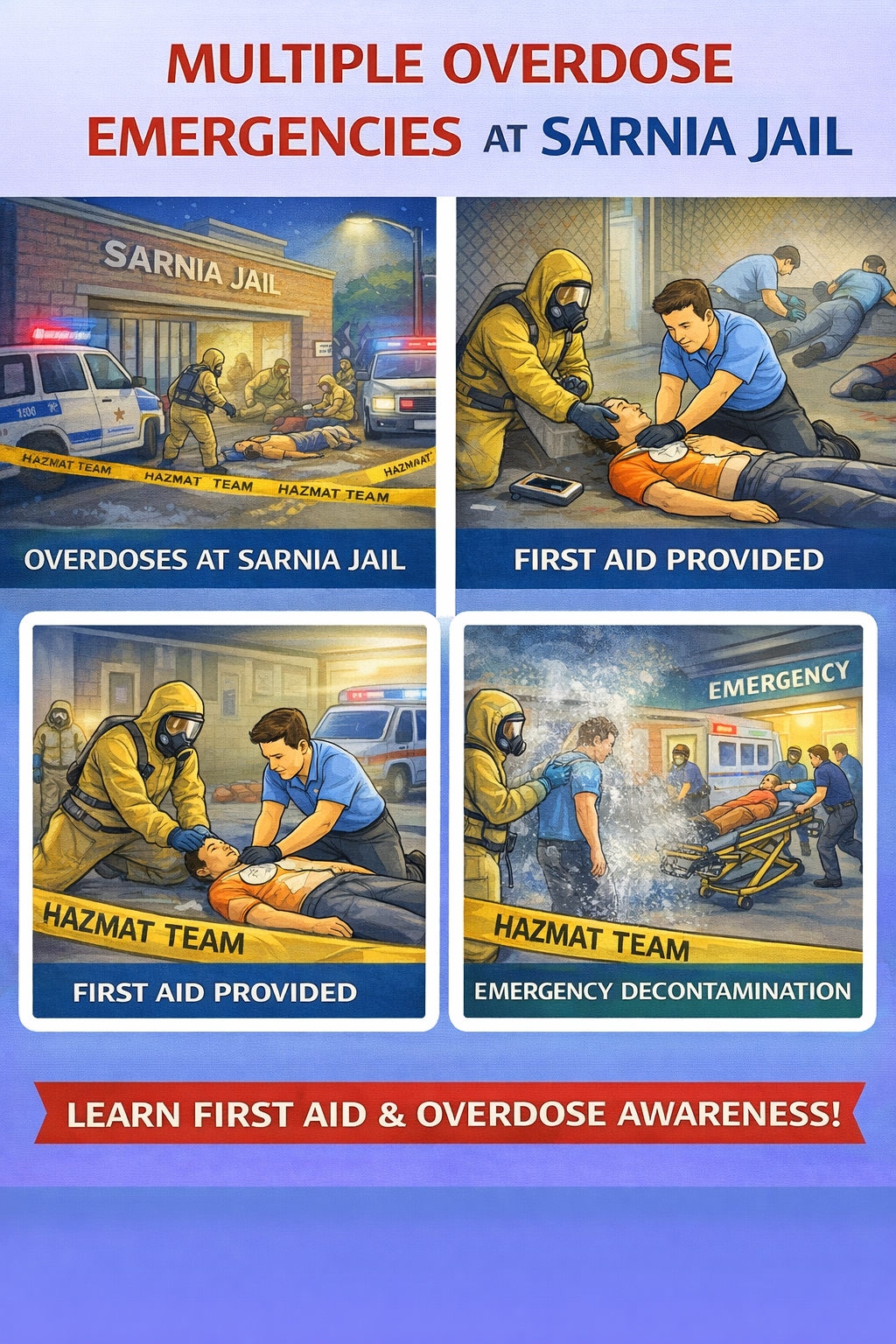
Emergency responders were called to the Sarnia Jail after several individuals showed signs of possible opioid exposure.
According to reports from Sarnia Fire Rescue Services, responders arrived at the facility in the late afternoon and discovered several people requiring medical attention.
When firefighters arrived, jail staff were already providing first aid and CPR to those affected.
Emergency crews assessed the situation and performed decontamination procedures before transporting several individuals to hospital for further care.
In total, three correctional officers and three inmates were taken to hospital as a precaution after possible exposure to an opioid substance. Reports later indicated that those affected were treated and discharged.
Because certain opioid substances can pose risks through accidental exposure, a hazardous materials (hazmat) team was also called to assist in cleaning and securing the area.
Local officials noted that the incident reflects broader concerns related to opioid misuse across many communities in Canada.
Representatives from correctional staff organizations emphasized the importance of providing staff with appropriate training, protective equipment, and resources to safely respond to medical emergencies.
Signs of an Opioid Overdose
Opioid overdoses can present several warning signs that require immediate attention.
Possible symptoms include:
-
Slow or irregular breathing
-
Unresponsiveness
-
Pale or bluish skin or lips
-
Pinpoint pupils
-
Gurgling or choking sounds
-
Loss of consciousness
Emergency services should be contacted immediately if these symptoms appear.
Possible Risks of Opioid Exposure
Certain powerful opioids can present risks not only to the person experiencing an overdose but also to responders if safety precautions are not followed.
Possible exposure risks may include:
-
Accidental contact with contaminated materials
-
Inhalation of airborne particles in rare circumstances
-
Secondary exposure during rescue efforts
Because of these risks, responders may use protective equipment and decontamination procedures in some situations.
First Aid Response and Immediate Management
When someone shows signs of a possible opioid overdose, trained responders may take several steps while waiting for paramedics.
General response actions may include:
-
Call emergency services immediately.
-
Check responsiveness and breathing.
-
Provide CPR if the person is unresponsive and not breathing normally.
-
Administer naloxone if trained and if it is available.
-
Continue monitoring the person until emergency responders arrive.
Naloxone kits are increasingly available in many Canadian communities as part of overdose response programs.
Prevention and Workplace Safety Considerations
Organizations can reduce risks through preparation, training, and safety planning.
Helpful measures may include:
-
Providing overdose awareness training for staff
-
Ensuring access to naloxone kits where appropriate
-
Establishing clear emergency response procedures
-
Providing protective equipment for responders
-
Supporting staff education about exposure risks
Prepared workplaces and trained responders help improve safety during medical emergencies.
Frequently Asked Questions
What is an opioid overdose?
An opioid overdose occurs when opioids slow or stop breathing, reducing oxygen flow to the body and brain.
What is naloxone?
Naloxone is a medication that can temporarily reverse the effects of opioid overdose by blocking opioid receptors in the body.
Why are naloxone kits distributed in communities?
Naloxone kits allow trained individuals to respond quickly during overdose emergencies while waiting for paramedics.
Can emergency responders be exposed to opioid substances?
In certain situations, responders may encounter contaminated materials. Protective equipment and safety procedures help reduce risks.
Why is overdose awareness training important in workplaces?
Training helps staff recognize symptoms of overdose and respond safely during emergencies.
Educational Note
This article is intended for general first aid awareness and public education. Learning CPR, first aid, and overdose response skills can help individuals respond more effectively during medical emergencies while waiting for professional medical assistance.
About The Author

Mark Kascha
First Aid Instructor Trainer with 30+ years of experience in CPR, emergency response, and safety training across Canada.
👉 [View full credentials]🔗 View LinkedIn Profile
Last reviewed: March 2026