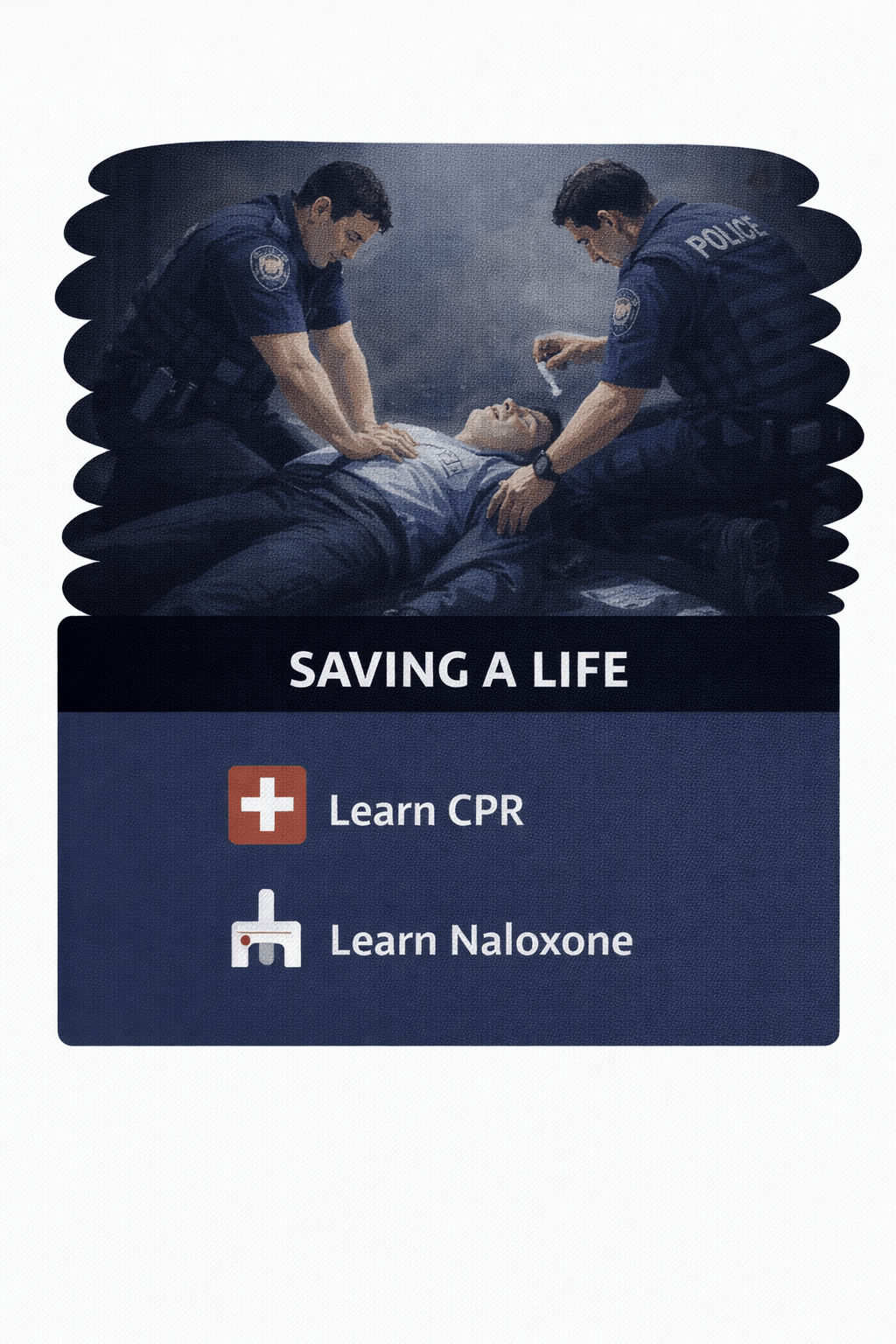
 In medical emergencies, quick action can help support breathing and circulation until advanced care arrives. Two important emergency responses include cardiopulmonary resuscitation (CPR) and the use of naloxone, a medication used to reverse opioid overdoses.
Across Surrey, Vancouver, Burnaby, and the Lower Mainland of British Columbia, emergency responders—including police officers—may be equipped with both CPR training and naloxone kits. These tools are used to help individuals experiencing cardiac arrest or suspected overdose.
First Aid and Overdose Response in British Columbia
British Columbia has focused on increasing awareness around emergency response, particularly in situations involving overdose. Police officers, firefighters, and paramedics are often trained to:
-
Recognize signs of overdose or cardiac arrest
-
Perform CPR when needed
-
Administer naloxone in suspected opioid emergencies
Community members and workplaces are also encouraged to learn these skills as part of first aid and safety training programs.
Scenario: Emergency Response and Policy Update
In British Columbia, a policy update clarified how incidents involving life-saving efforts are reviewed.
The Independent Investigations Office (IIO), which examines serious incidents involving police, stated that officers who attempt to save lives using CPR or naloxone will not be subject to investigation solely because a person later dies.
This update followed incidents where police officers responded to emergencies, including a case in Surrey where an individual experiencing a suspected overdose was given naloxone by an officer but later died.
Officials explained that previous cases involving CPR or naloxone had already been reviewed, and there was no evidence of wrongdoing by officers who were attempting to provide emergency care.
The clarification aims to ensure that emergency responders can continue to provide life-saving assistance without hesitation, particularly in urgent situations where every second counts.
Recognizing Signs of an Overdose or Medical Emergency
Emergency situations involving overdose or cardiac arrest may include signs such as:
-
Unresponsiveness or inability to wake the person
-
Slow, irregular, or no breathing
-
Blue or pale lips and skin
-
Pinpoint pupils (in opioid-related cases)
-
Gasping or choking sounds
These signs indicate a medical emergency requiring immediate assistance.
How CPR Helps During Cardiac Arrest
When the heart stops beating effectively, blood circulation stops. CPR helps by:
-
Providing chest compressions to circulate blood
-
Supporting oxygen delivery to the brain and body
-
Maintaining circulation until advanced care arrives
-
Improving the chances of survival during cardiac arrest
How Naloxone Supports Overdose Response
Naloxone works by temporarily reversing the effects of opioid drugs on the body. In emergency situations, it can:
-
Help restore breathing
-
Reverse the effects of opioid overdose
-
Provide time for emergency responders to arrive
Naloxone is commonly carried by first responders and is increasingly available in communities across British Columbia.
First Aid Response During Overdose or Cardiac Emergencies
Individuals trained in first aid may assist during emergencies by:
-
Calling emergency services immediately
-
Checking for responsiveness and breathing
-
Beginning CPR if the person is unresponsive and not breathing normally
-
Using naloxone if trained and available in suspected overdose situations
-
Staying with the person until emergency responders arrive
Emergency dispatchers may also provide guidance during the response.
Community Preparedness and Safety
Prepared communities help improve outcomes during emergencies. Important measures include:
-
Encouraging CPR and first aid training
-
Increasing awareness of overdose response
-
Supporting access to naloxone kits
-
Promoting workplace and community safety programs
Across Surrey and the Lower Mainland, education and preparedness continue to play a key role in emergency response.
Frequently Asked Questions
What is the difference between CPR and naloxone?
CPR is a physical technique used to maintain circulation when the heart stops, while naloxone is a medication used to reverse opioid overdoses.
When is CPR used?
CPR is used when a person is unresponsive and not breathing normally, often during cardiac arrest.
When is naloxone used?
Naloxone is used when an opioid overdose is suspected and the person is experiencing slowed or stopped breathing.
Can first responders use both CPR and naloxone?
Yes. In some emergencies, responders may use both CPR and naloxone depending on the situation.
Should community members learn about these skills?
Many safety organizations encourage learning CPR and understanding overdose response to help during emergencies.
Educational Note
This article is intended for general public education about first aid awareness and emergency response. Learning recognized first aid skills, including CPR awareness, can help individuals feel more prepared during unexpected emergencies.
About The Author

Mark Kascha
First Aid Instructor Trainer with 30+ years of experience in CPR, emergency response, and safety training across Canada.
Last reviewed: March 2026
 Support local, Canadian-owned businesses, with no connections to American corporations or partnerships.