Understanding First Aid for Severe Bleeding
 Severe bleeding is a medical emergency that requires immediate attention. When a person loses a significant amount of blood, their body may quickly go into shock. Basic first aid techniques—such as applying firm pressure to the wound and calling emergency services—can help control bleeding until paramedics arrive.
Across British Columbia and the Lower Mainland—including Vancouver, Burnaby, Richmond, and Abbotsford—first aid training is widely encouraged in workplaces and public environments. Because injuries can happen unexpectedly in stores, workplaces, or public spaces, people with basic first aid knowledge can play an important role in assisting during emergencies.
First Aid Awareness in Communities and Workplaces
Many businesses and workplaces across Vancouver and throughout British Columbia include first aid training as part of their safety programs. Employees often learn how to recognize emergencies and respond to injuries such as severe bleeding, fractures, or medical distress.
Quick assistance from bystanders may help stabilize an injured person until professional medical responders arrive.
A Quick Response at a Gas Station Convenience Store
An incident at a Husky gas station located at 6125 101st Avenue in the Terrace Heights neighbourhood demonstrated how bystander assistance can help during a serious emergency.
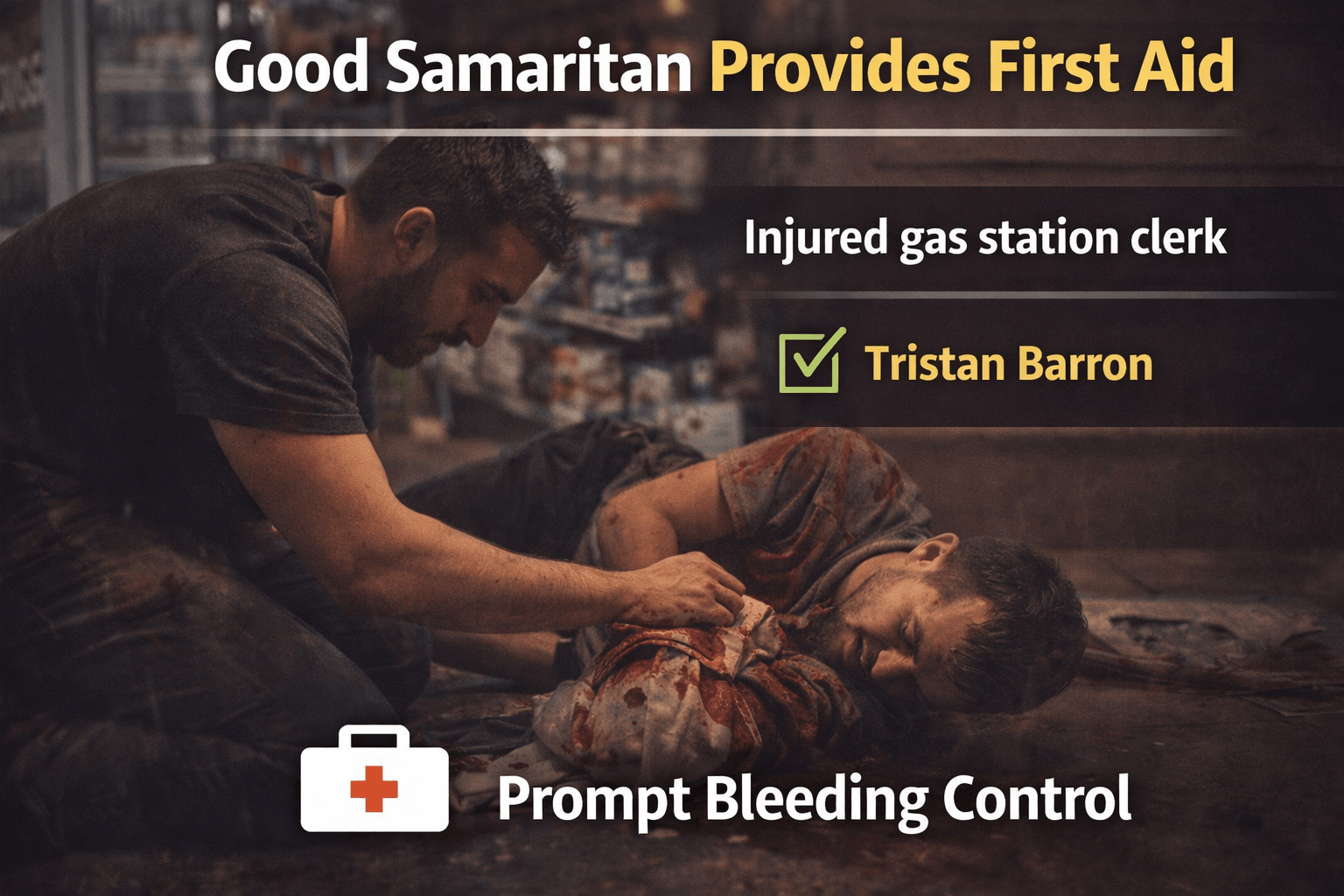
Thirty-year-old Tristan Barron had stopped at the gas station to refuel his vehicle when an elderly man approached him with blood on his hands. The man urgently asked Barron to call emergency services, explaining that the store clerk had been stabbed.
When Barron entered the convenience store, he found the clerk injured and lying behind the counter.
Immediate First Aid Assistance
Barron later described seeing blood throughout the area and hearing the injured clerk moaning in pain. The clerk had multiple wounds, including a deep injury under his arm and a cut above his eye.
Although Barron’s background was as a former personal trainer with some CPR training, he focused on providing the most important first aid step for severe bleeding: applying direct pressure to the wound.
He used clothing from the injured man to help apply pressure while speaking calmly to reassure him until paramedics arrived.
Emergency Responders Continue Care
Emergency services and police soon arrived at the scene. According to police reports, the clerk—believed to be in his early twenties—had sustained several injuries to the right side of his body, including wounds to his arm, leg, and head.
Paramedics transported him to a healthcare facility where he was treated for serious injuries and later reported to be in stable condition.
Authorities later located and arrested a suspect connected to the incident.
Why Immediate Bleeding Control Matters
In severe bleeding emergencies, controlling blood loss is one of the most important early first aid actions. Applying firm pressure to the wound can help slow bleeding while emergency responders travel to the scene.
First aid training programs often emphasize several key steps:
-
Calling emergency services immediately
-
Applying firm pressure to the bleeding area
-
Using cloth or bandages to help control bleeding
-
Remaining with the injured person until responders arrive
These actions help support the injured person during the critical early moments of an emergency.
Preparedness in Public Spaces and Workplaces
Although violent incidents are rare, injuries involving heavy bleeding can also occur during accidents at work, recreation activities, or traffic incidents.
Preparedness strategies may include:
-
Keeping first aid kits accessible in workplaces and public spaces
-
Training employees in emergency response procedures
-
Promoting awareness of workplace safety protocols
Across Vancouver and the Lower Mainland, many workplaces provide first aid training so employees and community members are prepared to assist when emergencies occur.
Frequently Asked Questions
What should someone do if they see severe bleeding?
First aid training typically emphasizes calling emergency services immediately and applying firm pressure to the wound to help slow bleeding until medical help arrives.
Why is controlling bleeding important in first aid?
Significant blood loss can quickly lead to serious medical complications. Early bleeding control helps stabilize the injured person until professional treatment is available.
Do workplaces in British Columbia provide first aid training?
Many workplaces follow occupational health and safety guidelines that include training designated employees in first aid and emergency response.
Can bystanders safely assist during emergencies?
Yes. Bystanders can often help by calling emergency services, providing reassurance to the injured person, and offering first aid within the limits of their training.
Where can people learn first aid skills in Canada?
First aid and CPR courses are offered by many community organizations and training providers across Canada.
Educational Note
This article is intended for general first aid awareness and public education. Participating in certified first aid and CPR training programs helps individuals learn how to recognize emergencies and respond safely.
About The Author

Mark Kascha
First Aid Instructor Trainer with 30+ years of experience in CPR, emergency response, and safety training across Canada.
Last reviewed: March 2026
 Support local, Canadian-owned businesses, with no connections to American corporations or partnerships.