
Nurse Performs CPR on Cyclist Found Unresponsive Near Calgary
Understanding Sudden Cardiac Arrest During Outdoor Activity
 Outdoor activities such as cycling, hiking, and running are popular across Canada. While these activities support overall health, medical emergencies can occasionally occur without warning.
Sudden cardiac arrest happens when the heart stops pumping effectively due to a disruption in its electrical system. When this occurs, a person may collapse and stop breathing normally.
Cardiopulmonary resuscitation (CPR) helps maintain blood flow to the brain and vital organs until emergency medical services arrive. Across Canada—including Vancouver and communities throughout British Columbia—CPR training is widely encouraged in workplaces and community programs to prepare people for unexpected emergencies.
First Aid and Workplace Relevance in Canada
First aid and CPR training are common in many Canadian workplaces, especially in industries involving outdoor work, recreation, transportation, and public safety.
Having trained individuals nearby can help ensure someone is prepared to respond if a medical emergency occurs. Quick action from bystanders or trained professionals can provide critical support before paramedics arrive.
Prepared communities and workplaces play an important role in early emergency response.
A Realistic Scenario Near Calgary
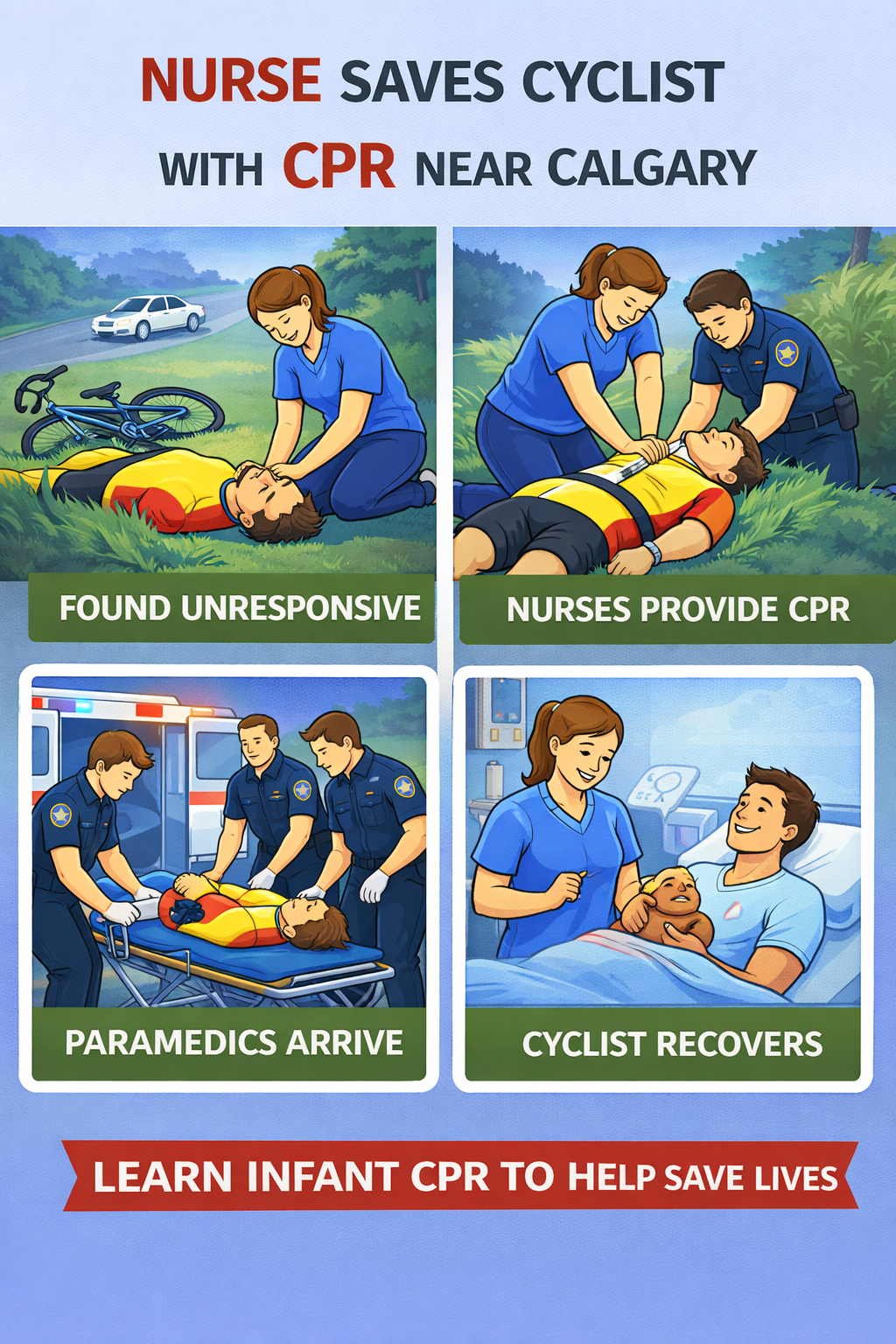
During a drive home from a hike outside Calgary, a nurse named Larissa Arthur noticed something unusual along Springbank Road.
She saw a cyclist lying motionless in a ditch beside the road. A bicycle was nearby, and the man was wearing bright cycling clothing.
Concerned that the cyclist may have been injured or struck by a vehicle, Arthur immediately stopped her car and ran over to check on him.
After assessing the situation, she found that the man had no detectable pulse and was not breathing.
Arthur immediately began CPR while another nurse and a nearby first responder arrived to assist. Together, they continued providing care while waiting for emergency medical services.
Approximately 15 minutes later, paramedics arrived and continued resuscitation efforts. The patient received defibrillation shocks as part of advanced life-support treatment before being transported to a healthcare facility.
At the time, Arthur believed the outcome might not be positive because the cyclist showed no signs of life when emergency crews left the scene.
Later, however, she received an unexpected message through social media from the cyclist she had helped.
The man, Mike Estepa, explained that he had little memory of what happened. The last thing he remembered was texting his family that he would be home soon after completing a 60-kilometre bike ride. His next memory was waking up two days later in the hospital.
Arthur later reflected that the successful outcome was the result of teamwork and quick response from several trained individuals.
Signs of Sudden Cardiac Arrest
Sudden cardiac arrest can occur without warning, but several signs may indicate that a person needs immediate medical assistance.
Possible signs include:
-
Sudden collapse
-
Unresponsiveness
-
No normal breathing
-
Gasping or irregular breathing
-
Weak or absent pulse
-
Pale or bluish skin tone
When these signs appear, emergency services should be contacted immediately.
Possible Causes of Collapse During Exercise
A person may suddenly collapse during physical activity for several reasons.
Possible causes may include:
-
Heart rhythm disturbances (arrhythmias)
-
Undiagnosed heart conditions
-
Dehydration or heat-related illness
-
Severe exhaustion
-
Underlying cardiovascular disease
Emergency responders focus on restoring breathing and circulation while identifying the cause of the collapse.
First Aid Response and Immediate Management
When someone collapses and is unresponsive, early action from bystanders may help support vital functions until emergency responders arrive.
General response steps may include:
-
Call emergency services immediately.
-
Check responsiveness and breathing.
-
Begin CPR if the person is unresponsive and not breathing normally.
-
Use an AED if one becomes available.
-
Continue CPR until paramedics arrive.
Automated external defibrillators (AEDs) are commonly available in public areas and workplaces and can help restore a normal heart rhythm in some cases.
Prevention and Outdoor Safety Considerations
While not all medical emergencies can be prevented, individuals participating in outdoor activities can take steps to reduce risks.
Helpful safety practices may include:
-
Staying hydrated during long rides or hikes
-
Monitoring physical exertion levels
-
Informing others about travel routes during outdoor activities
-
Carrying identification and emergency contact information
-
Learning first aid and CPR skills
Prepared individuals and trained bystanders can help improve emergency response in outdoor settings.
Frequently Asked Questions
Why is CPR important during cardiac arrest?
CPR helps circulate oxygen-rich blood to the brain and organs when the heart is not pumping effectively.
Can cardiac arrest occur during exercise?
Although uncommon, sudden cardiac arrest can occur during physical activity, particularly if an underlying heart condition is present.
Why are AEDs used during cardiac emergencies?
Automated external defibrillators analyze heart rhythms and can deliver a shock that may restore a normal rhythm during certain cardiac arrests.
Can bystanders safely help someone who collapses?
Yes. Bystanders can call emergency services, assess breathing, and begin CPR if the person is unresponsive and not breathing normally.
Why is CPR training encouraged in workplaces?
CPR training helps employees recognize emergencies and provide early assistance until professional medical responders arrive.
Educational Note
This article is intended for general first aid awareness and public education. Learning CPR and basic emergency response skills can help individuals act quickly during medical emergencies while waiting for professional medical assistance.
About The Author

Mark Kascha
First Aid Instructor Trainer with 30+ years of experience in CPR, emergency response, and safety training across Canada.
👉 [View full credentials]🔗 View LinkedIn Profile
Last reviewed: March 2026