
Understanding Diving-Related Injuries
Diving into shallow or unfamiliar water can result in serious injuries, particularly to the head, neck, and spine. A forceful impact can cause vertebral fractures or spinal cord compression, which may affect movement, breathing, or consciousness.
In water-related emergencies, quick recognition, safe rescue, and first aid response are essential.
First Aid & Workplace Relevance in Vancouver and the Lower Mainland
Across Vancouver, Abbotsford, Surrey, and recreational areas throughout British Columbia, lakes, rivers, and cottages are popular during warmer months.
Workplaces and communities often include:
-
Outdoor recreation settings
-
Camps and tourism environments
-
Construction or remote worksites near water
This highlights the importance of first aid, CPR training, and water safety awareness for both workers and the public.
Real Incident Overview
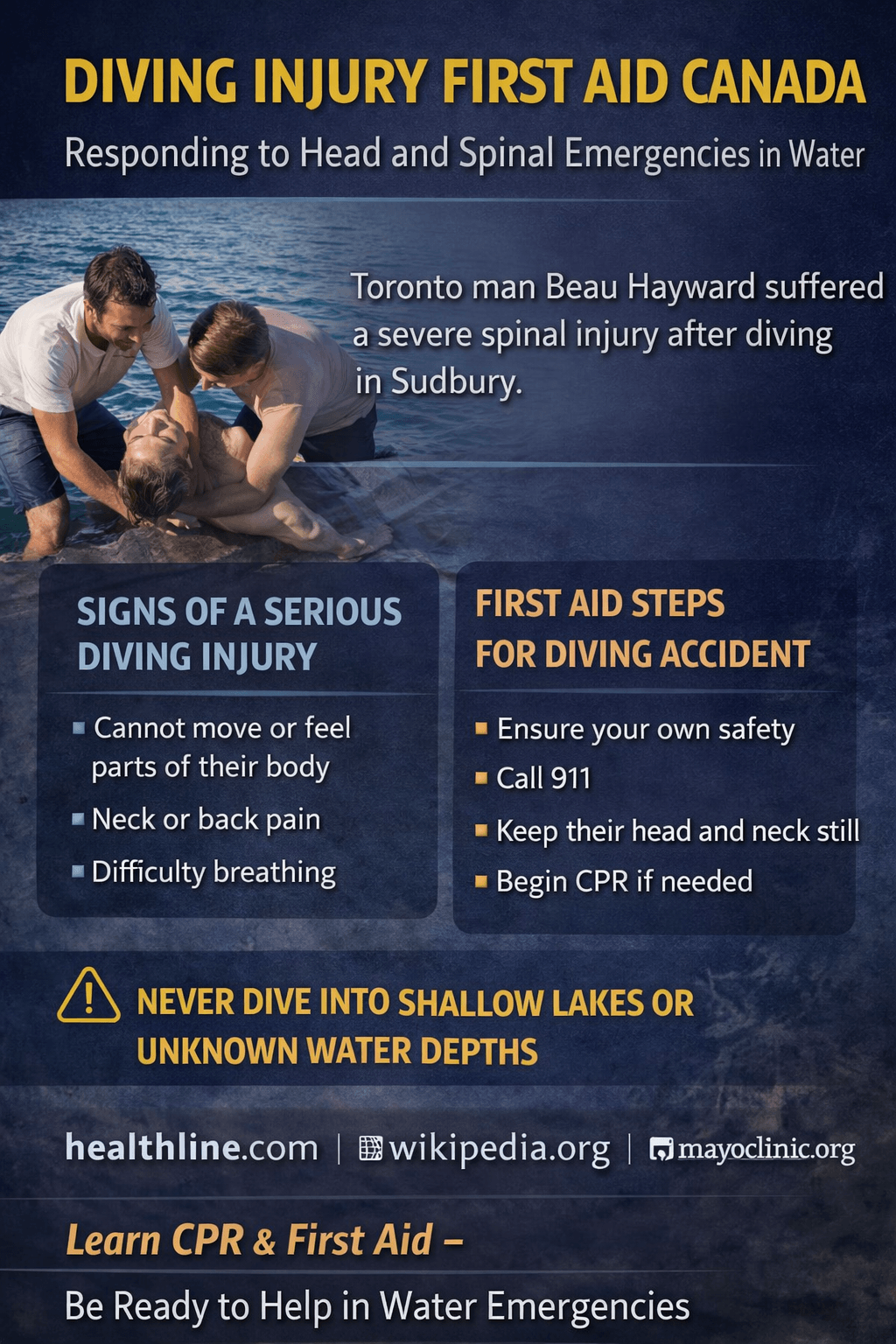 Beau Hayward, a 28-year-old from Toronto, suffered a severe diving injury while staying at a friend’s cottage in Sudbury.
According to his sister, Bianca Wilson, Hayward dove into a lake and struck his head on the sandy bottom. The impact caused significant trauma to his neck.
Medical assessments later revealed that his C5 vertebra had shattered into multiple pieces, while adjacent vertebrae (C4 and C6) were also fractured. His spinal cord was compressed but not severed.
After the incident, two friends found Hayward floating in the water. Recognizing the seriousness of the situation, they quickly brought him to safety.
One of the friends had recently completed CPR training at work and applied those skills. CPR was performed to help restore breathing and assist with clearing water from his airway.
Hayward was transported to a healthcare facility in Sudbury, where he received emergency care and remained in intensive care. He was later transferred to a hospital in Toronto for further treatment, including surgery to remove bone fragments from his spine.
The incident highlights both the risks associated with diving and the importance of immediate first aid response.
Signs of Serious Diving Injury
A person with a potential spinal or head injury may:
-
Be unable to move or feel parts of their body
-
Experience neck or back pain
-
Have difficulty breathing
-
Be unconscious or confused
-
Float face down or remain motionless in water
These signs require urgent attention.
First Aid Response for Diving Accidents
If someone is injured while diving:
-
Ensure your own safety before entering the water
-
Support the person’s head and neck to keep the spine aligned
-
Remove them from the water carefully if safe to do so
-
Call 911 immediately
-
Check breathing and responsiveness
-
Begin CPR if the person is not breathing normally
-
Keep the person still and monitor until help arrives
Minimizing movement is important in suspected spinal injuries.
Prevention and Water Safety Considerations
To reduce the risk of diving injuries:
-
Never dive into unknown or shallow water
-
Check depth and conditions before entering
-
Enter feet-first when unsure
-
Avoid alcohol or distractions around water
-
Ensure supervision and safety awareness
Prevention is key in water-related activities.
Frequently Asked Questions
Why are diving injuries often serious?
They can involve the head and spine, which control movement and breathing.
What should I do if someone is floating in water after a dive?
Ensure safety, support their head and neck, and call for help.
Can CPR help after a water incident?
Yes. It can support breathing and circulation if needed.
Why is spinal alignment important?
It helps prevent further injury to the spinal cord.
How can diving accidents be prevented?
By checking water depth and avoiding risky dives.
Educational Note
This article is intended for general first aid awareness and workplace safety education in Canada. First aid and CPR training can help individuals respond effectively in water-related emergencies.
About The Author

Mark Kascha
First Aid Instructor Trainer with 30+ years of experience in CPR, emergency response, and safety training across Canada.
👉 [View full credentials]🔗 View LinkedIn Profile
Last reviewed: March 2026
 Support local, Canadian-owned businesses, with no connections to American corporations or partnerships.