
Lake Drowning Emergencies: Understanding Water Safety and CPR Awareness
Understanding Drowning Incidents in Lakes
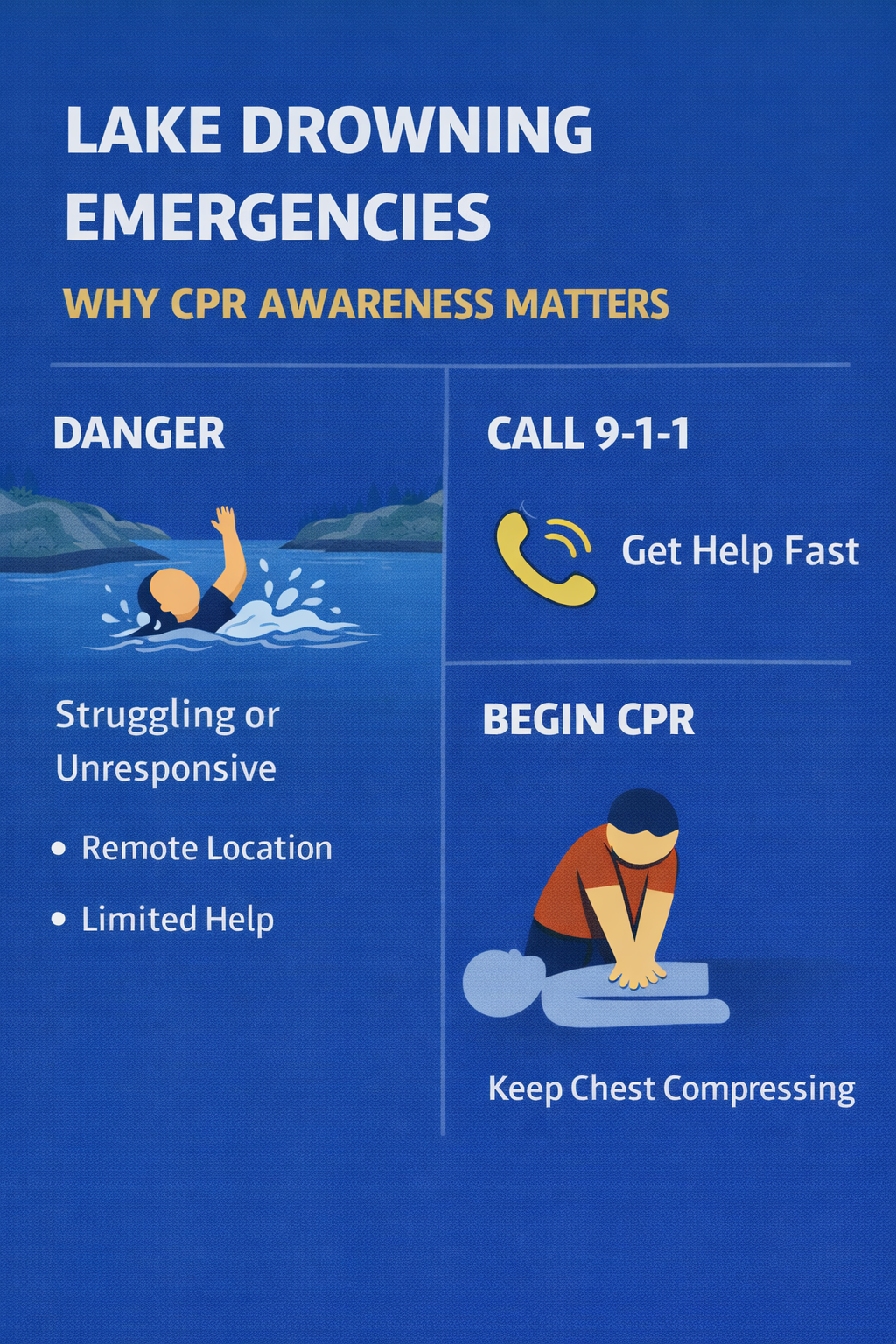 Drowning occurs when a person cannot breathe due to submersion or immersion in water. When oxygen is unable to reach the lungs and brain, the body can quickly begin to experience serious distress. In some cases, cardiopulmonary resuscitation (CPR) may be attempted once a person is removed from the water to help maintain circulation until emergency responders arrive.
Across Canada, including British Columbia and the Vancouver region, lakes and rivers are common locations for recreation such as boating, fishing, and swimming. Because many outdoor activities take place near water, first aid and CPR awareness are often emphasized in workplace safety programs and public education initiatives.
Understanding the risks associated with open water can help improve safety and emergency preparedness.
A Real-World Scenario
A drowning incident under investigation occurred in St. Mary’s, Nova Scotia, near an isolated lake along West Side Indian Harbour Lake Road.
According to police reports, two men discovered a 57-year-old woman in the water and quickly brought her to the shore. Recognizing that she was unresponsive, they began performing CPR while calling emergency services.
Paramedics transported the woman by ambulance to St. Mary’s Memorial Hospital in Sherbrooke, where she was later pronounced deceased.
Authorities reported that the circumstances surrounding the incident were still under investigation.
Situations like this illustrate how bystanders are often the first to respond during water emergencies, particularly in remote or rural locations where emergency responders may take longer to arrive.
Signs of a Drowning Emergency
Drowning incidents may not always be dramatic or obvious. A person in distress may be unable to call out for help.
Possible warning signs include:
-
Sudden disappearance beneath the water
-
Struggling to stay above the surface
-
Weak or uncoordinated swimming movements
-
Floating face-down or appearing unresponsive
-
Lack of movement after being removed from the water
If a person is removed from the water and is not breathing normally, CPR may be attempted until emergency responders arrive.
Causes and Risk Factors Around Lakes
Several factors can contribute to drowning incidents in lakes and other natural bodies of water.
Common risk factors include:
-
Slippery or uneven shorelines
-
Sudden changes in water depth
-
Cold water temperatures
-
Limited visibility in murky water
-
Swimming alone or without supervision
In rural areas or isolated lakes, access to immediate assistance may also be limited.
First Aid Awareness in Water Emergencies
First aid training teaches several general steps that may help during drowning emergencies.
Typical response steps include:
-
Call emergency services (9-1-1 in Canada).
-
Ensure the area is safe before attempting a rescue.
-
If the person is removed from the water, check responsiveness and breathing.
-
If breathing is absent or abnormal, begin CPR if it is safe to do so.
-
Continue CPR until emergency responders arrive.
Early CPR may help support circulation while waiting for advanced medical care.
Prevention and Water Safety Awareness
Many drowning incidents can be reduced through basic water safety practices.
Helpful precautions include:
-
Avoid swimming alone in isolated areas
-
Wear a properly fitted lifejacket when boating
-
Stay aware of water depth and shoreline conditions
-
Supervise children and inexperienced swimmers
-
Learn CPR and basic first aid skills
Across British Columbia and Vancouver Island, water safety education is commonly promoted because of the region’s many lakes, rivers, and coastal areas.
FAQ
Why can CPR be used after someone is removed from water?
If a person is not breathing normally after being submerged, CPR may help maintain blood circulation and oxygen delivery until emergency responders arrive.
What should someone do if they see a person struggling in a lake?
Emergency services should be contacted immediately. Rescue attempts should only be made if the situation is safe for the rescuer.
Why can drowning occur even in calm-looking water?
Factors such as cold water, fatigue, sudden depth changes, or medical conditions can make it difficult for someone to stay afloat.
Are isolated lakes more dangerous during emergencies?
Remote locations may increase response time for emergency services, making early recognition and bystander action more important.
Why is CPR training encouraged for the public?
Training helps people recognize emergencies and understand safe response steps while waiting for professional responders.
Educational Note
This article is intended for general first aid awareness and water safety education. Learning CPR and first aid through certified training programs can help individuals recognize emergencies and respond safely until emergency services arrive.
About The Author

Mark Kascha
First Aid Instructor Trainer with 30+ years of experience in CPR, emergency response, and safety training across Canada.
👉 [View full credentials]🔗 View LinkedIn Profile
Last reviewed: March 2026