
A medical emergency on a school playground serves as an important reminder that cardiac events can occur in children — even during routine activities like recess.
Across Canada, including Vancouver and throughout British Columbia, CPR and AED (automated external defibrillator) training are key components of community safety. Schools, workplaces, and recreation facilities increasingly recognize the value of accessible defibrillators and trained responders.
What Happened on the Playground
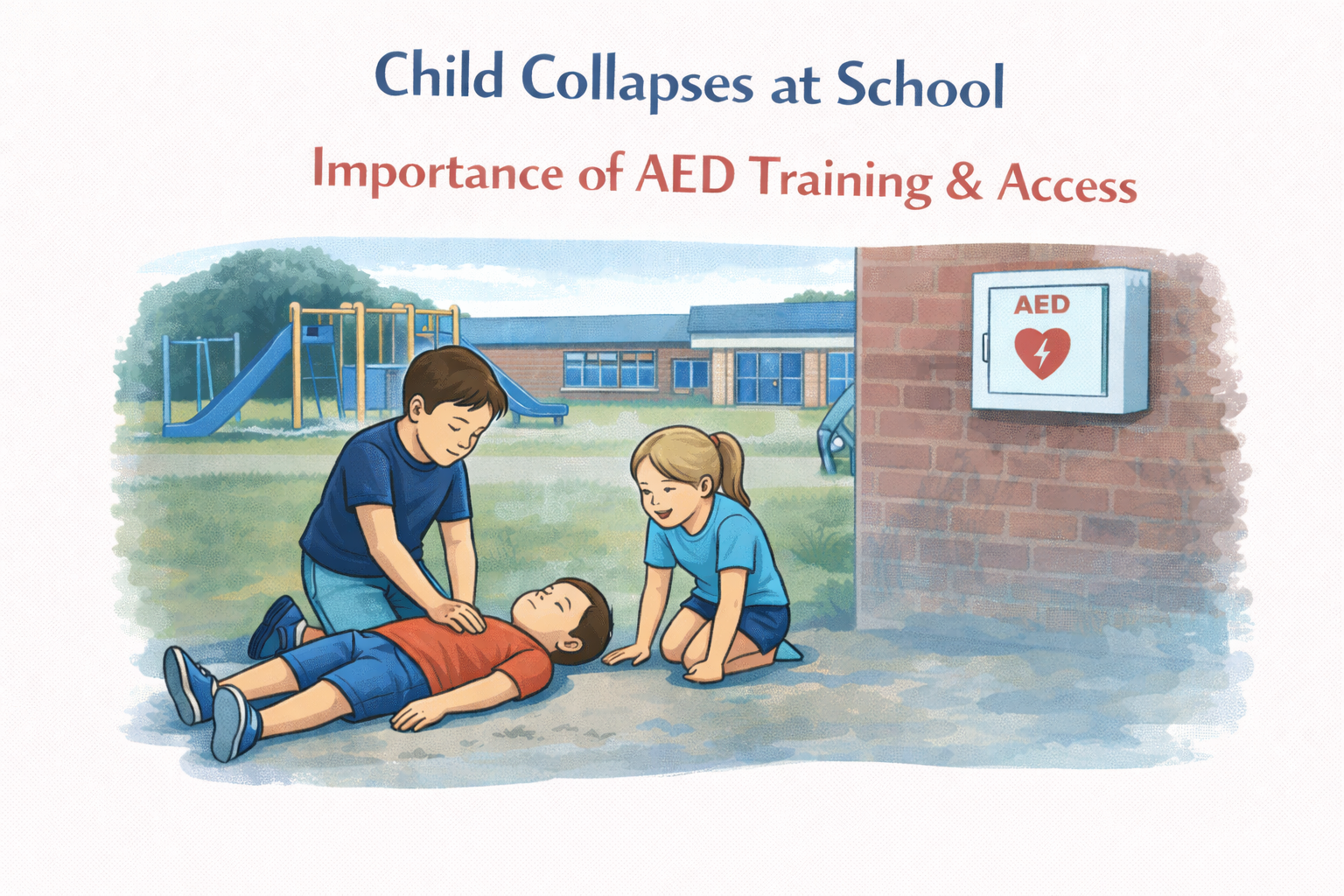 Three years ago, seven-year-old Benjamin Fizzard collapsed while playing tag with friends on his school playground.
Although CPR was not required at that moment, he was rushed to hospital for evaluation. His family already knew he had an underlying heart condition and had previously undergone monitoring with a cardiac loop recorder.
Medical assessment revealed ventricular tachycardia — a serious heart rhythm disturbance. He was later diagnosed with Brugada syndrome, a hereditary condition that affects the heart’s electrical system and can increase the risk of dangerous arrhythmias.
Benjamin was fitted with an implanted cardiac defibrillator (ICD) and pacemaker to help regulate his heart rhythm.
His parents later raised concerns about AED availability in elementary schools.
Understanding Ventricular Tachycardia and Brugada Syndrome
Ventricular tachycardia (VT) is a rapid heart rhythm that originates in the lower chambers of the heart. If sustained, it can reduce blood flow and lead to fainting or cardiac arrest.
Brugada syndrome is a genetic electrical disorder of the heart. Some individuals may have no symptoms until a serious rhythm disturbance occurs.
While these conditions are relatively rare, they highlight the importance of early recognition and emergency preparedness — particularly in schools.
Why AEDs Are Important in Schools
An AED is a portable device that:
-
Analyzes heart rhythm
-
Delivers a shock if a shockable rhythm is detected
-
Provides clear voice instructions
In cases of sudden cardiac arrest, early defibrillation significantly improves survival chances.
Many high schools and public facilities across Canada now have AEDs installed. However, access may vary by region and school board policy.
In British Columbia, many school districts and community centres have integrated AED programs as part of emergency planning.
Recognizing Sudden Cardiac Arrest in Children
Although less common in children than adults, sudden cardiac arrest can occur.
Warning signs may include:
-
Sudden collapse
-
Unresponsiveness
-
No normal breathing
-
Seizure-like activity at onset
Immediate action is critical.
First Aid Response in a School Setting
If a child collapses and is unresponsive:
-
Call 9-1-1 immediately
-
Send someone to retrieve an AED
-
Check breathing
-
Follow AED voice prompts
AEDs are designed to be used safely on children, and many units include pediatric settings or pads.
The Role of CPR and AED Training
Benjamin’s parents, both healthcare professionals, emphasized that AEDs are simple to use and that CPR training builds confidence in emergencies.
CPR courses in Canada typically include:
-
Adult, child, and infant CPR
-
AED operation
-
Recognizing cardiac arrest
-
Responding to choking
Training is practical, structured, and designed for the general public — including teachers, school staff, and parents.
School and Workplace Preparedness in BC
For schools and workplaces across Vancouver and BC, emergency planning may include:
-
Accessible AED placement
-
Staff CPR/AED certification
-
Clear emergency communication procedures
-
Regular equipment maintenance
-
Practice drills
Preparedness helps ensure rapid response during rare but serious medical events.
Frequently Asked Questions
Can children experience cardiac arrest?
Yes, although it is less common than in adults. Certain heart conditions increase risk.
Are AEDs safe for use on children?
Yes. Many AEDs have pediatric pads or settings designed for children.
Does CPR training include AED instruction?
Yes. Most Canadian CPR courses include hands-on AED training.
Should elementary schools have AEDs?
Many communities support AED placement in schools as part of emergency preparedness planning.
Is AED training difficult to learn?
No. AEDs are automated and provide clear voice prompts to guide users step-by-step.
Educational Note
This article is provided for general first aid awareness and school safety education in Canada. Formal CPR and AED training helps individuals respond confidently and appropriately during unexpected cardiac emergencies.
About The Author

Mark Kascha
First Aid Instructor Trainer with 30+ years of experience in CPR, emergency response, and safety training across Canada.
👉 [View full credentials]🔗 View LinkedIn Profile
Last reviewed: March 2026