
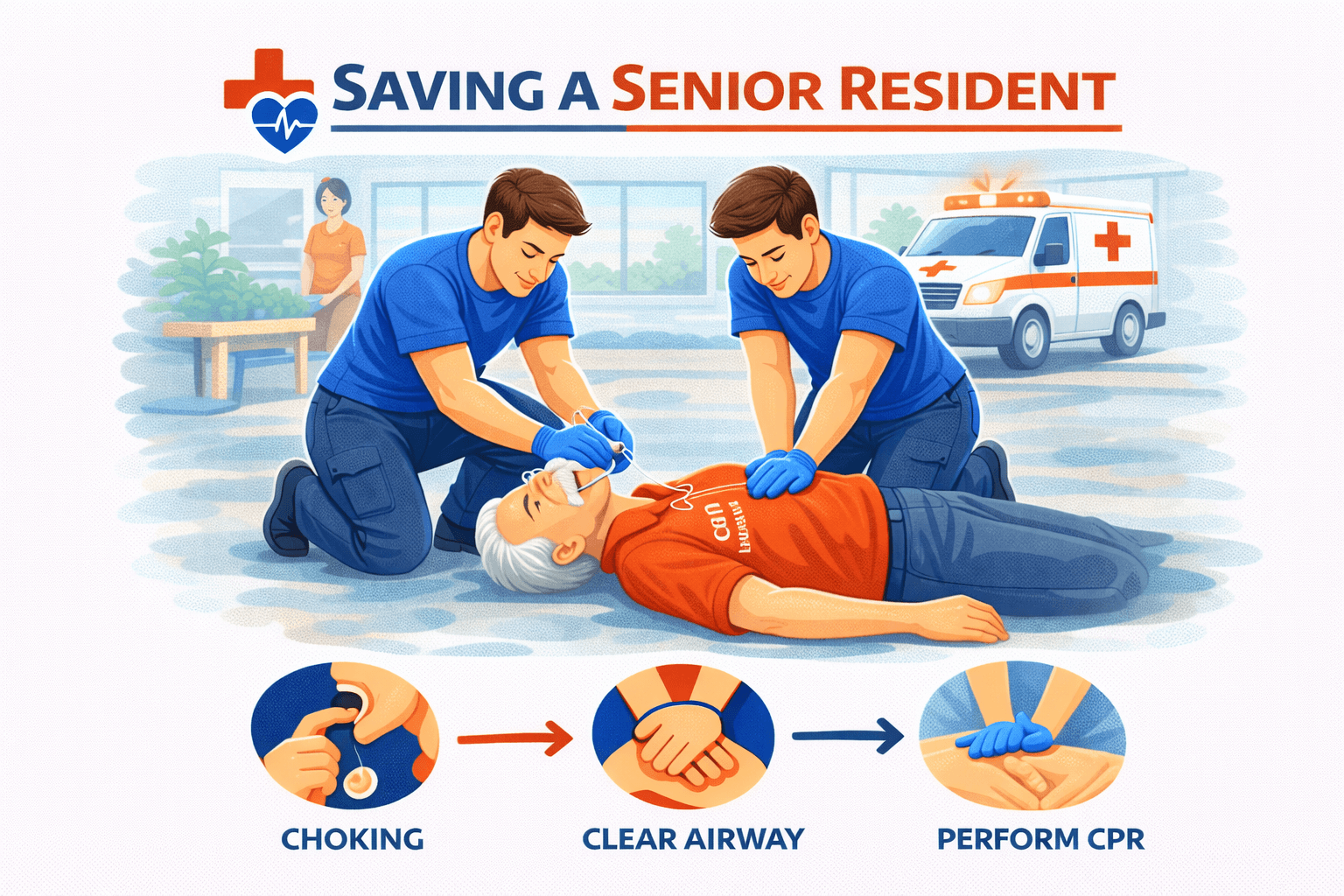
 Choking can quickly become a life-threatening emergency when an object blocks the airway and prevents normal breathing. If oxygen cannot reach the lungs and brain, a person may lose consciousness and appear to be in cardiac distress.
In Canada, including workplaces and care facilities across British Columbia and Vancouver, first aid training commonly includes how to respond to choking, cardiac arrest, and other breathing emergencies. These skills help staff and members of the public recognize warning signs and provide assistance while waiting for emergency medical services.
Learning how to respond quickly can make a significant difference in emergencies involving airway obstruction or sudden loss of consciousness.
Emergency at a Prince Albert Seniors Care Home
Paramedics from Parkland Ambulance responded to a call at a seniors care home in Prince Albert after staff reported a possible cardiac arrest involving a resident.
When emergency crews arrived, care home staff were already performing chest compressions on an unconscious resident.
Paramedics quickly assessed the situation and determined that the resident had collapsed while eating, suggesting a possible airway obstruction.
First Aid Actions at the Scene
Emergency responders took over the resuscitation effort and focused on clearing the resident’s airway.
Once the obstruction was addressed, the resident began breathing on his own again.
The patient was then transported to a healthcare facility for additional evaluation and monitoring. Reports indicated that the resident was expected to recover.
According to Parkland Ambulance spokesperson Lyle Karasiuk, the quick response from staff played an important role in the outcome.
Why Choking Awareness Matters
Choking emergencies can occur in homes, restaurants, long-term care facilities, or workplaces.
Foods that are difficult to chew or swallow can sometimes obstruct the airway, particularly for seniors or individuals with certain medical conditions.
First aid education helps people recognize signs of choking such as:
-
Difficulty breathing
-
Inability to speak or cough effectively
-
Clutching the throat
-
Sudden loss of consciousness in severe cases
Prompt recognition allows bystanders to take action and contact emergency services quickly.
The Importance of First Aid Training
Many workplaces and community organizations in Canada encourage staff and members of the public to learn basic emergency response skills.
Training programs often cover:
-
Recognizing choking emergencies
-
Basic CPR and AED awareness
-
How to respond to breathing emergencies
-
When to call emergency services
These skills help individuals feel more confident responding during medical emergencies.
Frequently Asked Questions
What causes choking?
Choking typically occurs when food or another object becomes lodged in the airway, blocking normal breathing.
Can choking lead to cardiac arrest?
A severe airway obstruction can reduce oxygen to the brain and body. If oxygen levels drop significantly, the person may lose consciousness and require emergency care.
What are common signs someone is choking?
Common signs include difficulty breathing, inability to speak or cough effectively, and clutching the throat.
Why is quick response important during choking emergencies?
Early recognition and assistance can help restore breathing and prevent complications related to lack of oxygen.
Where can people learn choking and CPR response skills in Canada?
First aid and CPR training programs are widely offered through certified training providers, community organizations, and workplace safety programs.
Educational Note
This article is intended for general first aid awareness and public safety education. Learning basic first aid and CPR helps individuals recognize emergencies and respond appropriately while waiting for trained emergency medical services.
About The Author

Mark Kascha
First Aid Instructor Trainer with 30+ years of experience in CPR, emergency response, and safety training across Canada.
👉 [View full credentials]🔗 View LinkedIn Profile
Last reviewed: March 2026