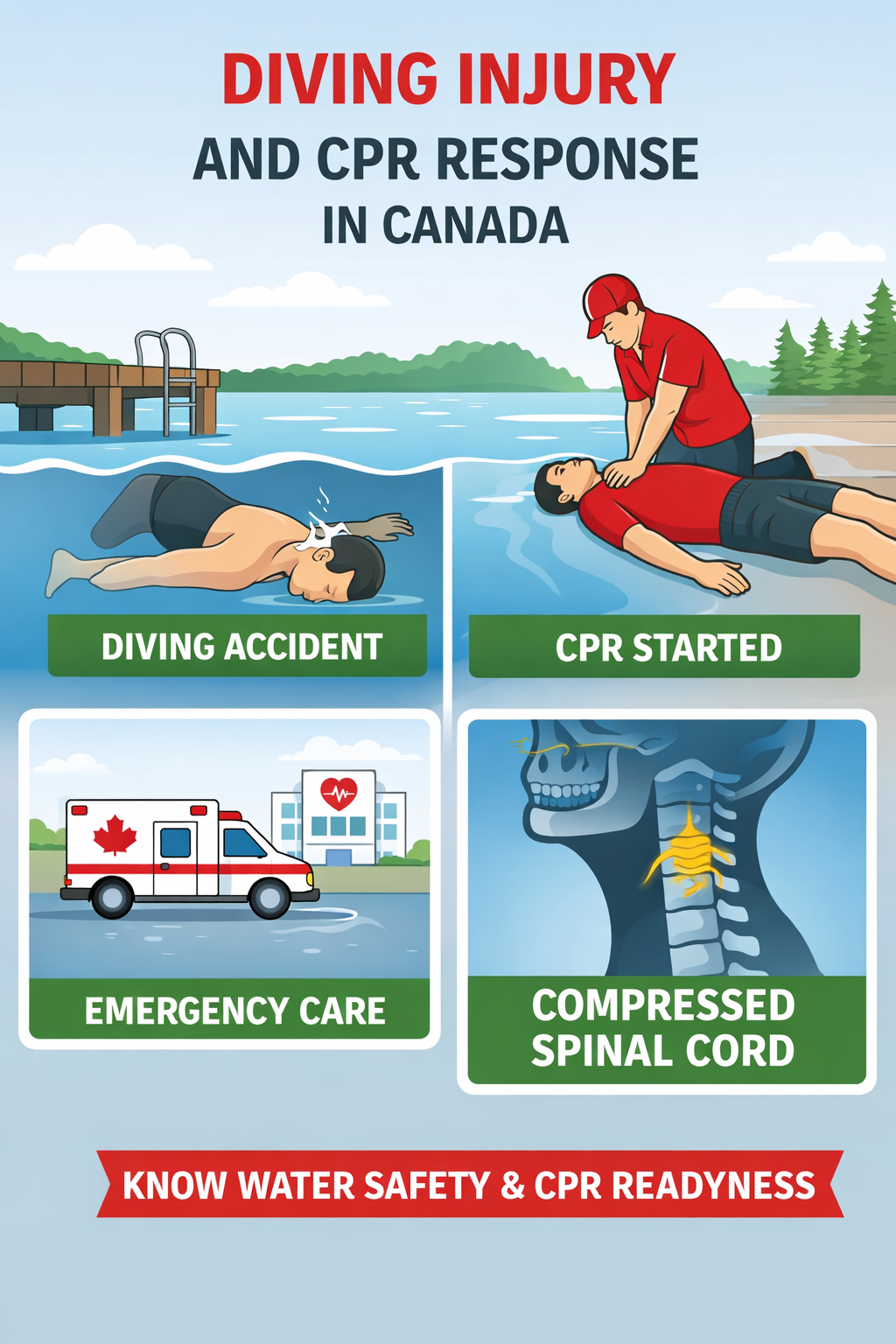
 Diving into shallow or unfamiliar water can sometimes lead to serious head and neck injuries. When a diver strikes the bottom of a lake, river, or pool, the force of impact may place extreme pressure on the cervical spine—the bones in the neck that protect the spinal cord.
Across Canada, including recreational areas around Vancouver and throughout British Columbia, swimming and cottage activities are popular during warmer months. Because lakes and shorelines can vary in depth, first aid awareness and safe water practices are important for both recreation and workplace environments, such as outdoor tourism, camp programs, and waterfront facilities.
Understanding how to respond when someone is injured in the water—including recognizing potential spinal injuries and providing basic life-saving support—can help improve safety outcomes before emergency services arrive.
First Aid and Workplace Relevance in Canada
In Canada, many workplaces and recreational organizations that operate near water—such as camps, tour operators, and outdoor recreation facilities—train staff in CPR and first aid response for aquatic emergencies.
Prompt assistance from bystanders or trained personnel can help support breathing and circulation until paramedics arrive. Situations involving diving injuries also require caution because the neck and spine may be injured.
Preparedness measures, including staff training and emergency planning, can make an important difference in water-related incidents.
A Realistic Scenario from a Canadian Cottage Stay
A 28-year-old man from Toronto was visiting a friend’s cottage near Sudbury when a serious diving accident occurred. According to reports from family members, he dove into the lake and struck his head on the sandy bottom.
The impact caused significant trauma to his neck. The C5 vertebra—one of the bones in the middle of the cervical spine—was fractured into several pieces, and nearby vertebrae were also affected. Although the spinal cord itself was not severed, it became compressed due to the injury.
Friends nearby quickly noticed that something was wrong when they saw him floating in the water. They pulled him from the lake and began assisting him.
One of the friends initiated CPR when it appeared that he was not breathing normally. The quick response helped restore breathing and allowed water in his airway to clear.
Emergency services transported him to a healthcare facility, where he was initially treated in intensive care before being transferred to a hospital in Toronto for further care and recovery.
Incidents like this highlight the importance of rapid assistance, calm bystander response, and access to emergency medical services when injuries occur during recreational activities.
Symptoms That May Occur After a Diving Injury
Head-first impacts in water can cause a range of symptoms depending on the severity of the injury.
Possible signs may include:
-
Neck pain or stiffness
-
Limited ability to move the neck or limbs
-
Weakness or numbness in arms or legs
-
Difficulty breathing
-
Loss of consciousness
-
Confusion or disorientation
-
Inability to move after impact
When these symptoms appear after a dive or fall into water, the possibility of a spinal injury should be considered.
Causes and Mechanisms
Diving injuries most commonly occur when a person enters water head-first in areas that are shallower than expected.
Several factors can contribute to these incidents:
-
Diving into unknown or shallow water
-
Changing water levels in lakes or rivers
-
Hidden sandbars or rocks
-
Poor visibility in natural water environments
-
Misjudging depth when jumping from docks or boats
When the head strikes the bottom, the neck can be forced downward, compressing the cervical vertebrae and potentially injuring the spinal cord.
First Aid Response and Immediate Management
When a diving injury is suspected, responders should focus on maintaining safety and preventing further harm until emergency services arrive.
General first aid considerations may include:
-
Call emergency services immediately.
-
Avoid unnecessary movement of the head or neck if a spinal injury is suspected.
-
Support the person’s airway and breathing while keeping the head and neck as stable as possible.
-
Begin CPR if the person is unresponsive and not breathing normally.
-
Continue monitoring breathing and responsiveness until professional help arrives.
Stabilizing the head and neck while awaiting emergency responders can help reduce the risk of additional spinal movement.
Prevention and Water Safety Considerations
Many diving injuries are preventable through awareness and safe recreational practices.
Water safety recommendations may include:
-
Avoid diving into unknown or shallow water
-
Check water depth before entering head-first
-
Enter lakes and rivers feet first when depth is uncertain
-
Follow posted safety guidelines at swimming areas
-
Ensure supervision and safety planning at recreational sites
-
Encourage first aid and CPR training for staff and community members
Outdoor recreation settings, camps, and waterfront workplaces often benefit from having trained personnel who can respond to water-related emergencies.
Frequently Asked Questions
Why are diving injuries often associated with neck injuries?
When someone dives head-first into shallow water, the head may stop suddenly upon impact while the body continues moving forward. This force can compress the cervical vertebrae in the neck, increasing the risk of spinal injury.
What is a compressed spinal cord?
A compressed spinal cord occurs when surrounding bones, swelling, or injury place pressure on the spinal cord. This pressure can interfere with nerve signals between the brain and the rest of the body.
Why is movement minimized after a suspected spinal injury?
Moving the head or neck unnecessarily may increase pressure on injured vertebrae or the spinal cord. Limiting movement helps reduce the risk of further damage until trained medical professionals arrive.
Why is CPR sometimes needed after a water accident?
If a person stops breathing or loses consciousness after a water incident, CPR may help support breathing and circulation until emergency medical services take over.
How can waterfront workplaces improve safety?
Organizations that operate near water often improve safety by training staff in first aid and CPR, implementing water safety guidelines, supervising swimming areas, and developing emergency response plans.
Educational Note
This article is provided for general first aid awareness and public education. Learning CPR and basic emergency response skills can help individuals respond more confidently to water-related incidents while waiting for professional medical assistance.
About The Author

Mark Kascha
First Aid Instructor Trainer with 30+ years of experience in CPR, emergency response, and safety training across Canada.
Last reviewed: March 2026
 Support local, Canadian-owned businesses, with no connections to American corporations or partnerships.