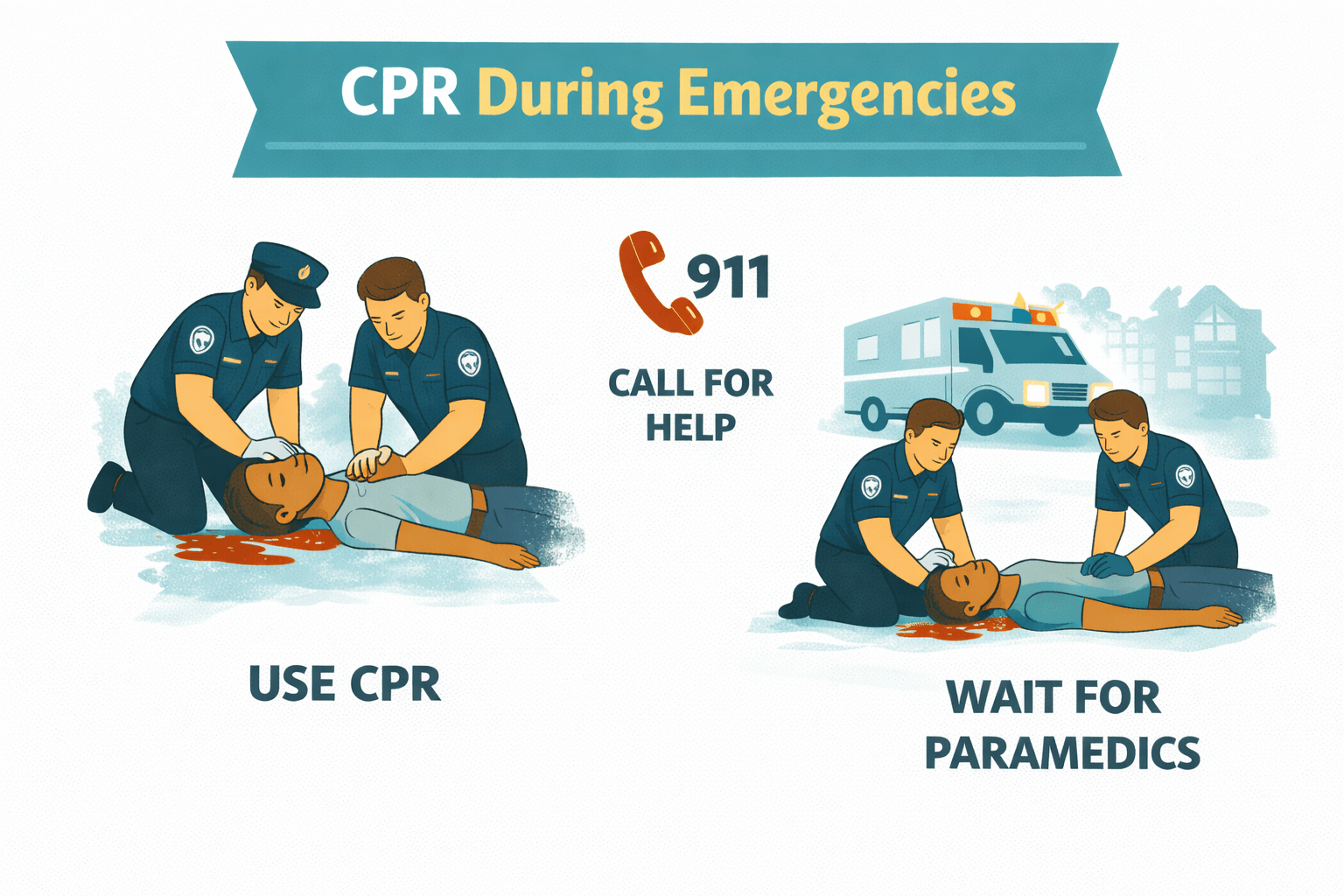
 Cardiopulmonary resuscitation (CPR) is a first aid technique used when someone becomes unresponsive and is not breathing normally. The purpose of CPR is to maintain circulation of oxygen-rich blood to the brain and vital organs until professional medical care arrives.
Across Canada, including Vancouver and throughout British Columbia, CPR training is commonly included in workplace first aid programs and public safety courses. These skills help people respond to sudden medical emergencies in workplaces, homes, and public settings.
In some situations, first aid may be provided not only by bystanders but also by emergency responders such as police officers, firefighters, or paramedics who arrive first at the scene.
Emergency Medical Response in British Columbia
Police officers in British Columbia often receive training in basic first aid and CPR as part of their emergency response responsibilities. When officers encounter individuals who become unresponsive during an incident, they may provide immediate medical assistance while waiting for paramedics.
Early intervention is an important part of emergency response, particularly in situations where medical conditions develop suddenly or when individuals lose consciousness.
A Police Incident in the Fraser Valley
An incident in British Columbia drew attention to the role of emergency medical response during police interactions.
According to reports, Chilliwack RCMP officers were called to a residence in the Fraser Valley regarding a situation involving a man accused of harming a dog. When officers arrived, they encountered the suspect inside the home.
Police reported that the man struggled with officers during the interaction. During the incident, officers used a conducted energy weapon, commonly referred to as a taser, in order to control the situation and make an arrest.
After the individual was restrained, officers observed that he appeared unresponsive. Police immediately began performing CPR and contacted emergency medical services.
Paramedics transported the man to a healthcare facility, where he was later declared deceased.
The Independent Investigations Office of British Columbia, which reviews incidents involving police actions that result in serious harm or death, began an investigation into the circumstances surrounding the incident.
During the event, one officer was injured and later treated and released from hospital. The dog involved in the initial call was transported to a veterinary clinic for care.
Recognizing When CPR May Be Needed
CPR may be used in situations where a person:
-
Becomes unresponsive
-
Is not breathing normally
-
Shows no signs of circulation
In emergency response situations, trained individuals may begin CPR while waiting for paramedics or other medical professionals to arrive.
Early recognition of these signs is an important part of first aid training.
Why Immediate CPR Can Be Important
During a medical emergency involving cardiac arrest or loss of breathing, oxygen delivery to the brain and organs can stop quickly.
CPR helps support circulation during this critical period. Emergency response training across Canada emphasizes that early CPR combined with professional medical care can improve survival outcomes in certain emergencies.
Police officers, workplace first aid attendants, and members of the public may all play a role in initiating early assistance.
Prevention and Emergency Preparedness
While the exact circumstances surrounding medical emergencies can vary, preparedness and training remain important.
Many Canadian workplaces and community programs encourage individuals to:
-
Learn CPR and basic first aid skills
-
Understand how to recognize medical emergencies
-
Know how to activate emergency services
-
Support safe and coordinated emergency response when needed
These skills can be useful in many different environments, from workplaces and homes to public spaces.
Frequently Asked Questions
What is CPR?
CPR, or cardiopulmonary resuscitation, is a first aid technique used to maintain circulation and oxygen flow when someone is not breathing normally or their heart has stopped functioning effectively.
Who can perform CPR during an emergency?
Anyone who has received CPR training can provide assistance during an emergency. In many cases, police officers, firefighters, workplace first aid attendants, or bystanders may begin CPR before paramedics arrive.
Why is early CPR important?
Early CPR helps maintain circulation to the brain and vital organs during a medical emergency, supporting the person until advanced medical care becomes available.
Are police officers trained in CPR?
Many police agencies in Canada include CPR and basic first aid training as part of their emergency response preparation.
Where can people learn CPR in British Columbia?
CPR training is commonly offered through workplace safety programs, community organizations, and certified first aid training providers throughout British Columbia.
Educational Note
This article is intended for general first aid awareness and public safety education. Learning CPR and first aid can help individuals better understand how to respond during emergencies while waiting for trained emergency medical professionals.
About The Author

Mark Kascha
First Aid Instructor Trainer with 30+ years of experience in CPR, emergency response, and safety training across Canada.
Last reviewed: March 2026
 Support local, Canadian-owned businesses, with no connections to American corporations or partnerships.