
Understanding Avalanche Risks and Injuries
Avalanches occur when layers of snow collapse and slide down a slope. Even medium-sized avalanches can carry people long distances, increasing the risk of injury, burial, and cold exposure.
Quick rescue and immediate first aid are essential, especially in remote backcountry areas where emergency response times may be longer.
First Aid & Workplace Relevance in Vancouver and the Lower Mainland
Across Vancouver, the North Shore mountains, Whistler, and interior regions like Fernie, many workers and outdoor enthusiasts spend time in avalanche-prone environments.
This includes ski patrol, guides, construction crews, and recreation staff. Emergency preparedness, avalanche awareness, and first aid training are critical for safety in these settings.
Real Incident Overview
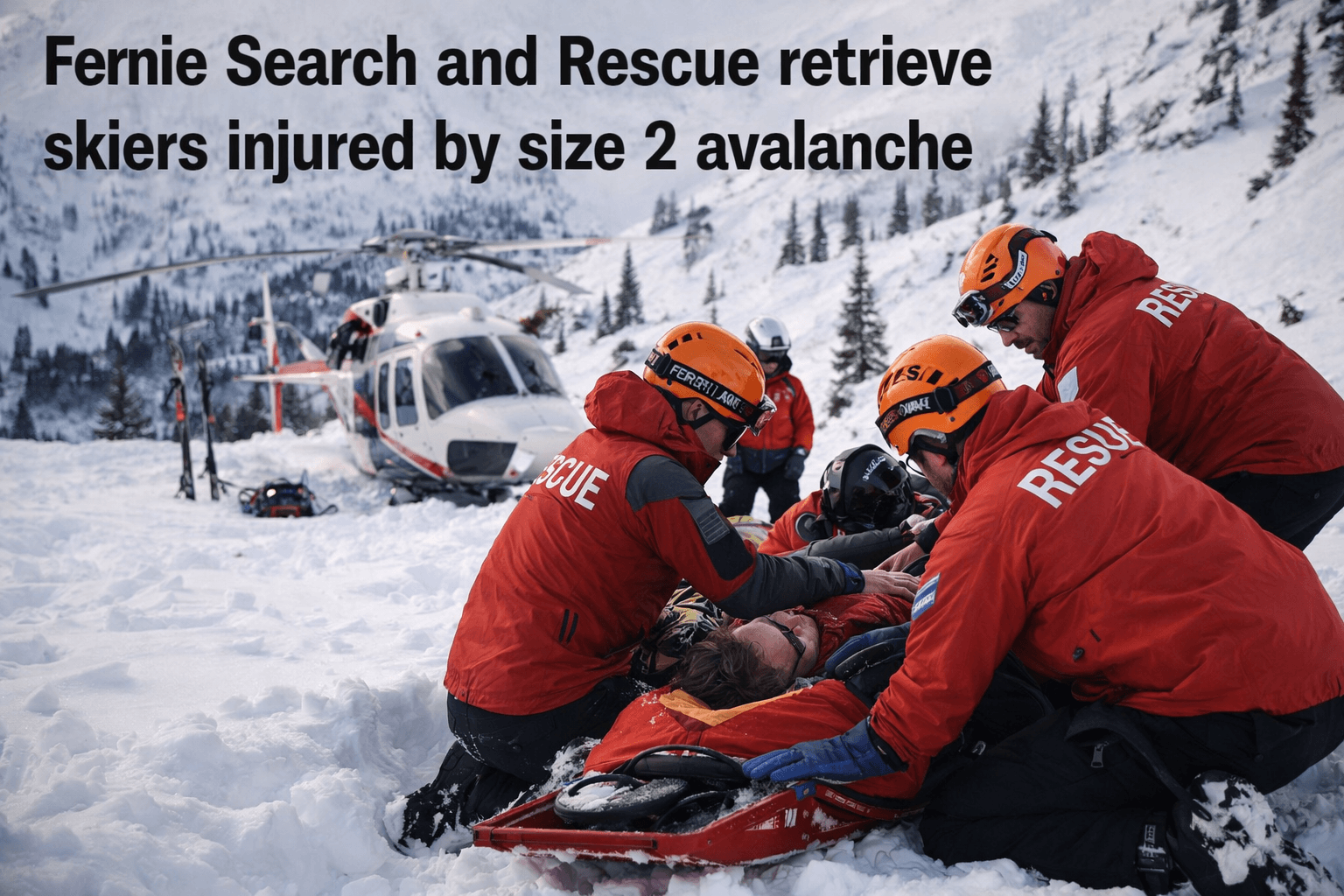 A group of 11 skiers triggered a size 2 avalanche in Orca Bowl, located outside Fernie Alpine Resort in British Columbia.
During the slide, six members of the group were caught in the avalanche, and one skier was carried approximately 300 metres down the slope.
Fortunately, none of the skiers were completely buried. The group was well-prepared with avalanche safety equipment and quickly initiated a companion rescue. They were able to locate and assist all affected members, provide first aid, and call for help.
According to Fernie Search and Rescue Manager Simon Piney, the group’s preparation and quick actions played a key role in the outcome.
Three skiers sustained injuries, and Fernie Search and Rescue teams responded around midday. Avalanche technicians were deployed to the area, and the injured individuals were airlifted out and transferred to the care of BC Ambulance Service.
The incident highlights how unpredictable snow conditions can be and reinforces the importance of preparation when travelling in backcountry terrain.
Common Injuries in Avalanche Incidents
Avalanche-related injuries may include:
-
Trauma from impact or tumbling
-
Fractures or sprains
-
Hypothermia from cold exposure
-
Breathing difficulties if partially buried
These injuries require prompt assessment and care.
Signs of Avalanche-Related Distress
A person affected by an avalanche may show:
-
Difficulty breathing or speaking
-
Confusion or disorientation
-
Injuries limiting movement
-
Cold, pale skin
-
Weakness or exhaustion
Recognizing these signs helps guide first aid efforts.
First Aid Response in Avalanche Situations
If someone is caught in an avalanche:
-
Ensure scene safety before assisting
-
Locate and safely access the person
-
Call for emergency help immediately
-
Check breathing and responsiveness
-
Begin CPR if needed
-
Keep the person warm and still
-
Treat visible injuries and monitor condition
Quick companion rescue is often the most important factor in survival.
Prevention and Backcountry Safety Considerations
To reduce avalanche risks:
-
Check avalanche forecasts before heading out
-
Travel with trained companions
-
Carry essential safety gear (beacon, probe, shovel)
-
Take avalanche safety and first aid training
-
Be aware of terrain and snow conditions
Preparation is essential for safe backcountry travel.
Frequently Asked Questions
What is a size 2 avalanche?
It is large enough to bury or injure a person and can carry individuals downhill.
Why is companion rescue important?
Immediate help from nearby companions is often faster than waiting for rescue teams.
What equipment is used in avalanche safety?
Common tools include a beacon, probe, and shovel.
What should I do after someone is rescued from an avalanche?
Check breathing, provide first aid, and keep them warm.
Why is training important for backcountry users?
It prepares individuals to respond effectively in remote emergencies.
Educational Note
This article is intended for general first aid awareness and workplace safety education in Canada. Learning avalanche safety and first aid can help individuals respond effectively in outdoor emergencies.
About The Author

Mark Kascha
First Aid Instructor Trainer with 30+ years of experience in CPR, emergency response, and safety training across Canada.
👉 [View full credentials]🔗 View LinkedIn Profile
Last reviewed: March 2026
 Support local, Canadian-owned businesses, with no connections to American corporations or partnerships.