
Drowning incidents can occur in a variety of environments, including swimming pools, lakes, rivers, and coastal shorelines. Rocky coastal areas, cliffs, and bluffs can present additional risks because of slippery surfaces, sudden drops, and cold water conditions.
In Vancouver and across British Columbia, coastal recreation is common. Beaches, rocky shorelines, and waterfront events attract visitors throughout the year. Because of these environments, first aid awareness and CPR training are valuable safety skills for workplaces, community events, and outdoor recreation areas where emergency responders may take time to arrive.
Understanding the risks associated with coastal terrain and water exposure can help improve safety awareness in both public spaces and workplaces near marine environments.
A Realistic Scenario: Incident at a Coastal Festival
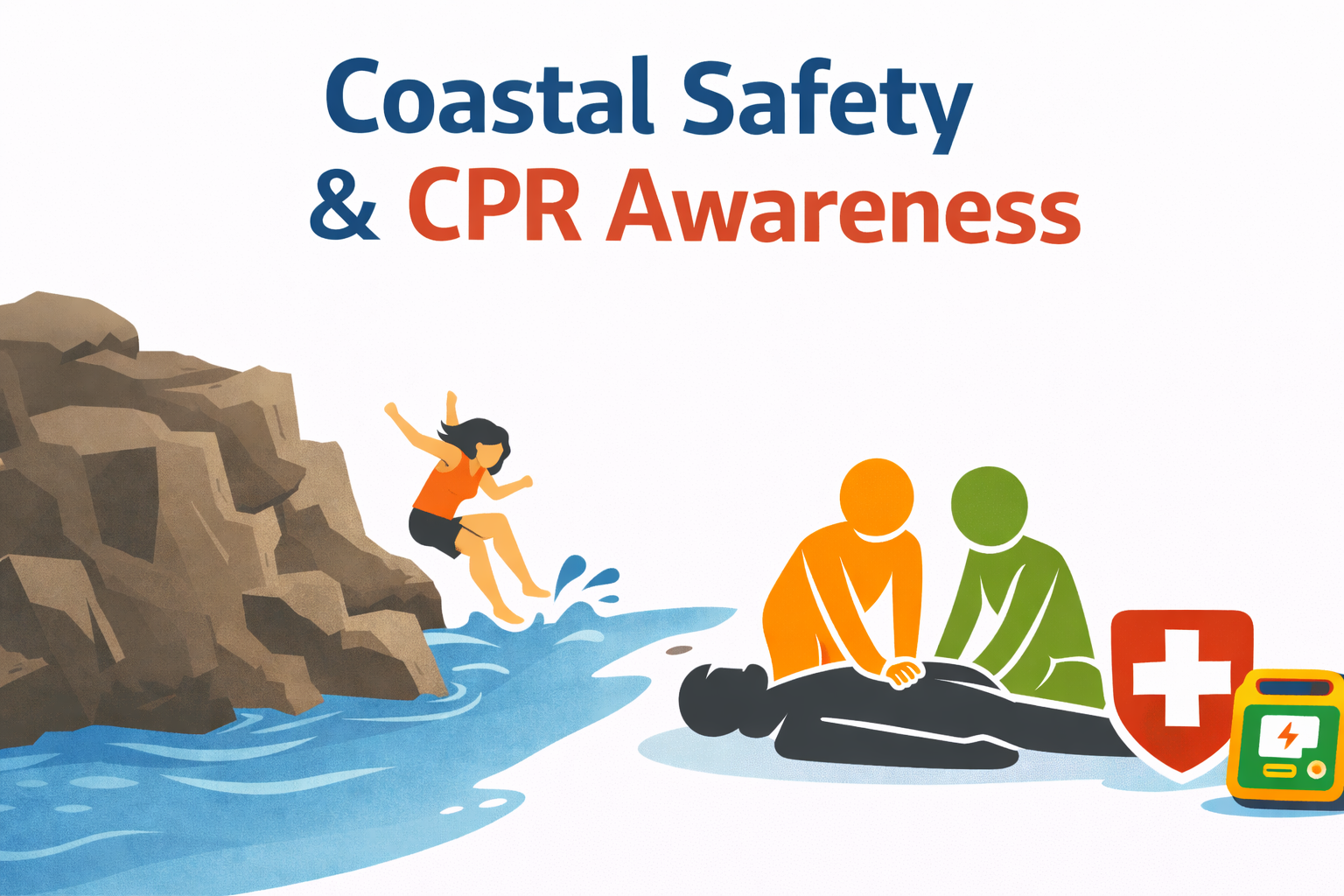 During a public event on Texada Island, emergency responders were called to Shingle Beach following reports of a possible drowning. Witnesses reported that a young woman had climbed a rocky bluff overlooking the shoreline and fell into the water below.
Bystanders nearby quickly responded and attempted CPR while waiting for emergency services to arrive. RCMP officers and emergency personnel attended the scene, and an air ambulance was requested to assist. Despite these efforts, the woman was later declared deceased at the scene.
Authorities began an investigation with the support of the BC Coroners Service to better understand the circumstances surrounding the incident. While tragic, situations like this highlight how bystander awareness and emergency response efforts can play an important role during unexpected incidents near water.
Signs of Drowning or Water-Related Medical Distress
Recognizing the signs of drowning or severe distress after a fall into water is important for early response.
Possible signs may include:
-
Unresponsiveness or loss of consciousness
-
Difficulty breathing or absence of breathing
-
Gasping or irregular breathing
-
Pale or bluish skin tone
-
Weak or absent pulse
-
Confusion or unusual behaviour after rescue
In cold coastal waters common to British Columbia, additional risks such as cold water shock and rapid fatigue may also occur.
Causes and Risk Factors Near Coastal Bluffs
Rocky shorelines and coastal cliffs can present hazards that increase the risk of falling or entering the water unexpectedly.
Potential contributing factors include:
-
Slippery rocks or uneven surfaces
-
Steep cliffs or bluffs near shoreline edges
-
Strong currents or waves
-
Cold water temperatures
-
Reduced footing or loose rock near cliffs
-
Limited safety barriers in natural environments
Public events held near coastal areas may also bring larger crowds to locations where natural terrain presents hazards.
First Aid Response and CPR Awareness
When someone is pulled from the water and appears unresponsive or not breathing normally, emergency responders and trained bystanders may initiate CPR while waiting for paramedics or specialized rescue teams.
First aid training typically teaches responders to:
-
Ensure personal safety before approaching the scene
-
Call emergency services immediately
-
Remove the person from the water if it can be done safely
-
Check responsiveness and breathing
-
Begin CPR if the individual is unresponsive and not breathing normally
-
Continue care until professional responders arrive
Quick action from nearby individuals can help support circulation and oxygen delivery while emergency services travel to the location.
Prevention and Safety Considerations Near Coastal Areas
British Columbia’s coastal environments are beautiful but can include natural hazards. Safety awareness can help reduce the risk of falls and water-related incidents.
Important prevention considerations include:
-
Staying a safe distance from cliff edges or rocky bluffs
-
Wearing appropriate footwear for uneven or slippery terrain
-
Avoiding climbing on unstable rocks or steep shoreline areas
-
Supervising recreational activities near water
-
Ensuring event organizers assess safety conditions near coastal environments
Workplaces and event organizers near waterfront areas often include first aid planning and emergency response preparation as part of their safety programs.
FAQ
Why are rocky shorelines considered hazardous?
Rocky coastal areas can have uneven surfaces, loose rocks, and slippery conditions. Combined with cliffs or sudden drops into water, these environments can increase the risk of falls.
What should someone do if a person falls into the water and appears unresponsive?
Emergency services should be contacted immediately. If the person is safely removed from the water and is unresponsive with abnormal breathing, trained individuals may begin CPR while waiting for emergency responders.
Why is CPR important in drowning incidents?
CPR helps circulate oxygenated blood to the brain and other vital organs when breathing or heart function has stopped. Early CPR can support the body until advanced medical care arrives.
Are coastal environments in British Columbia colder than many people expect?
Yes. Coastal waters in British Columbia are often cold throughout the year. Cold water can affect breathing and physical ability quickly, which increases the importance of caution near the shoreline.
Why is first aid training valuable for public events and outdoor locations?
Events held in parks, beaches, or waterfront areas may be far from immediate medical services. Having individuals trained in first aid and CPR can help provide early assistance during unexpected emergencies.
Educational Note:
This article is intended for general first aid awareness and public safety education. Learning CPR and first aid skills can help individuals recognize emergencies and provide supportive care until trained emergency services arrive.
About The Author

Mark Kascha
First Aid Instructor Trainer with 30+ years of experience in CPR, emergency response, and safety training across Canada.
👉 [View full credentials]🔗 View LinkedIn Profile
Last reviewed: March 2026
 Support local, Canadian-owned businesses, with no connections to American corporations or partnerships.