
 Water-related emergencies can occur quickly, especially in recreational settings such as swimming pools, beaches, and resorts. When someone is pulled from the water and is not breathing normally, immediate assistance may be required to restore breathing and circulation.
Cardiopulmonary resuscitation (CPR) is an emergency technique used when a person becomes unresponsive and stops breathing normally. Early CPR can help maintain blood flow and oxygen delivery to the brain until emergency medical services arrive.
Across Canada—including Vancouver and communities throughout British Columbia—CPR training is widely encouraged in workplaces, community programs, and recreation facilities to improve readiness for water-related emergencies.
First Aid and Workplace Relevance in Canada
Many Canadian workplaces and community organizations encourage staff to complete first aid and CPR certification, particularly in environments where water activities are common, such as pools, camps, fitness facilities, and tourism operations.
Having individuals nearby who understand how to recognize medical distress and begin CPR can improve emergency response during the critical minutes before paramedics arrive.
Prepared individuals and quick action can play a significant role in saving lives.
A Realistic Scenario at a Resort Pool
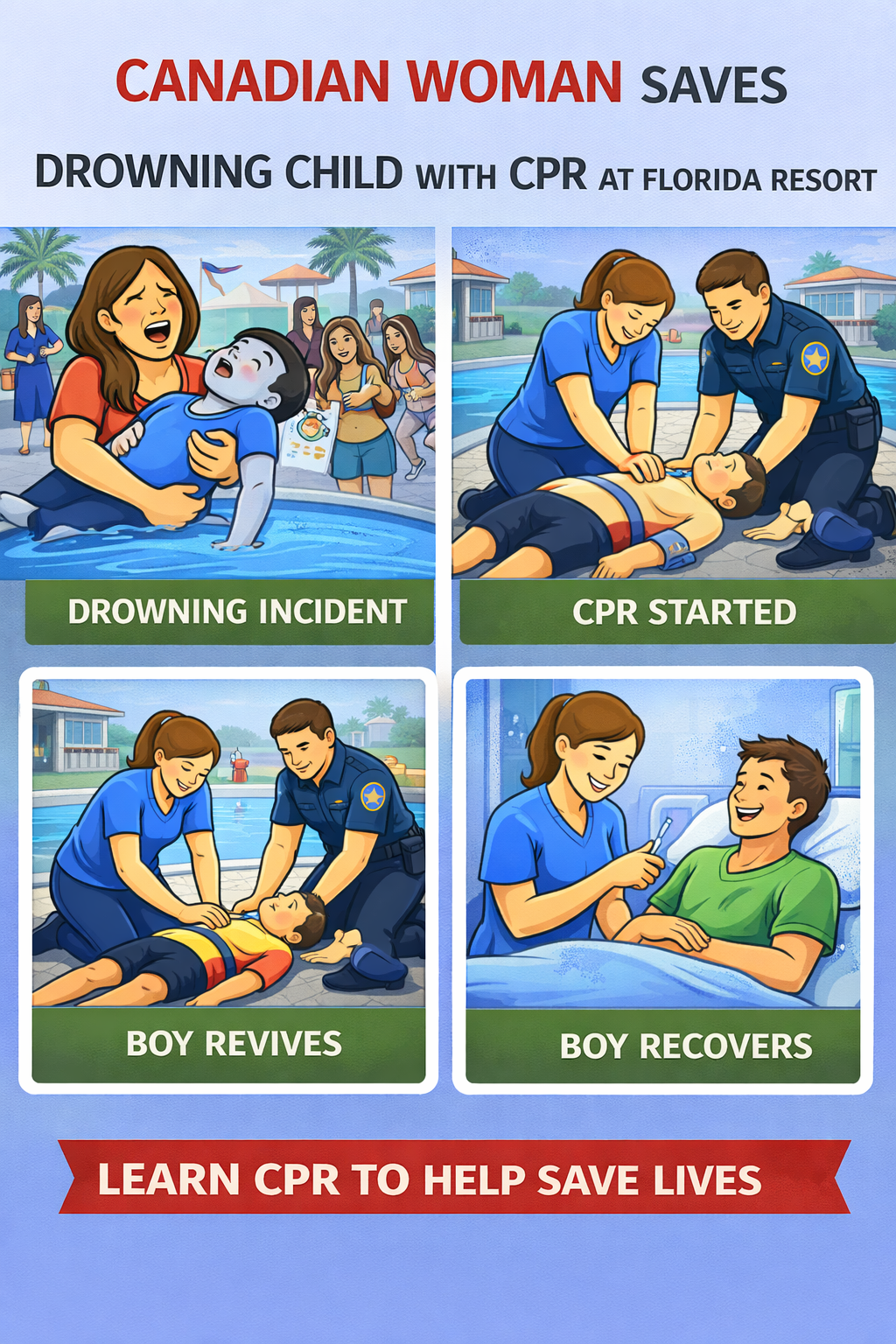
A woman from Trespassey, Newfoundland and Labrador, was recognized as a hero after helping save the life of a young boy while vacationing at a Florida resort.
According to reports, she had just arrived at the pool area to meet her husband and friends when she noticed a commotion nearby.
At first, she thought people might be arguing, but she quickly realized that a woman was calling for help while holding a young boy who appeared unresponsive.
Recognizing the seriousness of the situation, the woman quickly stepped in to help.
Fortunately, she had recently completed CPR training only eight months earlier. Drawing on that training, she immediately began performing chest compressions.
After the first rounds of compressions, her husband—who is a police officer—joined her and helped check the child’s vital signs while she continued CPR.
After several cycles of compressions, the child began responding and gradually regained colour. The rescuers rolled the child onto his side as he began to regain consciousness.
Emergency responders later transported the boy to a healthcare facility for observation. Reports indicated that the child recovered and was released from hospital the following day.
The incident highlights how recent CPR training and quick response from bystanders can support recovery during drowning emergencies.
Signs of a Water Emergency
When someone experiences a drowning-related emergency, several signs may indicate the need for immediate medical assistance.
Possible warning signs include:
-
Unresponsiveness
-
No normal breathing
-
Gasping or irregular breathing
-
Bluish or pale skin colour
-
Weak or absent pulse
-
Loss of consciousness after being in water
Emergency services should be contacted immediately when these signs appear.
Causes of Drowning Incidents
Drowning incidents can occur for many reasons in pools and open water environments.
Possible contributing factors include:
-
Lack of supervision
-
Fatigue or panic while swimming
-
Slipping or falling into water
-
Inexperience in water environments
-
Underlying medical conditions
Because these situations can develop quickly, rapid recognition and response are essential.
First Aid Response and Immediate Management
When someone is pulled from the water and appears unresponsive, immediate assistance may help support breathing and circulation.
General emergency response steps may include:
-
Call emergency services immediately.
-
Remove the person from the water if it is safe to do so.
-
Check responsiveness and breathing.
-
Begin CPR if the person is unresponsive and not breathing normally.
-
Continue CPR until professional responders arrive.
Early CPR can help maintain oxygen circulation during critical moments.
Prevention and Water Safety Considerations
Water safety awareness helps reduce the risk of drowning incidents.
Helpful prevention practices may include:
-
Supervising children closely near water
-
Ensuring swimming areas have appropriate safety supervision
-
Learning first aid and CPR skills
-
Following posted safety guidelines at pools and recreation areas
-
Teaching children basic water safety skills
Prepared individuals and trained responders can help improve outcomes during water emergencies.
Frequently Asked Questions
Why is CPR important after a drowning incident?
CPR helps restore circulation and oxygen flow to the brain and vital organs when someone has stopped breathing after being in the water.
Can CPR help after someone has been pulled from a pool?
Yes. If a person is unresponsive and not breathing normally after being removed from water, CPR may help support breathing and circulation until emergency responders arrive.
Who should learn CPR?
Parents, caregivers, recreation staff, teachers, and members of the public may benefit from learning CPR and first aid skills.
Why is supervision important around pools?
Children can encounter difficulties in water quickly. Active supervision helps ensure someone can respond immediately if a problem occurs.
How often should CPR training be refreshed?
Many organizations recommend periodic refresher training to maintain familiarity with CPR techniques and emergency response procedures.
Educational Note
This article is intended for general first aid awareness and public education. Learning CPR and water safety practices can help individuals respond quickly during emergencies while waiting for professional medical assistance.
About The Author

Mark Kascha
First Aid Instructor Trainer with 30+ years of experience in CPR, emergency response, and safety training across Canada.
👉 [View full credentials]🔗 View LinkedIn Profile
Last reviewed: March 2026