
Drowning is a leading cause of preventable injury-related death in Canada, particularly among children and young adults. It can happen quickly and quietly — often in familiar environments such as backyard water features, lakes, dugouts, and provincial parks.
For families, workplaces, and community organizations across British Columbia and Vancouver, understanding drowning risks and knowing how to respond with CPR is an essential part of first aid education.
Two Water Emergencies in Southern Alberta
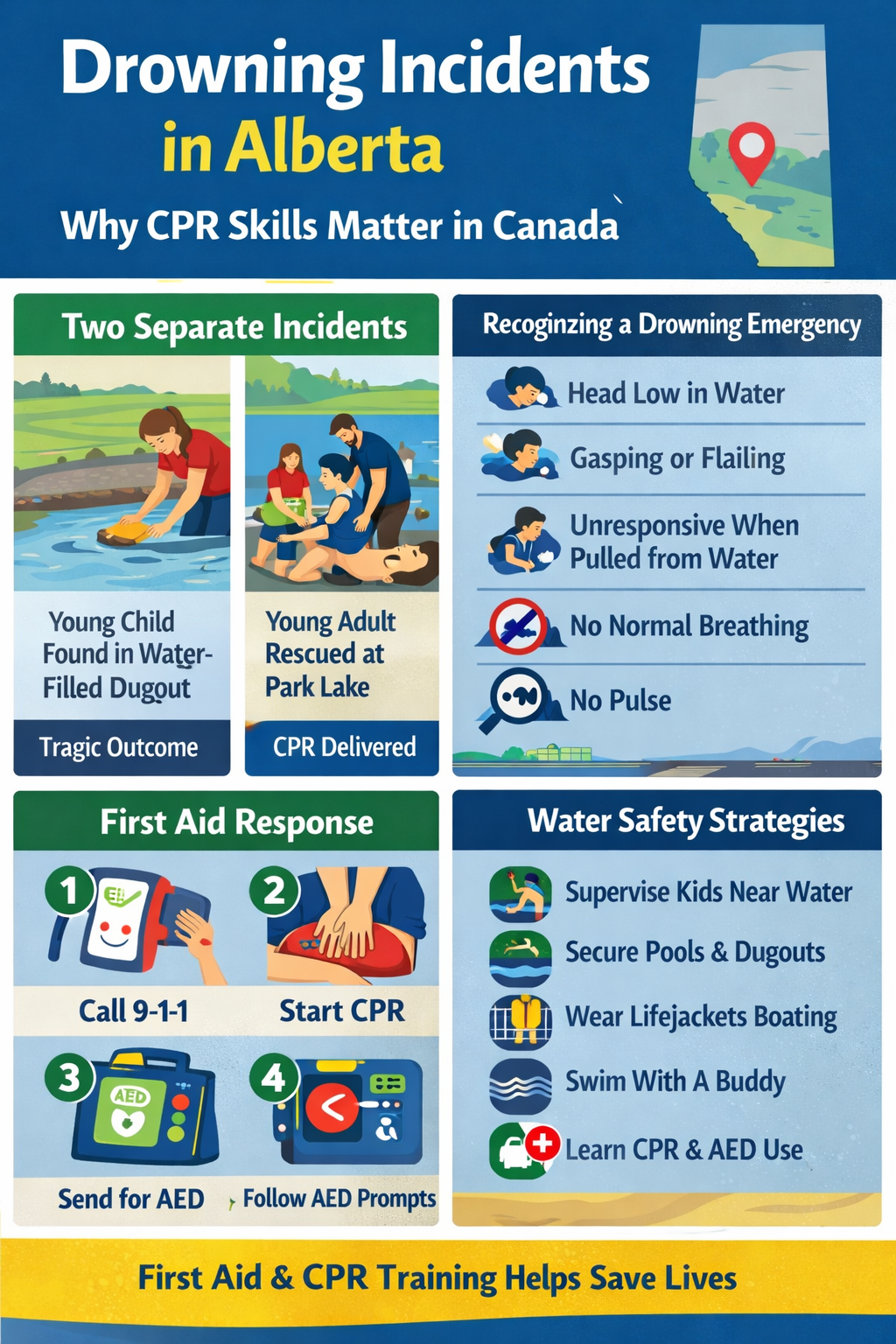 In southern Alberta, emergency crews responded to two separate water-related incidents on the same day.
Around 5 PM, police and EMS were called to a rural residence where a six-year-old girl was found in a water-filled dugout. She was transported to hospital, but despite resuscitation efforts by family members and first responders, she later died. Authorities indicated that the death was not considered suspicious.
Earlier that day at Park Lake Provincial Park, north of Lethbridge, an 18-year-old man was pulled from the water by bystanders after a near-drowning event. CPR was initiated before paramedics arrived. He was transported to hospital and later reported to be recovering.
While the outcomes were different, both incidents highlight the same reality: drowning can happen unexpectedly, and immediate action by bystanders can influence survival.
Why Drowning Happens Quickly
Drowning occurs when breathing is impaired due to submersion or immersion in liquid. It does not always involve splashing or shouting. In many cases:
- The person cannot call for help
- There is little visible struggle
- It happens within minutes
Children are particularly vulnerable around:
- Backyard pools
- Farm dugouts
- Unfenced water features
- Lakes and campgrounds
Young adults are at increased risk during recreational swimming, boating, or situations involving fatigue or cold water.
What Happens During a Drowning Emergency
When a person is submerged:
- Airway becomes blocked by water
- Oxygen levels in the body decrease
- Loss of consciousness can occur
- Cardiac arrest may follow if oxygen deprivation continues
Brain injury can begin within minutes without oxygen. This is why early rescue and CPR are critical.
Recognizing Signs of Drowning or Near-Drowning
In water settings, warning signs may include:
- Head low in the water with mouth at water level
- Gasping or hyperventilating
- Vertical body position with little or no leg movement
- Unresponsiveness after being removed from water
- No normal breathing
After removal from water, an unconscious person who is not breathing normally requires immediate emergency response.
First Aid Response: Public Education Overview
If someone is pulled from the water and is unresponsive:
- Ensure scene safety
- Call 9-1-1 or direct someone to call
- Check for normal breathing
- Begin CPR if not breathing normally
- Send for an AED if available
- Follow AED voice prompts
In drowning cases, oxygen deprivation is the primary issue. CPR helps circulate oxygenated blood to vital organs until advanced care arrives.
AEDs may be used if the person goes into cardiac arrest. The device will analyze the heart rhythm and advise whether a shock is needed.
Water Safety in BC and Vancouver Workplaces
While these incidents occurred in Alberta, similar risks exist across British Columbia.
Workplace and community settings where water hazards may exist include:
- Construction sites with retention ponds
- Agricultural properties
- Parks and recreation facilities
- Summer camps
- Waterfront worksites
- Boating and marine industries
Employers should consider:
- Hazard assessments for water risks
- Barriers or restricted access to water features
- Clear supervision policies
- Staff training in CPR and AED use
- Emergency action planning
Even in non-water-based workplaces, CPR certification prepares staff for unexpected medical emergencies.
Prevention Strategies
Drowning prevention involves layered protection:
- Constant supervision of children near water
- Secure fencing around pools or dugouts
- Lifejackets during boating or open water activities
- Avoiding swimming alone
- Awareness of cold water shock risks
- CPR training for adults and caregivers
Preparation does not eliminate risk, but it significantly improves response capability.
Frequently Asked Questions
How quickly can drowning occur?
Drowning can happen in minutes and often without loud splashing or yelling. Children can submerge silently in a very short period of time.
Should CPR be started after someone is removed from water?
If the person is unresponsive and not breathing normally, CPR should be started immediately while emergency services are contacted.
Can an AED be used in a drowning situation?
Yes. If the person goes into cardiac arrest, an AED can analyze the heart rhythm and advise whether a shock is required. The chest should be dried before applying AED pads.
Are drowning risks only related to pools?
No. Lakes, rivers, dugouts, retention ponds, and even large water containers can present drowning risks.
Why is CPR training important even if I don’t work near water?
Cardiac arrest and breathing emergencies can occur anywhere — at home, in parks, in workplaces, or during recreation. CPR training builds confidence to respond in many types of emergencies.
Educational Note
This article is provided for general first aid and water safety awareness in Canadian communities and workplaces. Formal first aid and CPR training helps individuals recognize emergencies and respond confidently while waiting for emergency medical services.
About The Author

Mark Kascha
First Aid Instructor Trainer with 30+ years of experience in CPR, emergency response, and safety training across Canada.
Last reviewed: March 2026
 Support local, Canadian-owned businesses, with no connections to American corporations or partnerships.