Understanding CPR and AED Response in Schools
 Sudden cardiac arrest can occur unexpectedly, even among young people. When the heart suddenly stops beating effectively, blood circulation to the brain and vital organs is interrupted. In these situations, immediate CPR and rapid use of an automated external defibrillator (AED) can help support the body until emergency medical services arrive.
Across British Columbia and the Lower Mainland—including Vancouver, Burnaby, Richmond, and Coquitlam—schools and workplaces increasingly include CPR and AED training as part of their safety programs. When teachers, staff, or bystanders know how to respond during emergencies, they can provide early assistance that may help stabilize a person until paramedics arrive.
First Aid Preparedness in Schools and Workplaces
Many schools across Canada have introduced AED devices and staff first aid training to improve emergency readiness. Teachers, coaches, and administrative staff often complete CPR and first aid certification so they can assist during unexpected medical incidents involving students or visitors.
Similar safety measures are encouraged in workplaces throughout Vancouver and the Lower Mainland, where trained responders and accessible emergency equipment help improve community preparedness.
A Sudden Emergency on a School Field
An example of how preparation can make a difference occurred at Balmoral School in Calgary.
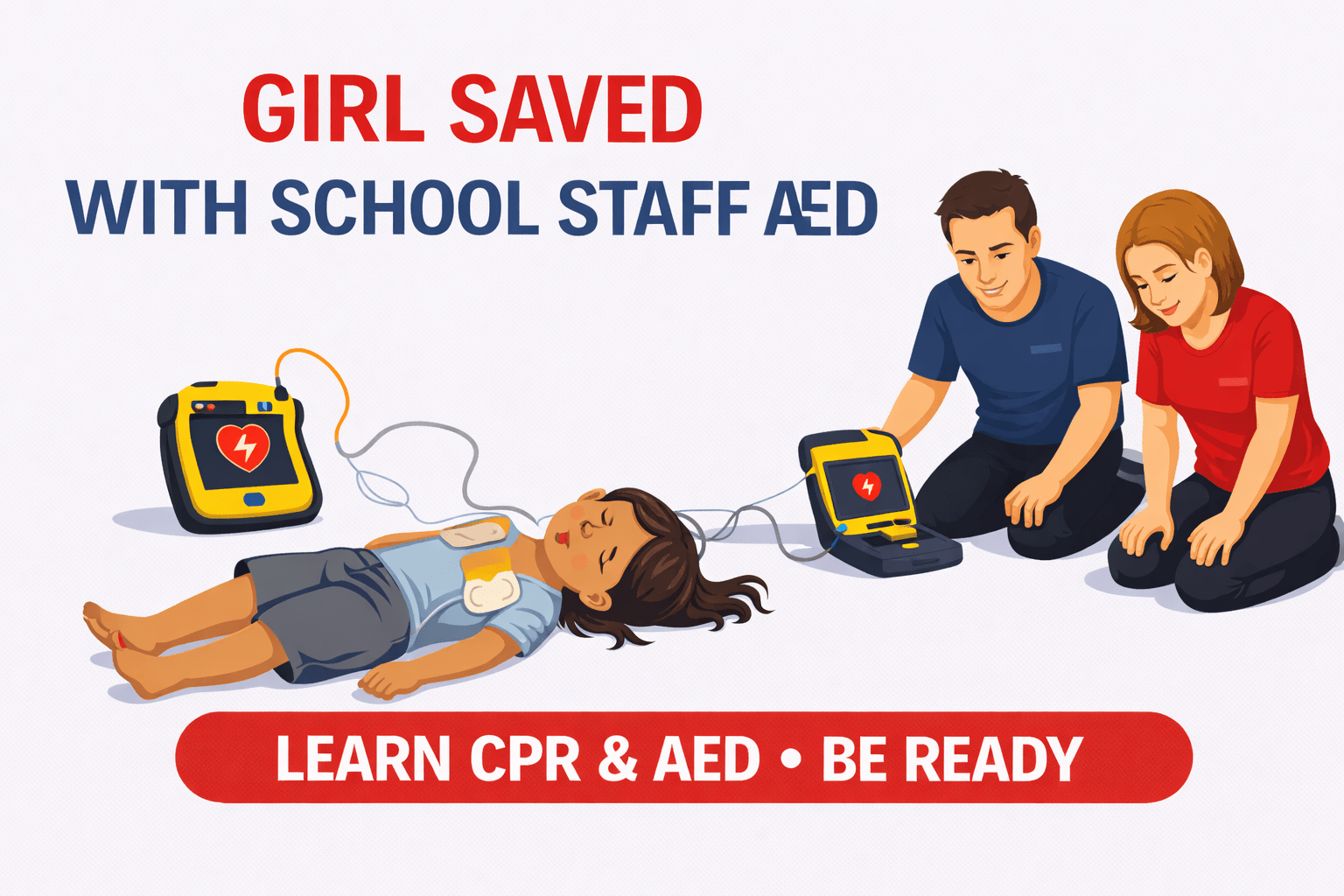
Only three days into the school year, 11-year-old student Maryam Basharat collapsed on the school field during outdoor activities. Staff quickly recognized that she was experiencing a serious medical emergency.
Just one month before the school year began, staff members at the school had completed first aid training, CPR instruction, and AED practice. Because of that preparation, the response was organized and immediate.
Staff Respond Quickly With CPR and AED
Social studies teacher Jill Wright later explained that staff members remained calm during the emergency and focused on helping the student.
While some staff began assisting Maryam, physical education teacher Thomas Guenther ran into the school building to retrieve the automated external defibrillator.
CPR was started while the AED was brought to the field. When the device was applied, it delivered a shock designed to help restore a normal heart rhythm.
Staff later described the moment as remarkable when Maryam began showing signs of recovery after the AED was used.
Emergency Responders Continue Care
Paramedics soon arrived at the school and continued providing medical care before transporting Maryam to a healthcare facility for further treatment.
Emergency medical services later recognized the staff members for their actions with an EMS award, highlighting how their preparation and teamwork helped support the student during the emergency.
The staff were also reunited with paramedic Paul Emmerson, who had responded to the call and assisted with further care.
Why Early CPR and AED Use Are Important
During sudden cardiac arrest, immediate action can be critical. First aid training programs often describe the “chain of survival,” which includes:
-
Early recognition of cardiac arrest
-
Immediate CPR to support circulation
-
Rapid use of an AED when available
-
Continued care from emergency medical services
AED devices are designed to guide users through the process using clear voice instructions, allowing trained responders to assist safely during emergencies.
Preparedness in Schools and Communities
Although cardiac emergencies are uncommon in children, many schools and public facilities install AED devices and encourage CPR training as part of broader safety planning.
Preparedness strategies may include:
-
CPR and AED training for teachers and staff
-
Accessible AED devices in schools and recreation facilities
-
Emergency response plans for school events and sports activities
-
Regular first aid refresher training
Across Vancouver and the Lower Mainland, similar safety programs are encouraged in schools, workplaces, and community centres to help ensure trained responders are available if emergencies occur.
Frequently Asked Questions
What is an AED and why is it used in emergencies?
An automated external defibrillator (AED) is a portable device that can analyze a person’s heart rhythm and deliver an electrical shock if needed. The device is designed to guide trained users through the process with voice prompts.
Can children experience sudden cardiac arrest?
Although uncommon, cardiac arrest can occur in children and adolescents due to underlying heart conditions or electrical disturbances affecting the heart.
Why do schools install AED devices?
Schools often install AEDs to improve emergency preparedness. Having the device available allows trained staff to assist quickly if a cardiac emergency occurs on campus.
Do teachers receive CPR training?
Many schools encourage or require teachers and staff to complete CPR and first aid training so they are prepared to respond to emergencies involving students or visitors.
Why is quick response important during cardiac arrest?
When the heart stops beating effectively, blood circulation stops. Early CPR and AED use help support circulation and may help restore a normal heart rhythm while waiting for paramedics.
Educational Note
This article is intended for general first aid awareness and public education. Certified CPR and AED training programs provide hands-on instruction that helps individuals learn how to recognize emergencies and respond safely.
About The Author

Mark Kascha
First Aid Instructor Trainer with 30+ years of experience in CPR, emergency response, and safety training across Canada.
Last reviewed: March 2026
 Support local, Canadian-owned businesses, with no connections to American corporations or partnerships.