 Cardiac emergencies can happen suddenly in public places, workplaces, or homes. When someone experiences sudden cardiac arrest, quick action from nearby people may help support circulation until emergency medical services arrive.
Cardiopulmonary resuscitation (CPR) and the use of an automated external defibrillator (AED) are two important emergency response techniques taught in Canadian first aid programs, including workplace safety training in Vancouver and across British Columbia.
Learning these skills helps people recognize cardiac emergencies and understand how to respond while waiting for paramedics.
Community Training Events Build Emergency Preparedness
Community training events help improve public awareness of CPR and AED use. These programs aim to give participants both the knowledge and confidence needed to respond during emergencies.
Typical community training sessions often include:
-
Recognizing signs of cardiac arrest
-
Learning hands-only CPR techniques
-
Practicing chest compressions on training mannequins
-
Understanding how AED devices work
-
Knowing when and how to call emergency services
These events help build stronger community preparedness.
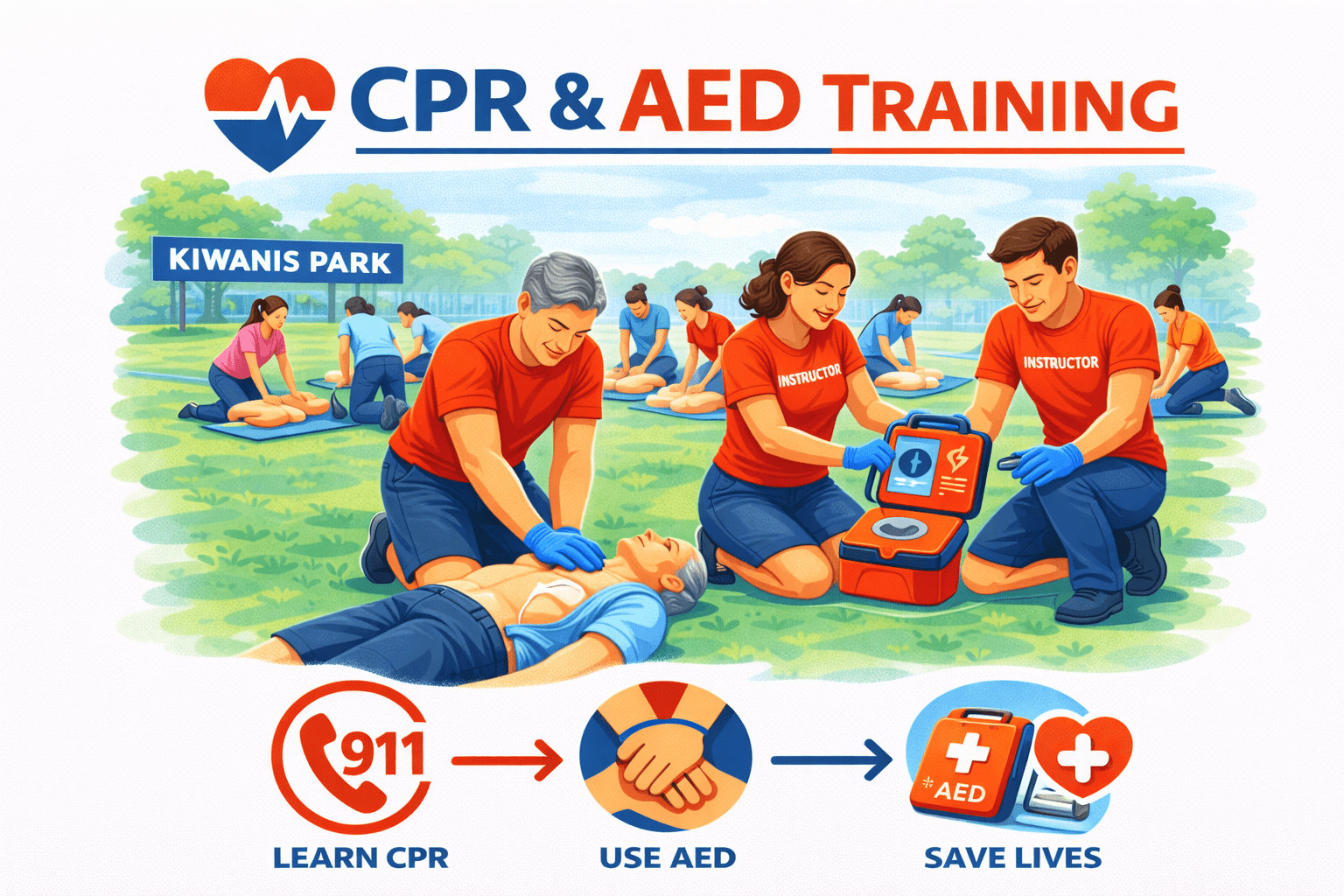
CPR and AED Training Event at Kiwanis Park
A public training event held at Kiwanis Park in Saskatoon focused on teaching community members how to respond during cardiac emergencies.
The program was designed to help participants learn basic CPR skills and become familiar with automated external defibrillators (AEDs).
According to Lisa Bagan, resuscitation program manager with Heart and Stroke, improving public awareness of CPR is important because bystander response rates remain relatively low across Canada.
Participants at the event received hands-on instruction in hands-only CPR, which focuses on chest compressions to help maintain blood circulation during cardiac emergencies.
Instructors also provided demonstrations on how to safely use an AED device.
Cardiac Arrest in Community Settings
Cardiac arrest can occur in a wide range of locations, including:
-
Public parks
-
Sports facilities
-
Workplaces
-
Community centres
-
Private homes
Health organizations report that many cardiac arrest incidents happen outside hospitals or medical facilities. Because of this, bystanders may be the first people available to help.
Community training programs aim to ensure more individuals understand the basic steps of emergency response.
Public Access to AED Devices
Automated external defibrillators are becoming increasingly common in public spaces. These devices are designed to analyze heart rhythms and provide step-by-step voice instructions to guide users during emergencies.
In Saskatoon, officials reported that more than 900 AED devices are installed in businesses and public facilities.
Increasing awareness of where AEDs are located and how they function can help improve community readiness.
Why Quick Response Is Important
During cardiac arrest, the heart stops pumping blood effectively, preventing oxygen from reaching the brain and other vital organs.
Emergency response organizations often emphasize that early CPR combined with rapid defibrillation can significantly improve survival outcomes in certain cardiac emergencies.
Training programs help ensure more people are prepared to assist if an emergency occurs nearby.
Frequently Asked Questions
What is hands-only CPR?
Hands-only CPR focuses on continuous chest compressions without rescue breaths and is commonly taught for adult cardiac emergencies.
What is an automated external defibrillator (AED)?
An AED is a portable device that analyzes heart rhythms and may deliver an electrical shock to help restore a normal heartbeat.
Why are CPR training events held in communities?
Community training events help improve public awareness and confidence in responding to medical emergencies.
Where are AED devices typically located?
AEDs are commonly installed in recreation centres, workplaces, schools, airports, and other public facilities.
Where can people learn CPR and AED skills in Canada?
CPR and AED training programs are widely available through certified first aid providers, workplace safety training centres, and community organizations.
Educational Note
This article is intended for general first aid awareness and community safety education. Learning CPR and AED use can help individuals better understand how to respond during emergencies while waiting for trained emergency medical services.
About The Author

Mark Kascha
First Aid Instructor Trainer with 30+ years of experience in CPR, emergency response, and safety training across Canada.
Last reviewed: March 2026
 Support local, Canadian-owned businesses, with no connections to American corporations or partnerships.