
Drowning can occur quickly when a person is unable to breathe due to submersion in water. When oxygen cannot reach the lungs and brain, the body may lose consciousness within minutes. In these emergencies, cardiopulmonary resuscitation (CPR) may be attempted to help circulate oxygenated blood until emergency responders arrive.
Across Canada, including Vancouver and communities throughout British Columbia, residential pools, hot tubs, and backyard water features are common. Because water-related emergencies can occur at home, first aid and CPR training are often recommended for homeowners, workers, and community members.
Understanding the risks around pools can help improve safety and preparedness.
A Real-World Scenario
 A tragic drowning incident occurred at a home in Hamilton, Ontario, involving a man found unresponsive in a backyard pool.
According to authorities, the 30-year-old man was discovered without vital signs around 9 p.m. at a residence on Proctor Boulevard. The homeowner quickly attempted to help by performing CPR while waiting for emergency services.
Paramedics transported the man to a hospital, but he was later pronounced deceased.
This case followed other recent drowning incidents in the region. Reports also referenced a case involving a 33-year-old woman who entered Lake Ontario while attempting to help her child, as well as an 89-year-old man who died after being pulled from a pool in Burlington.
These situations highlight how water-related emergencies can occur in different environments, including private homes, lakes, and public areas.
Signs of a Drowning Emergency
Drowning incidents are often quieter than many people expect. A person in distress may not be able to call for help.
Possible warning signs include:
-
A person floating face-down or motionless in water
-
Weak or ineffective attempts to stay afloat
-
Difficulty keeping the mouth above water
-
Unresponsiveness after being removed from water
-
No normal breathing after rescue
When someone is removed from water and is not breathing normally, CPR may be required while waiting for emergency responders.
Causes and Risk Factors Around Pools
Backyard pool incidents can occur due to several factors.
Common risks may include:
-
Swimming without supervision
-
Slippery pool decks or sudden falls into water
-
Alcohol consumption near water
-
Medical events while swimming
-
Lack of barriers or pool safety equipment
Residential pools can present risks for people of all ages, particularly when safety precautions are not in place.
First Aid Awareness During Pool Emergencies
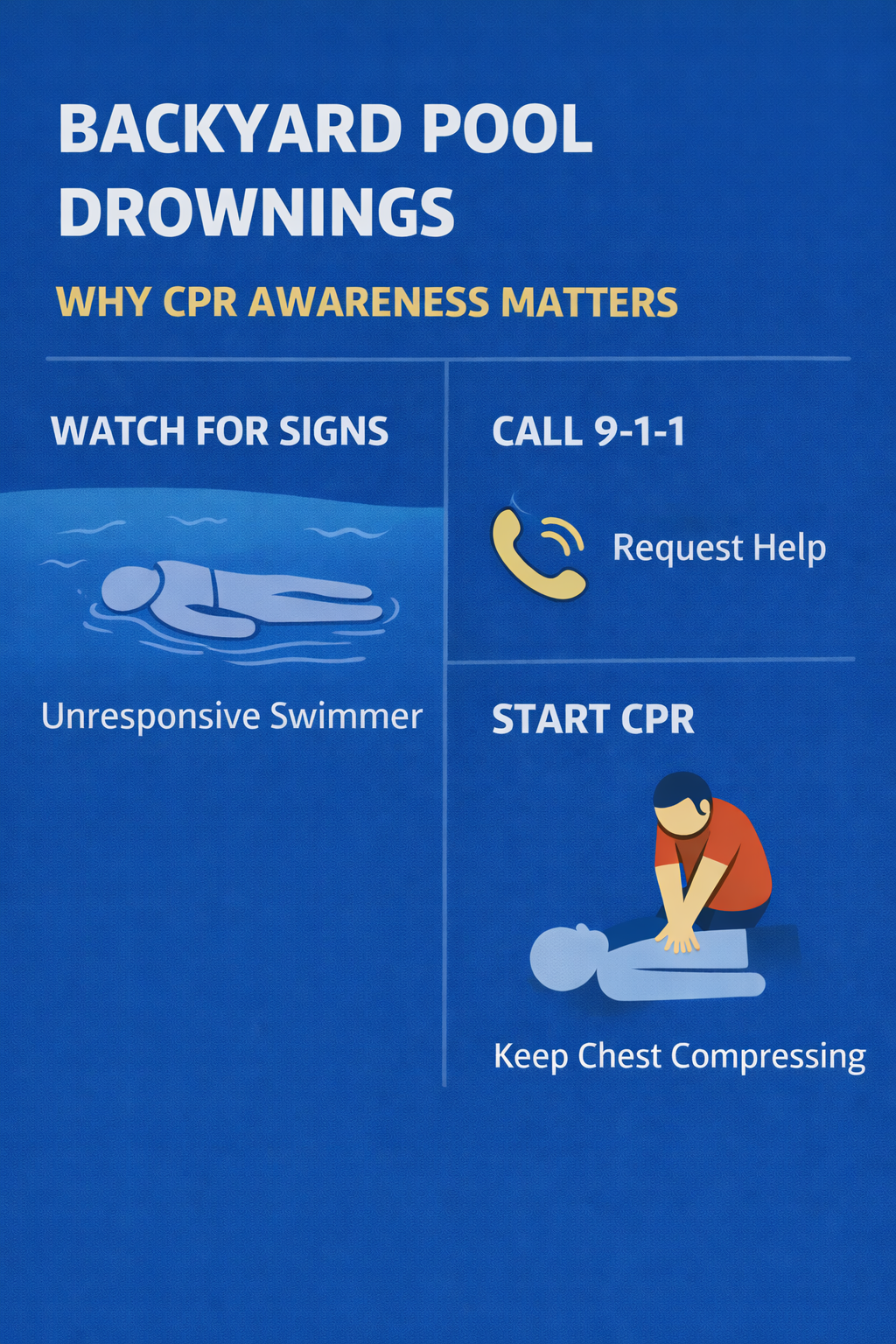
First aid training teaches several general steps for responding to a drowning emergency.
These steps may include:
-
Call emergency services (9-1-1 in Canada).
-
Ensure the scene is safe before entering the water.
-
Remove the person from the water if it can be done safely.
-
Check responsiveness and breathing.
-
If the person is not breathing normally, begin CPR if it is safe to do so.
-
Continue CPR until emergency responders arrive.
Early CPR can help maintain oxygen circulation while waiting for trained medical professionals.
Pool Safety and Prevention Awareness
Many drowning incidents can be prevented through safety planning and awareness.
Recommended precautions may include:
-
Installing pool barriers or fences
-
Supervising swimmers at all times
-
Avoiding alcohol while swimming
-
Using lifejackets for inexperienced swimmers
-
Learning CPR and basic first aid
-
Keeping rescue equipment nearby
In regions such as Vancouver and across British Columbia, water safety education is often promoted because many homes and recreational spaces include pools or access to water.
FAQ
Why is CPR important in drowning emergencies?
CPR can help circulate oxygenated blood through the body when a person has stopped breathing after being submerged in water.
What should someone do if they find a person unconscious in a pool?
Emergency services should be contacted immediately. If the person is removed from the water and is not breathing normally, CPR may be started if it is safe to do so.
Are backyard pools a common location for drowning incidents?
Drowning incidents can occur in both natural bodies of water and residential pools, particularly when supervision or safety measures are limited.
What safety features can help reduce pool risks?
Pool fences, locked gates, and proper supervision are commonly recommended to help reduce the risk of accidental drowning.
Why is CPR training recommended for homeowners and families?
Training helps individuals recognize emergencies and understand how to respond safely while waiting for professional responders.
Educational Note
This article is intended for general first aid awareness and water safety education. Learning CPR and first aid through certified training programs can help individuals recognize emergencies and respond safely until emergency services arrive.
About The Author

Mark Kascha
First Aid Instructor Trainer with 30+ years of experience in CPR, emergency response, and safety training across Canada.
👉 [View full credentials]🔗 View LinkedIn Profile
Last reviewed: March 2026
 Support local, Canadian-owned businesses, with no connections to American corporations or partnerships.