
Residential fires can create dangerous conditions within minutes, particularly when smoke inhalation or oxygen deprivation affects breathing. In severe situations, individuals exposed to fire or heavy smoke may become unconscious or stop breathing, requiring immediate emergency care such as cardiopulmonary resuscitation (CPR).
Across Vancouver, Surrey, and communities throughout British Columbia, firefighters and paramedics frequently respond to residential fires where medical assistance must be provided alongside fire suppression efforts. CPR and the use of automated external defibrillators (AEDs) are part of the emergency response tools used by trained responders during life-threatening incidents.
Suspicious Fire in a Surrey Basement Suite
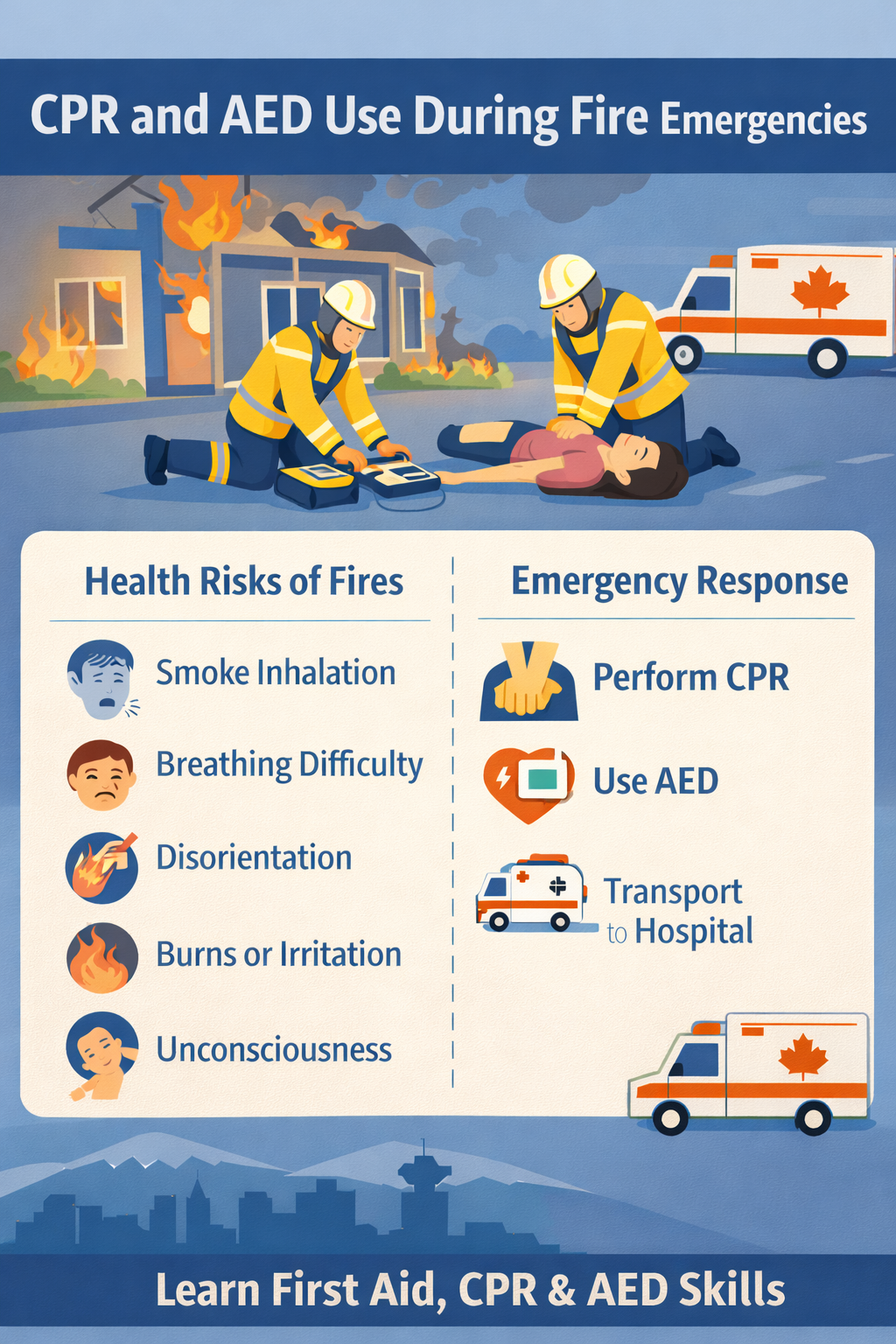 A serious fire incident in Surrey, British Columbia, left several family members critically injured and required immediate life-saving efforts from emergency responders.
The fire broke out early Sunday morning in a basement suite, prompting a large response from firefighters, paramedics, and police.
Initial reports indicated that two toddlers were in critical condition, but authorities later confirmed that one of their parents was also critically injured.
When firefighters arrived at the scene, they quickly moved to extinguish the fire and rescue the occupants. Witnesses reported seeing first responders providing emergency care on the roadway outside the home, where firefighters began performing CPR on the victims while paramedics prepared further medical treatment.
The injured individuals were transported to hospital for advanced medical care.
Police described the fire as suspicious, and investigators continued to examine the circumstances surrounding the incident. Officials indicated that further details would be shared as the investigation progressed.
The event deeply affected neighbours in the surrounding community, many of whom gathered nearby as emergency crews worked to assist the victims.
Incidents like this highlight how fire emergencies often require both rescue operations and urgent medical intervention at the same time.
Health Risks Associated with Fire and Smoke Exposure
Fires can produce dangerous gases and intense heat that affect the lungs and the body’s ability to absorb oxygen. Smoke inhalation is one of the most common medical concerns during residential fires.
Possible symptoms of smoke exposure include:
-
Difficulty breathing
-
Persistent coughing
-
Headache or dizziness
-
Confusion or disorientation
-
Burns or irritation to the airways
-
Loss of consciousness
In severe cases, breathing may slow or stop, which requires immediate emergency medical attention.
CPR and AED Use During Fire Emergencies
Cardiopulmonary resuscitation (CPR) is a first aid technique used when a person is unresponsive and not breathing normally. Chest compressions help maintain circulation and oxygen delivery to the brain and other vital organs.
Emergency responders may also use an automated external defibrillator (AED) when a cardiac arrest is suspected. AEDs analyze heart rhythms and can deliver an electrical shock when appropriate.
Together, CPR and AED use can help:
-
Maintain blood circulation
-
Support oxygen delivery
-
Improve the chances of survival until advanced care is available
Firefighters and paramedics across British Columbia are trained to use these techniques during rescue operations.
Emergency Response During Residential Fires
Fire emergencies require coordinated efforts from several emergency services.
Typical response steps include:
-
Rescuing occupants from the structure
-
Assessing breathing and responsiveness
-
Providing CPR or other emergency care if needed
-
Transporting injured individuals to hospital
-
Investigating the cause of the fire
Because fire scenes can involve hazardous environments, trained emergency responders are responsible for entering structures and conducting rescues.
Prevention and Community Safety
Fire safety awareness can help reduce risks in homes and workplaces.
Common safety measures include:
-
Installing and maintaining smoke alarms
-
Practicing home fire escape plans
-
Keeping exits clear and accessible
-
Using heating equipment safely
-
Ensuring electrical systems are properly maintained
First aid and CPR training also contribute to safer communities by helping individuals recognize medical emergencies and understand how to respond while waiting for professional responders.
Frequently Asked Questions
Why might CPR be needed during a fire emergency?
CPR may be required if a person becomes unresponsive and stops breathing after smoke exposure or other serious injuries related to a fire.
What does an AED do?
An automated external defibrillator (AED) is a device used to analyze heart rhythms and deliver an electrical shock when a life-threatening heart rhythm is detected.
Who performs CPR during fire rescues?
CPR may be performed by firefighters, paramedics, or trained bystanders depending on who reaches the victim first.
Why is smoke inhalation dangerous?
Smoke can contain toxic gases and particles that reduce the body’s ability to absorb oxygen, which can affect breathing and consciousness.
Why is CPR training recommended for the public?
CPR training helps individuals recognize life-threatening emergencies and understand how to provide assistance while waiting for emergency responders.
Educational Note
This article is intended for general first aid awareness and community safety education. Learning first aid, CPR, and AED awareness can help individuals recognize emergencies and provide initial assistance until professional emergency responders arrive.
About The Author

Mark Kascha
First Aid Instructor Trainer with 30+ years of experience in CPR, emergency response, and safety training across Canada.
👉 [View full credentials]🔗 View LinkedIn Profile
Last reviewed: March 2026