
Serious road collisions can lead to life-threatening injuries that require immediate emergency response. When a person becomes unconscious or stops breathing after trauma, cardiopulmonary resuscitation (CPR) may be performed to help maintain circulation and oxygen flow until advanced medical care is available.
Across Vancouver, Surrey, and throughout British Columbia, traffic incidents occasionally involve pedestrians, cyclists, and drivers. For this reason, CPR and first aid awareness are important components of community safety and workplace training programs. While professional responders handle most emergency care, early assistance and rapid response can support survival during critical moments.
Pedestrian Collision in Surrey
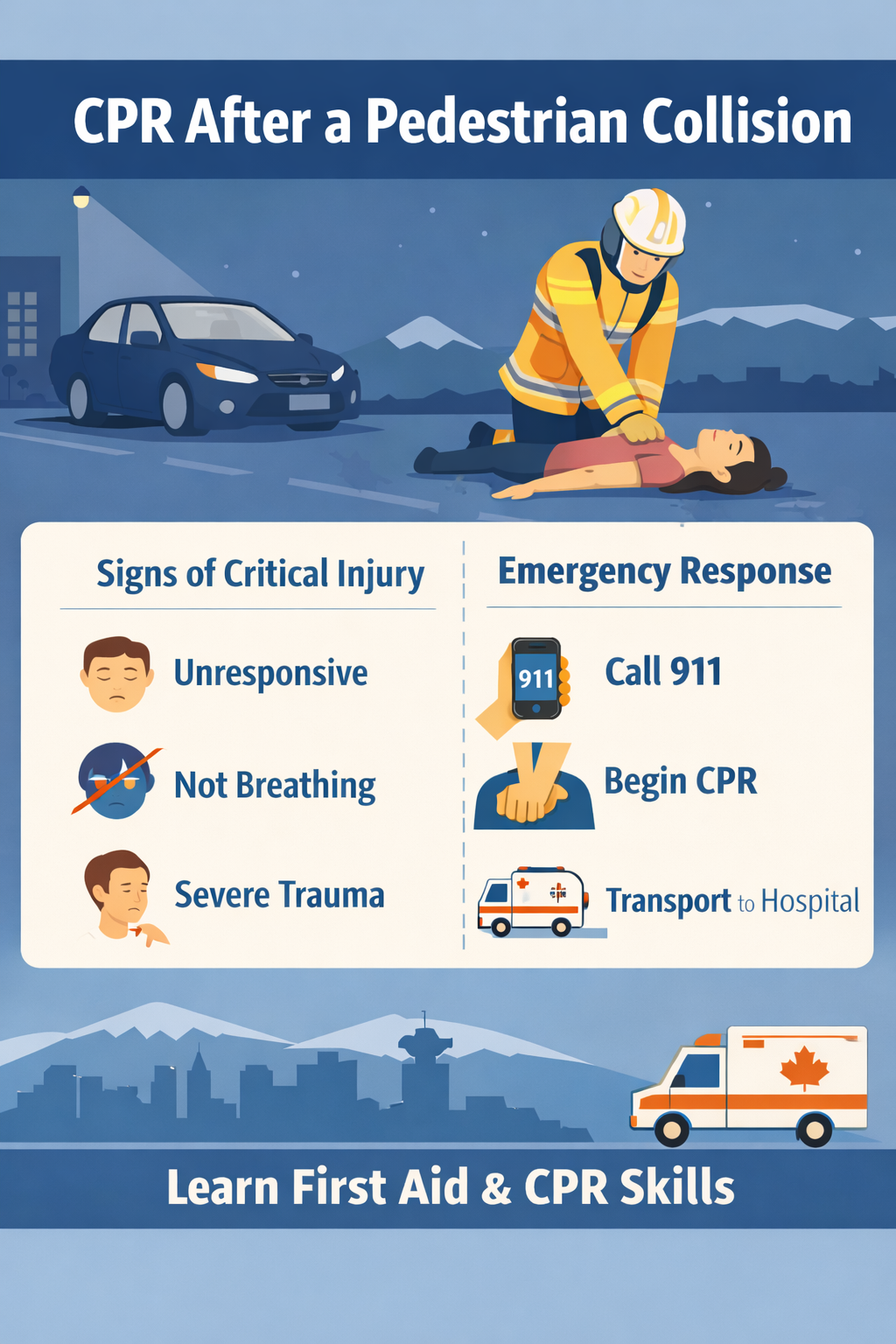 A serious traffic collision in Surrey, British Columbia involved a pedestrian who required emergency care after being struck by a vehicle.
The incident occurred at 80 Avenue and 122A Street during the evening hours. According to reports, a 2006 Toyota Corolla travelling eastbound on 80 Avenue struck a pedestrian and then collided with a nearby telephone pole.
The pedestrian, a 37-year-old woman from Surrey, sustained critical injuries in the crash.
When emergency crews arrived, firefighters immediately began providing assistance, including performing CPR at the scene. Paramedics transported the woman to Royal Columbian Hospital for further medical care.
Despite the emergency response efforts, she was later declared deceased.
The 47-year-old driver of the vehicle sustained minor injuries and was treated at a healthcare facility.
Events like this highlight the role of emergency responders who provide rapid life-saving interventions such as CPR during serious incidents.
When CPR May Be Needed After Trauma
Severe injuries from traffic collisions can affect breathing, circulation, or consciousness. In certain situations, a person may become unresponsive or stop breathing, which can require immediate life-saving assistance.
CPR may be used when a person:
-
Is unconscious and unresponsive
-
Is not breathing normally
-
Shows no signs of circulation
-
Has experienced severe trauma affecting breathing or the heart
Emergency responders are trained to quickly assess these signs and begin CPR when necessary.
Understanding CPR in Emergency Situations
Cardiopulmonary resuscitation (CPR) is a first aid technique that involves rhythmic chest compressions to help circulate blood when the heart has stopped or breathing has ceased.
The purpose of CPR is to:
-
Maintain blood flow to the brain and vital organs
-
Provide temporary circulation until advanced medical care is available
-
Support oxygen delivery throughout the body
In Canada, emergency dispatchers can guide callers through CPR instructions over the phone until paramedics arrive.
Emergency Response After Road Collisions
When serious traffic incidents occur, emergency responders follow several steps to manage the situation safely:
-
Securing the scene to protect victims and responders
-
Assessing injuries and responsiveness
-
Calling for medical assistance if not already dispatched
-
Providing life-saving care such as CPR if required
-
Transporting injured individuals to hospital
Firefighters, paramedics, and police often work together during traffic emergencies across Metro Vancouver and the Fraser Valley.
Prevention and Community Safety Awareness
While emergency responders provide critical care during collisions, prevention and awareness remain key parts of public safety.
Important road safety considerations include:
-
Following posted speed limits
-
Remaining attentive when driving near crosswalks or intersections
-
Improving visibility for pedestrians and cyclists
-
Practicing defensive driving
-
Supporting community education around road safety
In addition, first aid and CPR training programs in Vancouver and Surrey help prepare individuals to recognize medical emergencies and understand how to respond while waiting for professional responders.
Frequently Asked Questions
What is CPR and when is it used?
CPR (cardiopulmonary resuscitation) is a first aid technique used when a person stops breathing or their heart stops beating. It involves chest compressions that help maintain circulation until advanced medical care is available.
Can CPR be used after a traffic collision?
CPR may be required if a person involved in a collision becomes unresponsive and is not breathing normally. Emergency responders assess the situation and provide life-saving care when needed.
Who usually performs CPR at crash scenes?
CPR may be performed by trained bystanders, firefighters, paramedics, or other emergency responders depending on who arrives first and the condition of the injured person.
Why is rapid response important during medical emergencies?
Early recognition of breathing or circulation problems allows responders to begin life-saving assistance sooner, which may help support oxygen flow to the brain and vital organs.
Why is CPR training recommended for the public?
CPR training helps individuals recognize medical emergencies and understand how to provide basic assistance while waiting for emergency services.
Educational Note
This article is intended for general first aid awareness and community safety education. First aid and CPR training can help individuals recognize emergencies and provide initial assistance until professional emergency responders arrive.
About The Author

Mark Kascha
First Aid Instructor Trainer with 30+ years of experience in CPR, emergency response, and safety training across Canada.
👉 [View full credentials]🔗 View LinkedIn Profile
Last reviewed: March 2026
 Support local, Canadian-owned businesses, with no connections to American corporations or partnerships.