
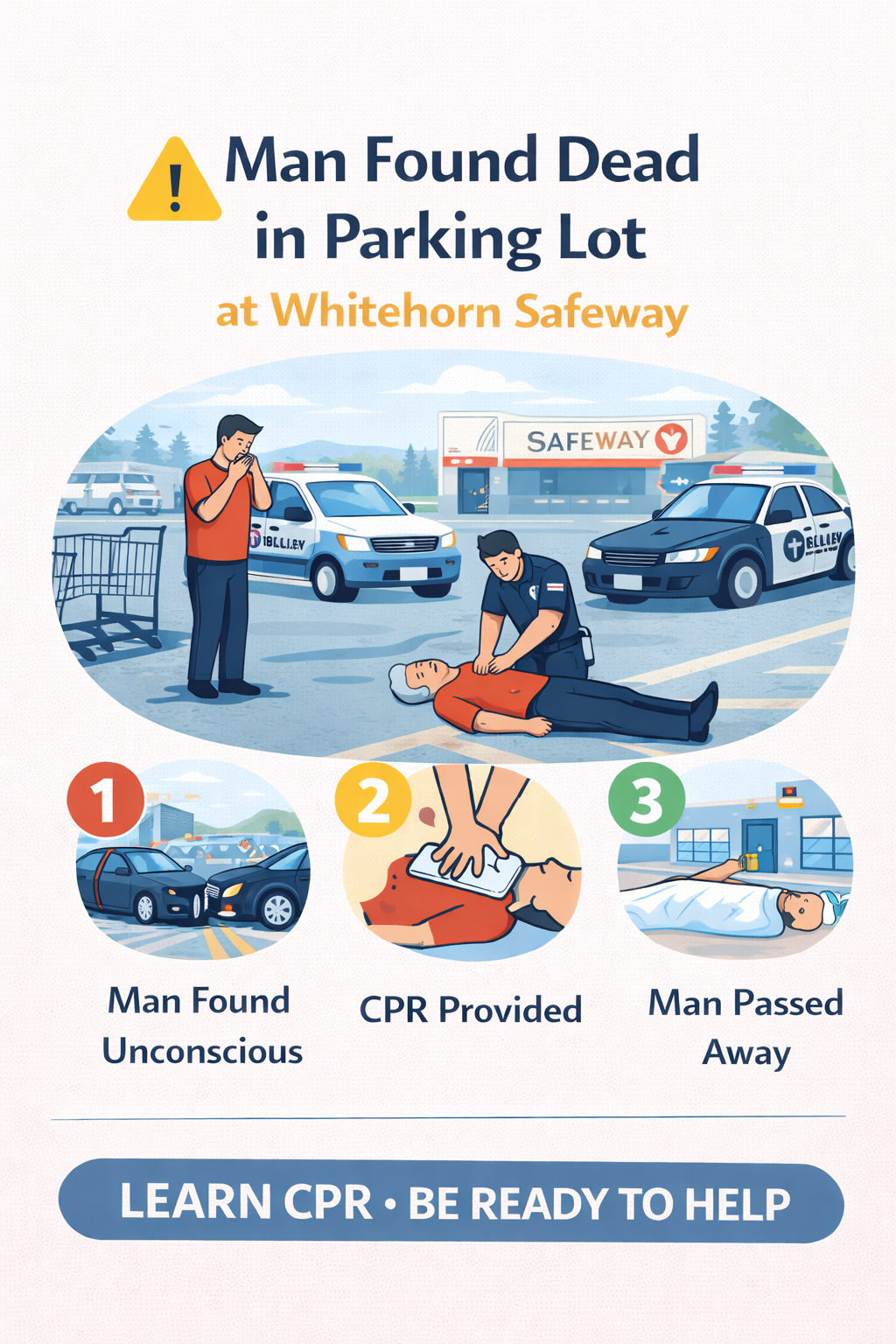
 Medical emergencies can occur anywhere, including shopping centres, parking lots, workplaces, and other public spaces. When a person becomes unresponsive or shows signs of severe injury, immediate assistance from bystanders or emergency responders may help stabilize the situation until paramedics arrive.
Cardiopulmonary resuscitation (CPR) and basic first aid are commonly taught in training programs across Canada, including Vancouver and British Columbia, to help people respond during emergencies involving breathing problems, cardiac arrest, or serious trauma.
Learning these skills allows individuals to recognize emergencies and provide support while professional medical teams are on the way.
First Aid and Workplace Safety Relevance in Vancouver and British Columbia
Public places such as retail centres, parking areas, and transportation hubs are environments where unexpected medical emergencies can occur. For this reason, first aid and CPR training are widely encouraged in workplaces and community programs throughout Vancouver and BC.
Training programs often include instruction on how to:
-
Recognize medical distress
-
Call emergency services
-
Begin CPR if a person is unresponsive and not breathing normally
-
Provide basic first aid until paramedics arrive
Having trained individuals nearby can help ensure that someone is able to respond quickly when an emergency happens in a public setting.
A Medical Emergency in a Calgary Parking Lot
An incident in Calgary, Alberta, highlighted how bystanders and police officers may respond when someone is found in serious medical distress.
Police reported that a man approached officers in the area and asked for help for someone who appeared to be experiencing a medical emergency in the parking lot of a Safeway store in the Whitehorn neighbourhood.
Officers stopped to investigate and located a man with significant injuries. They immediately began providing first aid and CPR while waiting for paramedics to arrive.
Emergency medical services transported the individual to hospital for further care. Authorities later confirmed that the man, identified as Darrin Thomas Amond, died after being admitted to hospital.
Emergency Response and Investigation
According to police, the injuries appeared to be consistent with a serious assault. Officers began investigating the circumstances surrounding the incident and asked potential witnesses to come forward with information.
Incidents occurring in public locations often involve multiple witnesses who may have seen events leading up to the emergency. Information provided by bystanders can help investigators understand what occurred.
Police continue to review available evidence while determining the events that led to the man’s injuries.
The Importance of Immediate First Aid
When someone is found unresponsive or severely injured, immediate first aid and CPR can help support breathing and circulation until emergency responders arrive.
Although first aid cannot always prevent a fatal outcome, quick assistance from trained individuals can provide critical support during the early stages of an emergency.
First aid training programs commonly teach participants how to:
-
Recognize medical distress
-
Contact emergency services quickly
-
Begin CPR when necessary
-
Provide basic care until paramedics arrive
These skills are valuable in many environments, including workplaces, public areas, and community events.
Public Safety and Community Awareness
Public safety depends on both emergency services and community awareness. Encouraging people to learn first aid and CPR helps build safer communities where individuals are better prepared to assist during emergencies.
Preparedness initiatives often include:
-
First aid and CPR training programs
-
Workplace emergency response plans
-
Community safety education
-
Public awareness campaigns about emergency response
When more people understand how to respond during emergencies, it increases the likelihood that help will be available quickly.
Frequently Asked Questions
What should someone do if they see a person in medical distress?
If someone appears to be unresponsive or seriously injured, emergency services should be contacted immediately. Trained individuals may begin first aid while waiting for responders.
Why is CPR important during medical emergencies?
CPR helps circulate oxygenated blood to the brain and vital organs when the heart stops beating effectively.
Can bystanders perform first aid before paramedics arrive?
Yes. Many first aid and CPR courses teach simple techniques that allow bystanders to assist until professional medical care becomes available.
Why do police sometimes provide first aid?
Police officers are often trained in basic first aid and CPR so they can assist during emergencies when they arrive before paramedics.
Why is community first aid training encouraged?
First aid training helps individuals respond to emergencies in homes, workplaces, and public spaces, improving overall community preparedness.
Educational Note
This article provides general educational information about first aid and CPR awareness in public emergencies. First aid training helps individuals learn how to respond during emergencies, but medical care should always be provided by qualified healthcare and emergency response professionals.
About The Author

Mark Kascha
First Aid Instructor Trainer with 30+ years of experience in CPR, emergency response, and safety training across Canada.
👉 [View full credentials]🔗 View LinkedIn Profile
Last reviewed: March 2026
Hi A. Clarke!
Lots of mistakes in your story here.
1) Darrin Amond wasn’t found dead. He was beaten and was on life support in hospital for 2 weeks before succumbing to injuries.
2) Darrin Amond was not sentenced to 4 years in prison. He was sentenced to 8, but had served more than a year and a half before being sentenced. That time was counted as double as per federal law. He left prison when 2/3s of his sentenced were served to go into a halfway house, as is customary for inmates. FWIW he had a reduced sentence of Manslaughter, compared to Cesar’s 2nd degree Murder Conviction. We do not want people thinking Federal Courts are handing out 4 year sentences for 2nd degree murder.
3) Deveaux’s daughter expressed gratitude to the police in the interview you are referring to, not his mother. Though, I can attest she was grateful too. The Calgary Police were stellar in their investigation of Marcus Deveaux’s death, having both suspects in custody within a week of the murder.
I know you want people to learn first aid, and participate in early intervention, saving lives. However, this particular story is a fairly sensational one encourage it. It is also not the greatest example. Likely neither Amond or Deveaux would have survived even with earlier intervention. Simply put, if you learn first aid, the lives you will be saving will likely be those closest to you. Chances of you running into an assault victim in a parking lot or snow bank are slim. Helping a choking child or an elderly uncle at a family dinner – way more likely.
Also, using people’s stories to further your cause, no matter how valiant the cause is, must be done in a respectful way. Your cursory and inaccurate presentation of the story indicates a lack of research and attention. Both Marcus and Darrin are somebody’s sibling, son, and uncle. Their lives are much more than the way they died. Please remember that when promoting your cause.