
Single-vehicle crashes sometimes occur when a driver suddenly becomes unwell or loses control of a vehicle. In these situations, a person may become unresponsive or stop breathing normally, which is when cardiopulmonary resuscitation (CPR) may be attempted by bystanders or emergency responders.
Across Canada, including Vancouver and communities throughout British Columbia, CPR training is widely encouraged in workplaces and community safety programs. When bystanders understand how to recognize an emergency and call for help quickly, it can support emergency response while paramedics are on the way.
A Realistic Emergency Response Scenario
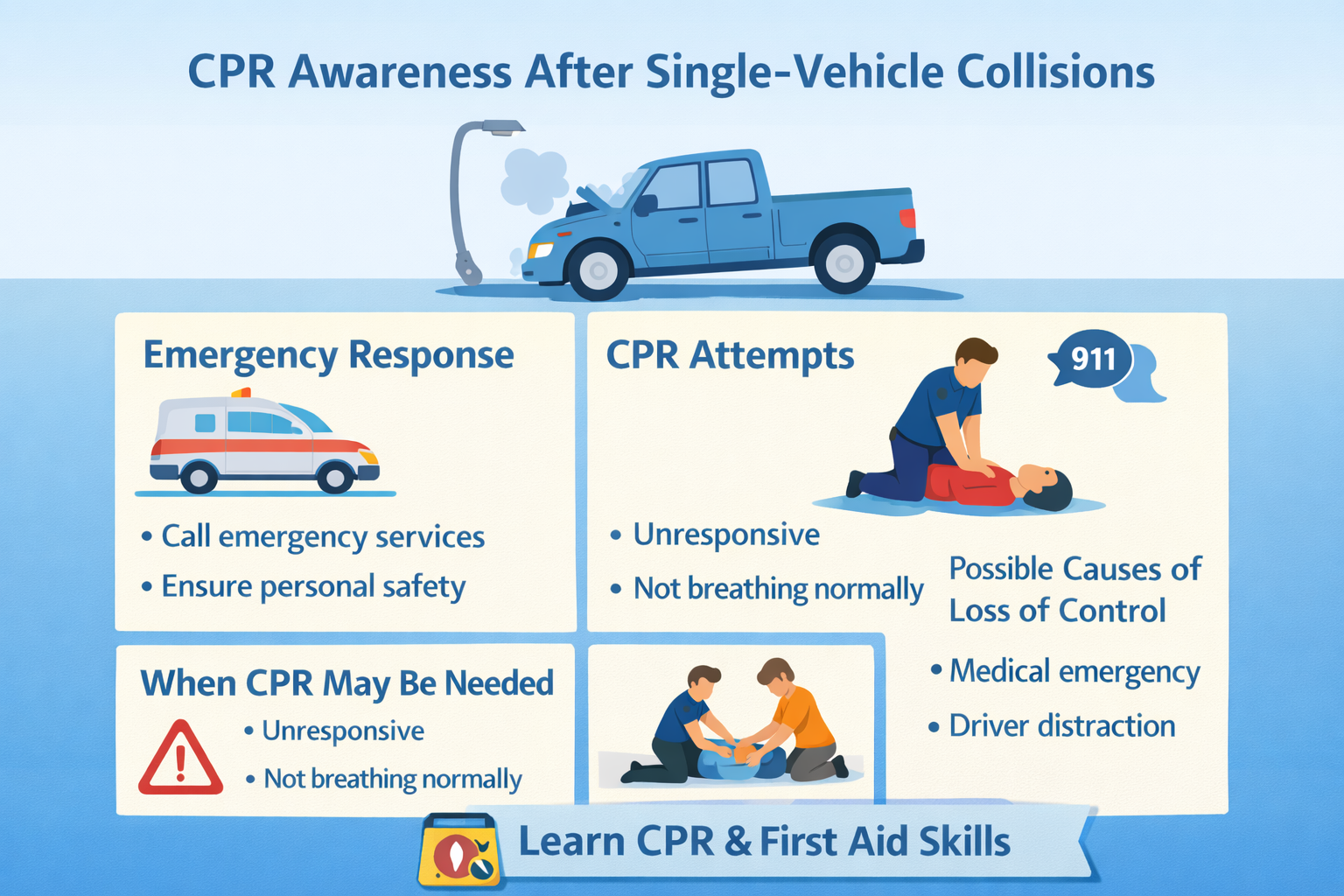 In a reported incident on John Laurie Boulevard near Brisebois Drive, a pickup truck travelling eastbound suddenly crossed the median into the westbound lanes before striking a light pole along the shoulder.
People nearby quickly approached the vehicle and found the driver, believed to be a man in his 70s, unconscious and unresponsive behind the wheel. Bystanders removed him from the truck and began CPR while waiting for emergency responders to arrive.
Paramedics arriving at the scene reported the man was in critical condition and continued emergency care. Police temporarily closed nearby roads while they investigated the circumstances surrounding the crash.
Situations like this illustrate how bystanders sometimes act quickly to provide assistance when someone becomes unresponsive after a vehicle collision.
Signs Someone May Need Immediate Assistance
A person involved in a crash or medical emergency may require urgent help if they show signs such as:
-
Unresponsiveness or inability to wake
-
Not breathing normally or only gasping
-
Slumped posture or lack of movement
-
Pale, grey, or bluish skin tone
-
No response when spoken to or touched
Recognizing these signs and contacting emergency services immediately is an important step in the emergency response process.
Possible Causes of Sudden Vehicle Loss of Control
When a vehicle unexpectedly leaves its lane or strikes an object, investigators may consider several possible factors.
These can include:
-
A sudden medical emergency affecting the driver
-
Driver fatigue or loss of attention
-
Mechanical issues with the vehicle
-
Road or weather conditions
-
Driver distraction
Emergency responders and investigators work together to determine the exact circumstances after a crash.
Emergency Response and First Aid Awareness
In many emergency situations, bystanders may be the first people at the scene before professional responders arrive. First aid education in Vancouver and across Canada teaches several priorities during roadside emergencies:
-
Ensure personal safety before approaching the vehicle
-
Call emergency services immediately
-
Provide assistance only if it is safe to do so
-
Follow instructions from emergency dispatchers if available
Once firefighters, paramedics, and police arrive, they take over care and manage the scene.
Prevention and Road Safety Considerations
While not every incident can be prevented, some safety practices may help reduce risks while driving.
Examples include:
-
Avoiding driving when feeling unwell or extremely fatigued
-
Keeping regular vehicle maintenance up to date
-
Staying attentive and avoiding distractions while driving
-
Driving at appropriate speeds for road conditions
-
Seeking medical advice if experiencing symptoms that could affect driving ability
Workplaces that require employees to drive often include driver safety awareness and emergency preparedness training as part of occupational health and safety programs.
Frequently Asked Questions
Why might CPR be attempted after a vehicle crash?
CPR may be attempted when a person becomes unresponsive and is not breathing normally. It helps circulate oxygenated blood until emergency medical responders arrive.
Can bystanders help during a roadside emergency?
Bystanders can help by calling emergency services quickly and providing assistance if it is safe to do so. Emergency dispatchers may provide guidance while responders are on the way.
Why is personal safety important at crash scenes?
Traffic hazards, damaged vehicles, or unstable conditions may create additional risks. Ensuring the area is safe helps prevent further injuries.
Could a medical emergency cause a crash?
In some cases, sudden health issues such as loss of consciousness or other medical problems may affect a driver’s ability to control a vehicle.
Why is CPR training encouraged for the public?
CPR training helps people recognize emergencies and understand how to assist safely until trained responders arrive.
Educational Note
This article is intended for general public education about emergency response awareness and first aid training. Learning CPR and basic first aid can help individuals recognize emergencies and provide assistance safely until professional responders arrive.
About The Author

Mark Kascha
First Aid Instructor Trainer with 30+ years of experience in CPR, emergency response, and safety training across Canada.
👉 [View full credentials]🔗 View LinkedIn Profile
Last reviewed: March 2026