
Understanding Sudden Cardiac Emergencies
Sudden cardiac arrest can occur without warning, even during routine daily activities like walking or visiting a coffee shop. When the heart stops functioning properly, a person may collapse, become unresponsive, and stop breathing normally.
Immediate CPR can help maintain blood flow to the brain and vital organs until emergency medical services arrive.
First Aid & Workplace Relevance in Vancouver and the Lower Mainland
Across Vancouver, Burnaby, Surrey, and the Lower Mainland, many cardiac emergencies occur in public places such as sidewalks, cafés, and workplaces.
This highlights the importance of:
-
CPR training for employees and the public
-
Quick recognition of emergencies in everyday settings
Skills learned in first aid training are not limited to the workplace—they are often used in real-life community situations.
Real Incident Overview
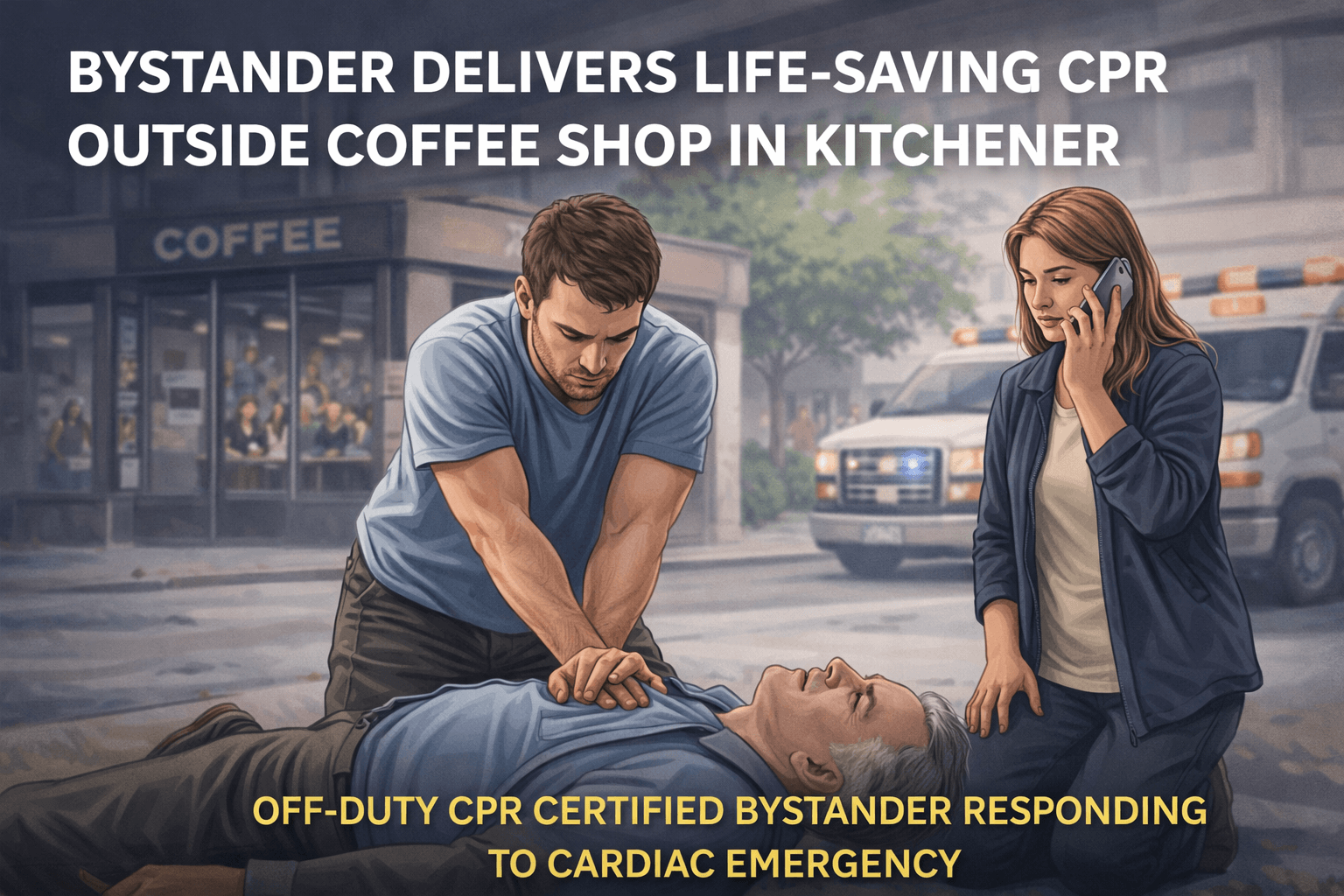 A man collapsed outside a coffee shop in Kitchener, Ontario, in what initially appeared to be a seizure. According to his wife, Jessica Burman Zinger, he suddenly went down and quickly became unresponsive, with his condition rapidly worsening.
Bystanders nearby reacted quickly. They moved him off the road to a safer area while a young man stepped in and began performing CPR.
As his wife called for emergency assistance, the man showed signs of severe distress, including a bluish skin tone, indicating a lack of oxygen.
The bystander continued CPR, and after some time, the man’s breathing returned briefly. He regained some awareness before losing consciousness again.
Emergency responders arrived and transported him to a healthcare facility, where he ultimately survived.
Later, his wife was able to identify and thank the bystander—Dylan Duncan—who had completed a CPR certification course just two weeks prior to the incident.
Signs of Cardiac Arrest
A person experiencing cardiac arrest may:
-
Collapse suddenly
-
Be unresponsive
-
Not breathe normally
-
Show signs of poor oxygen circulation (such as bluish skin)
Recognizing these signs quickly allows for faster intervention.
First Aid Response: CPR in Public Settings
If someone collapses in a public place:
-
Call 911 immediately
-
Check for responsiveness and breathing
-
Begin CPR (chest compressions)
-
Ask others nearby to assist or locate an AED
-
Continue CPR until help arrives
Even basic CPR can help maintain circulation during critical moments.
Why Immediate CPR Matters
This incident highlights:
-
The importance of bystander intervention
-
The value of recent CPR training
-
The role of quick thinking in public emergencies
-
The impact of early CPR before paramedics arrive
Every minute without CPR reduces the chances of survival.
Prevention and Safety Considerations
While cardiac events are not always predictable:
-
Learn CPR and basic first aid
-
Be aware of emergency signs in others
-
Encourage workplaces to provide training
-
Know how to respond quickly in public environments
Prepared individuals can help improve outcomes.
Frequently Asked Questions
What should I do if someone collapses suddenly in public?
Call 911, assess breathing, and begin CPR if needed.
Can CPR really help before paramedics arrive?
Yes. It helps maintain circulation and supports vital organs.
Do I need formal training to perform CPR?
Training is highly recommended and improves confidence and effectiveness.
What if the person starts breathing again?
Continue to monitor them and wait for emergency services.
Is CPR useful even if I’m unsure what caused the collapse?
If the person is unresponsive and not breathing normally, CPR is appropriate.
Educational Note
This article is intended for general first aid awareness and workplace safety education in Canada. CPR training helps individuals respond effectively during unexpected emergencies.
About The Author

Mark Kascha
First Aid Instructor Trainer with 30+ years of experience in CPR, emergency response, and safety training across Canada.
👉 [View full credentials]🔗 View LinkedIn Profile
Last reviewed: March 2026