Understanding Sudden Cardiac Arrest in Young People
 Sudden cardiac arrest occurs when the heart unexpectedly stops pumping blood effectively. When this happens, oxygen cannot circulate to the brain and other vital organs. Without rapid assistance, the person may lose consciousness within seconds. Immediate actions such as cardiopulmonary resuscitation (CPR) and the use of an automated external defibrillator (AED) can help restore heart rhythm and improve survival chances.
Across Canada, including British Columbia and the Vancouver region, schools, workplaces, and recreation facilities are increasingly equipped with AED devices and staff trained in first aid and CPR. These safety measures allow bystanders to respond quickly when someone experiences a cardiac emergency.
First Aid and Workplace Relevance in Vancouver and British Columbia
Many schools and workplaces in British Columbia encourage employees to maintain first aid, CPR, and AED training. Teachers, coaches, and staff members are often trained to recognize medical emergencies and begin life-saving care while waiting for paramedics.
Because students participate in sports and physical activity during school hours, having trained staff and accessible AED equipment can be an important part of school safety planning.
Scenario: Cardiac Emergency During a School Gym Class
At South Okanagan Secondary School, two teachers responded quickly when a student experienced a medical emergency during gym class.
Steve Podomorow and Mike Russo were supervising a joint physical education class involving Grade 8 students and senior students. After completing a 12-minute run, 13-year-old Dilshaan Dhaliwal handed in his running results and began walking across the gym.
Moments later, he suddenly collapsed.
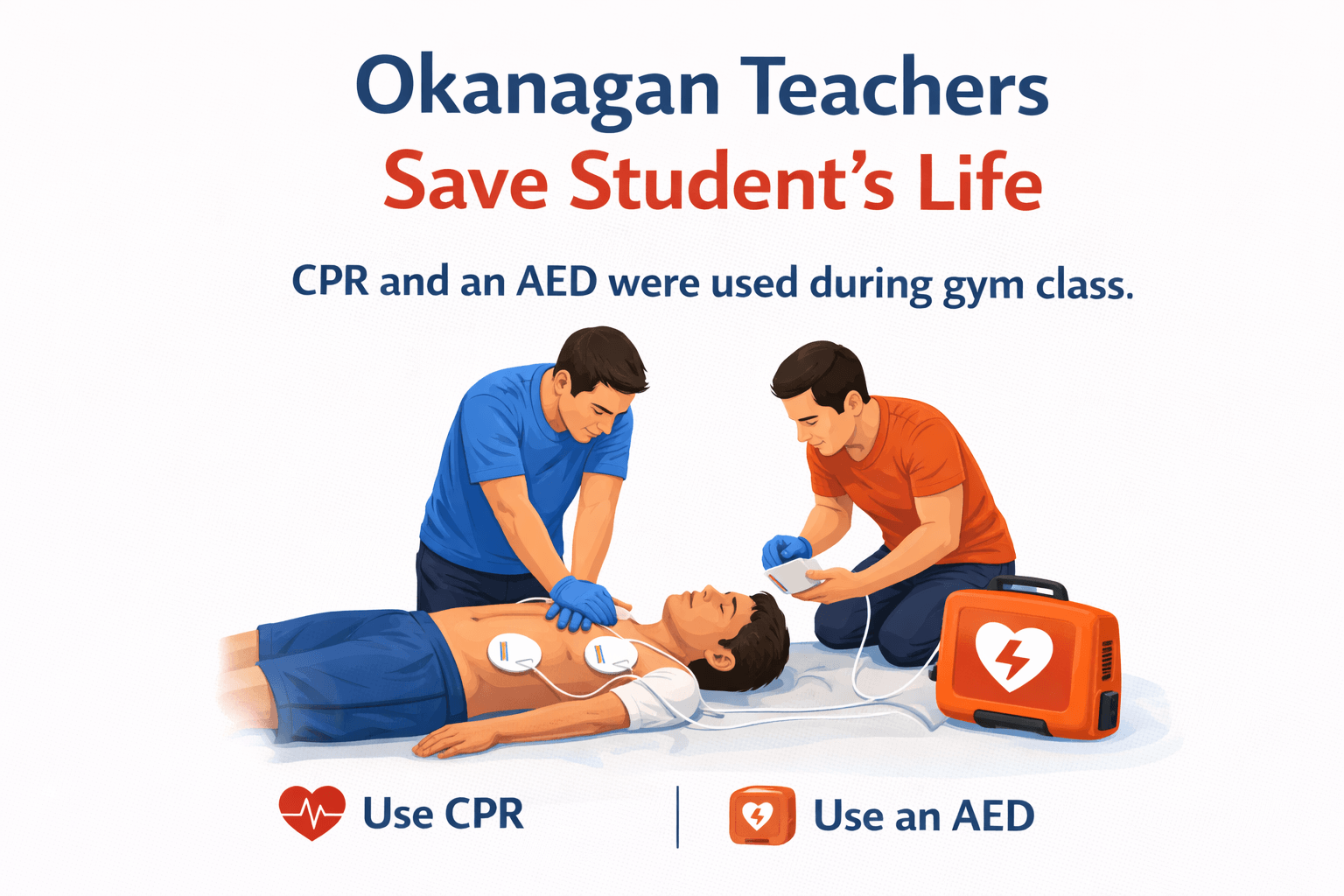
Mike Russo, who had first aid training, immediately assessed the situation and recognized that the student required urgent help. Emergency services were contacted right away, and CPR was started while a 911 dispatcher remained on the phone providing guidance.
Within a few minutes, an automated external defibrillator (AED) was brought to the scene. The device analyzed the student’s heart rhythm and assisted responders during the emergency.
CPR continued for several minutes until paramedics arrived. Dhaliwal was later transported by air ambulance to B.C. Children’s Hospital for further medical care.
The quick actions of the teachers and the availability of emergency equipment helped ensure that the student received immediate assistance during a critical moment.
Signs of Sudden Cardiac Arrest
Sudden cardiac arrest may occur with little warning. Common signs include:
-
Sudden collapse
-
Loss of consciousness
-
Absence of normal breathing
-
No detectable pulse
-
Pale or bluish skin due to reduced oxygen circulation
These signs indicate a medical emergency requiring immediate action.
Possible Causes of Cardiac Arrest in Youth
Although uncommon, cardiac arrest can occur in children or teenagers for several reasons, including:
-
Undiagnosed heart conditions
-
Abnormal heart rhythms (arrhythmias)
-
Structural heart abnormalities
-
Intense physical exertion combined with underlying conditions
Medical professionals typically perform further evaluation to determine possible causes.
First Aid and Emergency Response
When someone collapses and cardiac arrest is suspected, rapid response is essential. General emergency response actions may include:
-
Calling emergency services immediately
-
Beginning CPR if the person is unresponsive and not breathing normally
-
Retrieving and using an AED if available
-
Continuing care until emergency responders arrive
AED devices provide voice prompts that guide responders through each step, helping trained individuals provide assistance during emergencies.
School and Workplace Safety Considerations
Preparedness plays an important role in improving emergency outcomes. Schools and workplaces can strengthen safety by:
-
Providing CPR and AED training for staff
-
Installing AED devices in accessible locations
-
Practicing emergency response procedures
-
Educating students and employees about recognizing emergencies
-
Maintaining clear communication with emergency services
These measures can help ensure a faster response when medical emergencies occur.
Frequently Asked Questions
What is an AED and how does it work?
An automated external defibrillator (AED) analyzes the heart’s rhythm and may deliver a controlled electrical shock to help restore a normal heartbeat during cardiac arrest.
Why is CPR important before paramedics arrive?
CPR helps maintain blood circulation to the brain and vital organs until advanced medical care is available.
Can cardiac arrest occur in young people?
Although rare, cardiac arrest can occur in children and teenagers, sometimes due to underlying heart conditions.
Why are AEDs placed in schools and public facilities?
AEDs allow trained staff or bystanders to respond quickly during cardiac emergencies in places where many people gather.
Do teachers often receive first aid training?
Many schools encourage staff to maintain first aid, CPR, and AED certification to help respond during medical emergencies.
Educational Note
This article is intended for general public education about sudden cardiac arrest awareness and the role of CPR and AEDs in emergency response. Learning these skills can help individuals respond more confidently in schools, workplaces, and community environments.
About The Author

Mark Kascha
First Aid Instructor Trainer with 30+ years of experience in CPR, emergency response, and safety training across Canada.
Last reviewed: March 2026
 Support local, Canadian-owned businesses, with no connections to American corporations or partnerships.