Police Officer Uses CPR and AED to Help Cardiac Arrest Victim
Understanding Cardiac Arrest and Emergency Response
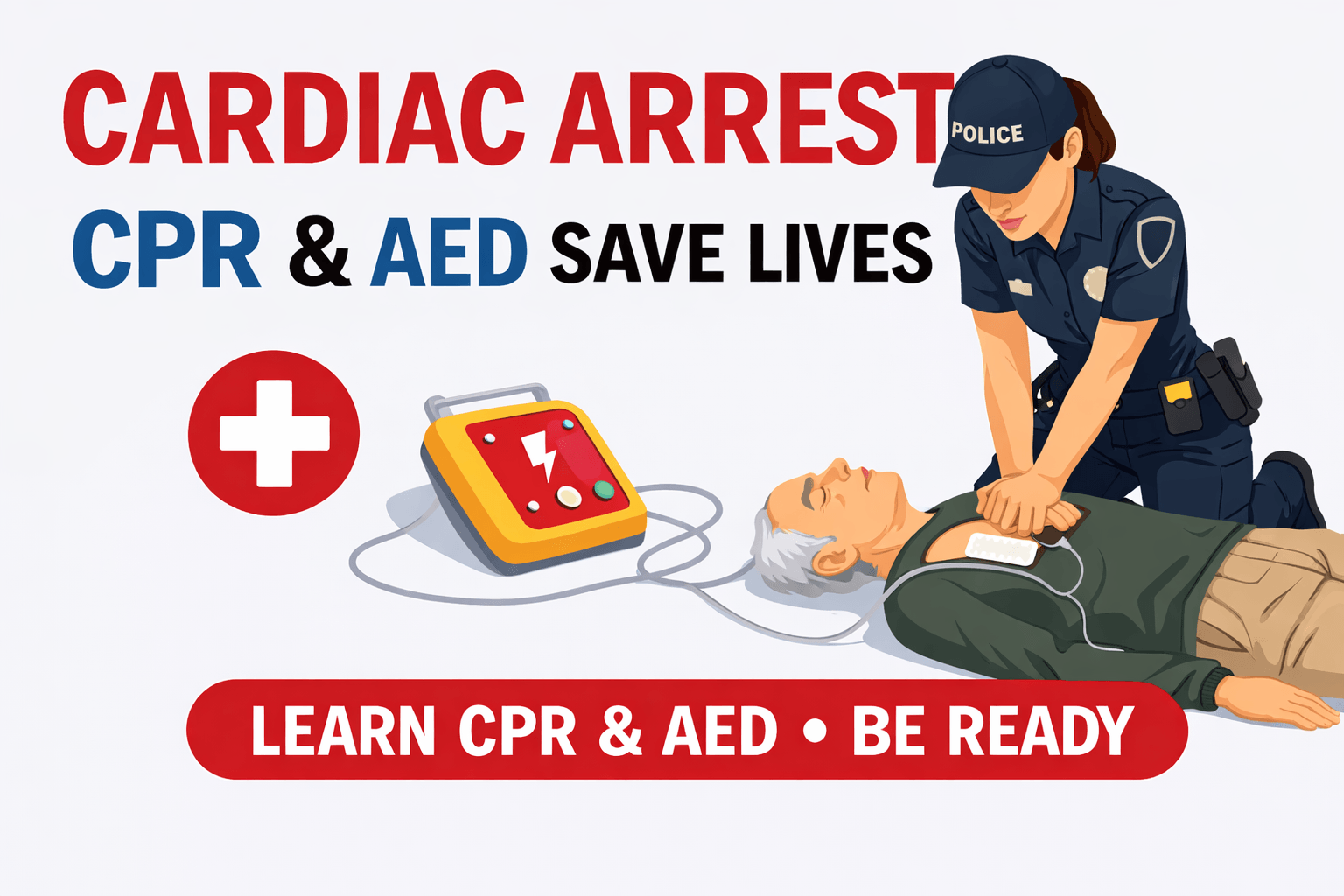 Sudden cardiac arrest occurs when the heart suddenly stops pumping blood effectively. Without immediate assistance, blood flow to the brain and other vital organs stops. In these situations, early recognition, CPR (cardiopulmonary resuscitation), and the use of an automated external defibrillator (AED) can help support circulation until paramedics arrive.
Across British Columbia and the Lower Mainland—including Vancouver, Burnaby, Richmond, and Coquitlam—CPR and AED training are widely encouraged in workplaces, community programs, and emergency services. When trained bystanders or first responders act quickly during a cardiac emergency, it can significantly improve the chances of survival.
First Aid Preparedness in Communities and Workplaces
Many workplaces in Vancouver and across British Columbia include CPR and AED training as part of their occupational safety programs. Public spaces such as restaurants, office buildings, and recreation facilities increasingly install AED devices to help support emergency response.
First responders—including police officers, firefighters, and paramedics—often receive regular CPR and AED training, allowing them to assist during emergencies while medical teams are on the way.
A Police Officer Responds to a Cardiac Emergency
An example of quick response occurred when Constable Ashley Nisbet of the Ottawa Police Service responded to a medical emergency involving a 72-year-old man.
The man collapsed outside a restaurant on Carling Avenue near Maitland Avenue in Ottawa. Constable Nisbet was the first to arrive at the scene after emergency services were contacted.
Recognizing the seriousness of the situation, she immediately began CPR and used an automated external defibrillator (AED) in an effort to restore the man’s heart rhythm.
Early Intervention Helps Restore a Pulse
When paramedics arrived shortly afterward, the man had regained a pulse, although he remained unconscious. During transport to the hospital, he began to show signs of movement, which paramedics described as an encouraging sign.
Emergency responders later credited the officer’s quick action with providing critical early care during the cardiac emergency.
Why CPR and AED Use Are Important
During cardiac arrest, every minute without assistance reduces the chances of survival. First aid training programs emphasize the importance of the “chain of survival,” which includes:
-
Early recognition of cardiac arrest
-
Immediate CPR to support circulation
-
Rapid use of an AED when available
-
Continued care until emergency medical services arrive
AED devices are designed to be used by trained responders and provide voice instructions to guide users through the process.
First Aid Training for First Responders
Police officers, firefighters, and many other public safety professionals receive CPR and AED training as part of their initial preparation and ongoing refresher programs.
This training helps ensure they are prepared to respond to emergencies that may occur in public places, workplaces, or residential areas.
Across Vancouver and the Lower Mainland, many workplaces and community organizations also offer CPR and AED training courses so that more people are prepared to help during emergencies.
Prevention and Emergency Preparedness
Although cardiac arrest often occurs unexpectedly, communities and workplaces can improve preparedness through several measures:
-
Providing CPR and AED training for staff and community members
-
Installing AED devices in public spaces and workplaces
-
Encouraging awareness of cardiac emergencies
-
Practicing emergency response procedures
Preparedness and training help ensure that more people are able to recognize and respond quickly when emergencies occur.
Frequently Asked Questions
What is an AED and how does it work?
An automated external defibrillator (AED) is a portable device that analyzes the heart’s rhythm and can deliver a controlled electrical shock if necessary. The device provides voice instructions to guide trained users through the process.
Why is CPR important during cardiac arrest?
CPR helps maintain blood circulation to the brain and vital organs while waiting for emergency medical services. This support can help sustain the body until advanced care becomes available.
Who should learn CPR and AED skills?
Many people can benefit from learning CPR and AED use, including workplace staff, teachers, coaches, community members, and students.
Are AEDs commonly available in public places?
AEDs are increasingly found in public locations such as airports, shopping centres, recreation facilities, and workplaces to help support emergency response.
Do police officers receive CPR training?
Yes. Many police departments provide CPR and AED training to officers as part of their emergency response preparation and require periodic refresher training.
Educational Note
This article is intended for general public education about first aid awareness and emergency preparedness. Participating in certified CPR and AED training programs can help individuals learn practical skills for recognizing emergencies and responding safely.
About The Author

Mark Kascha
First Aid Instructor Trainer with 30+ years of experience in CPR, emergency response, and safety training across Canada.
Last reviewed: March 2026
 Support local, Canadian-owned businesses, with no connections to American corporations or partnerships.