
Sudden cardiac arrest occurs when the heart unexpectedly stops pumping blood effectively. When this happens, oxygen-rich blood no longer reaches the brain and other vital organs. Without rapid intervention, the situation can quickly become life-threatening.
Two critical emergency responses are cardiopulmonary resuscitation (CPR) and the use of an automated external defibrillator (AED). CPR helps maintain blood circulation, while an AED can analyze the heart’s rhythm and deliver a controlled electrical shock to help restore a normal heartbeat.
Across British Columbia, including Vancouver and Abbotsford, CPR and AED awareness is often promoted in workplaces and communities because early action can improve survival during cardiac emergencies.
A Real-World Scenario
 A powerful example of rapid emergency response took place in Abbotsford, British Columbia, when firefighters helped save the life of a local resident.
One year after the incident, firefighters returned to the Yntema family home—this time for a celebration rather than an emergency. They were welcomed with applause by friends and family gathered in the backyard.
The previous time firefighters had arrived, the situation was far more serious.
Bonnie Yntema, age 60, had suffered a sudden cardiac arrest at home. Her husband, Remko, woke up after hearing unusual gurgling sounds and discovered that his wife was unresponsive.
Recognizing that something was wrong, he immediately called 9-1-1 and began performing CPR while waiting for emergency responders.
Within approximately five minutes, Abbotsford firefighters arrived and continued CPR while preparing additional lifesaving equipment.
An AED was used to analyze Bonnie’s heart rhythm and deliver a shock, helping restore a normal heartbeat.
After roughly 40 minutes of emergency care, Bonnie was stabilized enough to be transported to a healthcare facility.
While receiving treatment at the hospital, she experienced a second cardiac arrest and was again revived with defibrillation. Doctors placed her in a medically induced coma for two days to help protect her brain during recovery.
Her family waited anxiously to see how she would recover. When she woke up, she was able to recognize her husband, children, and other loved ones.
Her recovery continued from there, and the family later invited the firefighters who helped save her life to return to the home for a celebration of gratitude.
Stories like this demonstrate how early CPR and rapid defibrillation can play an important role during cardiac emergencies.
Signs of Sudden Cardiac Arrest
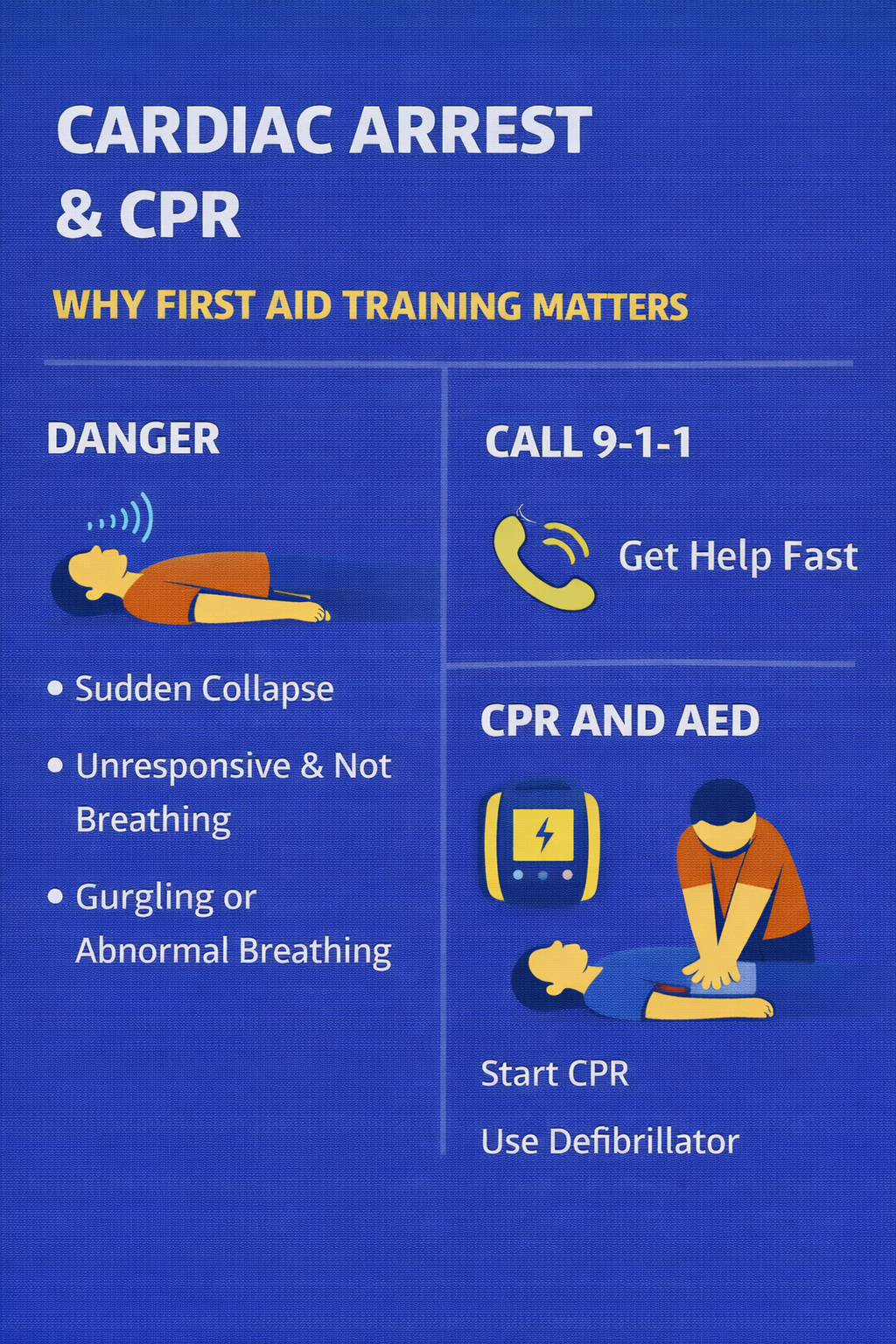
Cardiac arrest often occurs without warning, but some signs may indicate that a person is experiencing a medical emergency.
Possible signs include:
-
Sudden collapse
-
Unresponsiveness
-
No normal breathing or only gasping
-
Unusual sounds such as gurgling or abnormal breathing
If these signs are present, immediate emergency response is critical.
Why CPR and AED Use Are Important
CPR and AED use work together during cardiac emergencies.
CPR helps:
-
Maintain blood flow to the brain and heart
-
Provide oxygen circulation while waiting for advanced care
AEDs help by:
-
Analyzing the heart’s rhythm
-
Delivering a controlled electrical shock when needed
-
Guiding rescuers with voice instructions
Many public locations across Canada now install AEDs to improve emergency response.
First Aid Awareness During Cardiac Emergencies
First aid training teaches general steps that may help during cardiac arrest.
Typical response steps include:
-
Call emergency services (9-1-1 in Canada).
-
Check responsiveness and breathing.
-
If the person is not breathing normally, begin CPR if trained and if it is safe to do so.
-
Retrieve and use an AED if one is available.
-
Continue CPR until emergency responders arrive.
Early action from bystanders can help provide critical support during the first minutes of a cardiac emergency.
Prevention and Workplace Preparedness
Cardiac arrest can occur in homes, workplaces, or public spaces. Because these events often happen without warning, preparedness is important.
Safety measures may include:
-
CPR and AED training for employees
-
AED devices in workplaces and public buildings
-
Emergency response procedures for staff
-
Awareness of cardiac emergency signs
Throughout Vancouver and British Columbia, many organizations encourage CPR training as part of workplace safety and community preparedness programs.
FAQ
What is sudden cardiac arrest?
Sudden cardiac arrest occurs when the heart stops pumping blood effectively, leading to loss of consciousness and breathing.
How does CPR help during cardiac arrest?
CPR provides chest compressions that help circulate oxygenated blood to the brain and vital organs until advanced care is available.
What does an AED do?
An AED analyzes the heart’s rhythm and may deliver an electrical shock to help restore a normal heartbeat.
Can cardiac arrest happen to people with no previous heart problems?
Yes. Cardiac arrest can sometimes occur without warning, even in individuals who have not been previously diagnosed with heart disease.
Why is CPR training encouraged for the public?
Training helps people recognize emergencies and understand how to respond safely while waiting for professional responders.
Educational Note
This article is intended for general first aid awareness and public safety education. Learning CPR and AED use through certified training programs can help individuals recognize cardiac emergencies and respond safely until emergency services arrive.
About The Author

Mark Kascha
First Aid Instructor Trainer with 30+ years of experience in CPR, emergency response, and safety training across Canada.
👉 [View full credentials]🔗 View LinkedIn Profile
Last reviewed: March 2026