Understanding CPR in Everyday Emergencies
 Cardiopulmonary resuscitation (CPR) is a first aid technique used when a person’s heart stops beating effectively or when they are not breathing normally. CPR helps circulate blood to vital organs until professional medical help arrives.
Across British Columbia and the Lower Mainland—including Vancouver, Burnaby, Surrey, and Coquitlam—CPR training is often included in workplace safety programs, school courses, and community education initiatives. Emergencies can occur anywhere, including public transportation, schools, workplaces, or community spaces. When trained bystanders recognize an emergency and respond quickly, it can help stabilize a person until paramedics arrive.
First Aid Awareness in Public Spaces in British Columbia
Public environments such as buses, transit stations, and college campuses bring together many people each day. Because medical emergencies can occur without warning, many organizations encourage CPR and first aid education for students, staff, and community members.
In British Columbia workplaces and educational institutions, first aid training is often recommended because bystanders are frequently the first people available to assist during a medical emergency.
A Student Responds During a Bus Emergency
A college student named Nicole Bade, age 30, experienced this reality firsthand during a routine trip to class.
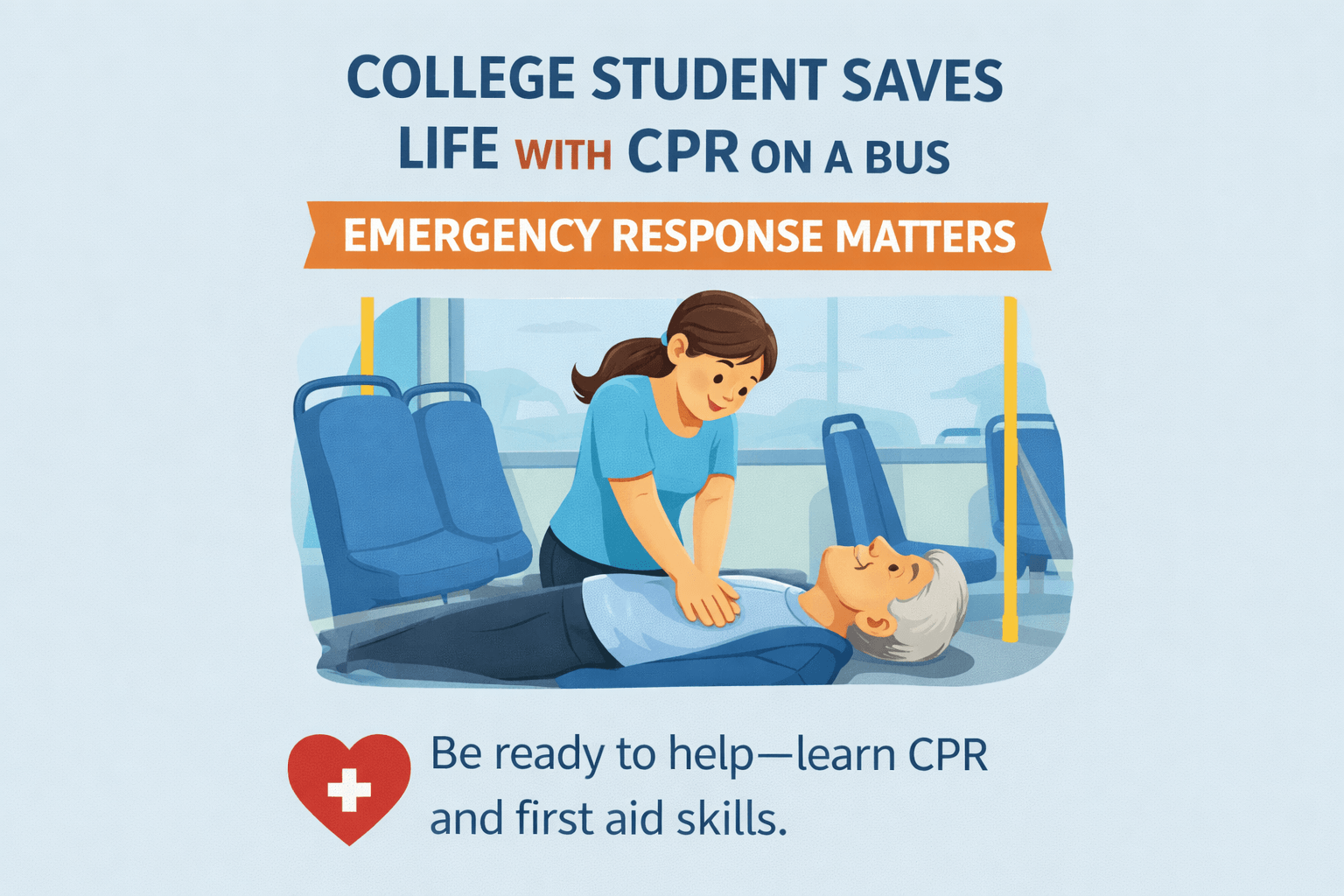
Bade was travelling by bus on her way to an Early Childhood Education (ECE) course when an unexpected medical emergency occurred nearby. A 70-year-old passenger standing near her suddenly collapsed in the aisle.
At the time, Bade herself was recovering from a knee injury and was using a wheelchair. Other passengers helped move the man into a seat while they tried to understand what had happened.
Shortly after collapsing, the man experienced additional medical distress and became unresponsive.
Stepping Forward to Help
The bus had reached the college campus and the driver began assisting the passengers. Someone called out asking whether anyone knew CPR.
Although she had learned CPR during a class the previous fall, Bade had never needed to use the skill in a real-life situation.
Despite the pain in her injured knee, she moved out of her wheelchair and began performing chest compressions on the man while others contacted emergency services.
She continued assisting until paramedics arrived and took over care. Although she did not know exactly how long she performed CPR, her quick action helped provide assistance during the critical early moments of the emergency.
Why Immediate CPR Matters
During sudden cardiac emergencies, immediate assistance from bystanders can help maintain circulation until advanced medical care arrives.
First aid training programs often emphasize that early CPR is one of the most important actions bystanders can take when someone collapses and becomes unresponsive.
These early actions may include:
-
Recognizing that a person is unresponsive or not breathing normally
-
Calling emergency medical services
-
Beginning CPR if trained
-
Continuing assistance until paramedics arrive
Quick intervention helps support the body’s circulation during the time before professional medical treatment becomes available.
Signs That May Indicate a Cardiac or Medical Emergency
Medical emergencies that require immediate assistance may involve signs such as:
-
Sudden collapse
-
Unresponsiveness
-
Irregular or absent breathing
-
Seizure-like activity
-
Loss of consciousness
These situations require prompt attention and activation of emergency medical services.
First Aid Preparedness in Schools and Workplaces
Across Vancouver and the Lower Mainland, many organizations encourage CPR training because emergencies can happen in everyday environments—including classrooms, public transit, and workplaces.
Preparedness strategies may include:
-
CPR and first aid training for staff and students
-
Awareness of emergency procedures
-
Accessible first aid supplies and AED devices in public facilities
-
Encouraging community members to learn life-saving skills
Stories like this one demonstrate how training and confidence can help people respond during unexpected emergencies.
Frequently Asked Questions
Why is CPR training recommended for students and workers?
CPR training helps people recognize emergencies and respond safely if someone collapses or stops breathing normally. Because emergencies often occur in everyday environments, trained bystanders can provide assistance before paramedics arrive.
Can someone with limited mobility still help during an emergency?
Yes. Emergency response often involves teamwork. People can assist by calling emergency services, guiding others, retrieving equipment, or providing first aid if they are able.
How common are medical emergencies in public spaces?
Medical emergencies can occur in any public environment, including transportation systems, schools, workplaces, or recreational facilities. Preparedness and awareness help communities respond more effectively.
Do colleges and workplaces in Canada offer CPR training?
Many educational institutions and workplaces across Canada offer CPR and first aid training programs as part of safety and emergency preparedness initiatives.
Why is quick action important when someone collapses?
Early recognition and assistance help maintain circulation and breathing while emergency responders travel to the scene.
Educational Note
This article is intended for general first aid awareness and public education. Hands-on CPR and first aid training courses help individuals learn how to recognize emergencies and respond safely within their level of training.
About The Author

Mark Kascha
First Aid Instructor Trainer with 30+ years of experience in CPR, emergency response, and safety training across Canada.
Last reviewed: March 2026
 Support local, Canadian-owned businesses, with no connections to American corporations or partnerships.