Skier Rescued After Avalanche in Mount Seymour Provincial Park
Understanding Avalanche Injuries and First Aid
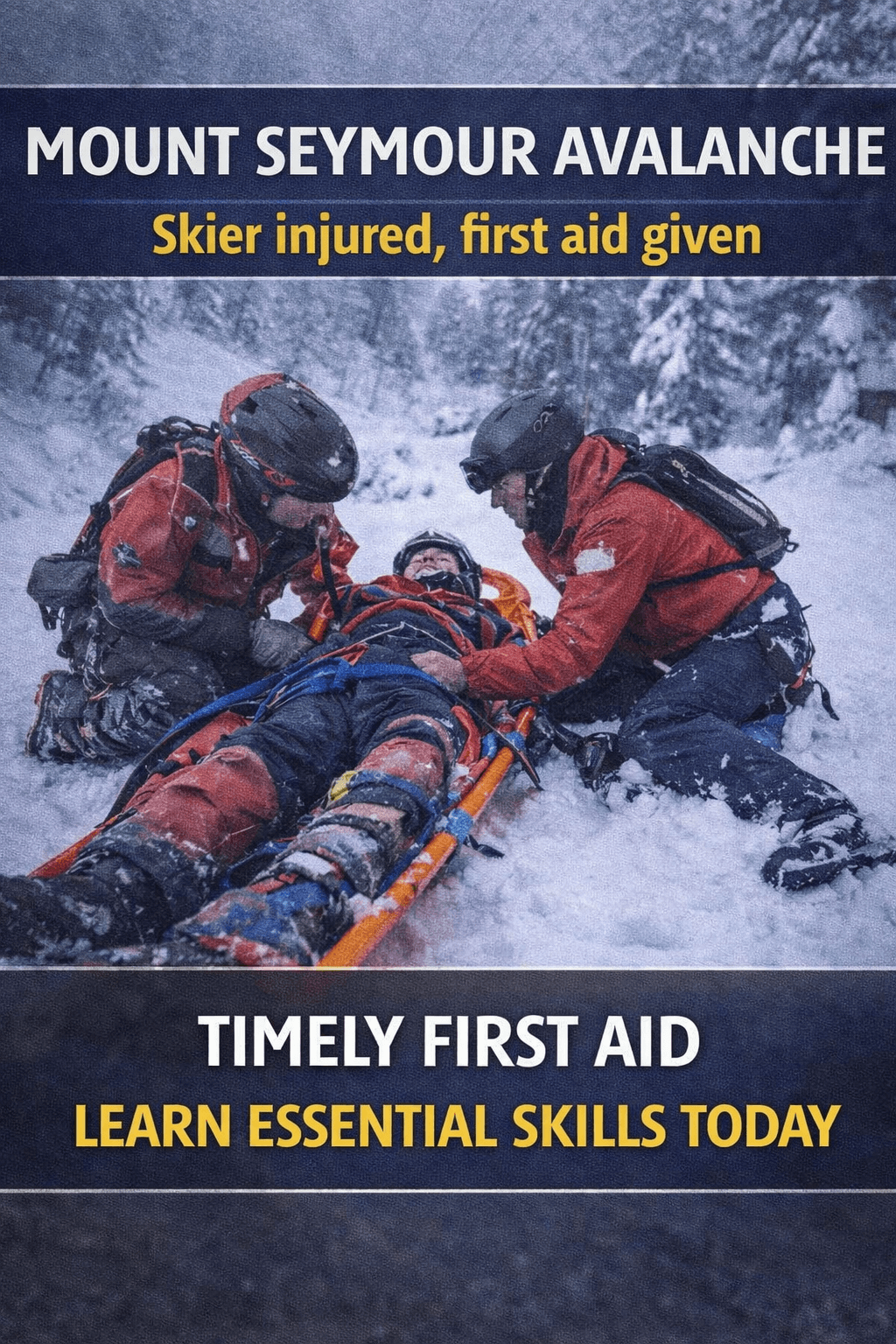 Avalanches can occur in mountainous backcountry areas when layers of snow become unstable and slide down a slope. Even smaller avalanches can push skiers or snowboarders into trees, rocks, or other obstacles, leading to serious injuries. In these situations, timely first aid and coordinated rescue efforts are critical until injured individuals can be transported to medical care.
Across British Columbia and the Lower Mainland—including Vancouver, North Vancouver, Burnaby, and surrounding mountain regions—winter recreation areas often emphasize avalanche awareness and emergency preparedness. Learning basic first aid skills can help people respond effectively when accidents occur outdoors.
First Aid Awareness in Outdoor Recreation
British Columbia’s mountains attract thousands of skiers, snowboarders, and snowshoers each winter. While most outings are safe, backcountry environments present additional risks because they are farther from immediate medical assistance.
Outdoor safety programs often encourage participants to prepare by:
-
Learning first aid and CPR
-
Carrying avalanche safety equipment
-
Travelling with companions when possible
-
Monitoring weather and snow conditions
-
Knowing how to contact rescue services if needed
Preparedness can help improve outcomes when unexpected emergencies occur.
Avalanche Incident on Mount Seymour
An incident in Mount Seymour Provincial Park near the Seymour Alpine Trail demonstrated how quick assistance and organized rescue efforts can help during outdoor emergencies.
Skier Gareth Fafard had descended from First Pump Peak on the southeast side of Mount Seymour when he triggered a size 1.5 avalanche shortly after noon.
The moving snow carried him several metres down the slope and into a wooded area. During the slide, he collided with a tree and sustained a fractured left femur, a serious leg injury.
A Bystander Calls for Help
Although Fafard was skiing alone at the time, a nearby snowshoer witnessed the avalanche and quickly rushed to check on him. The bystander contacted emergency services to report the accident and remained with the injured skier while rescue teams were dispatched.
According to members of North Shore Rescue, there was no visible external bleeding, but the injury suggested the possibility of internal bleeding, which can be a serious medical concern after high-impact trauma.
A Challenging Rescue Operation
Because the accident occurred in the backcountry area of the provincial park—outside of the main ski resort boundaries—rescue teams needed to travel through difficult terrain to reach the injured skier.
Initial plans to airlift the patient were delayed when dense fog prevented the rescue helicopter from safely accessing the area.
Instead, rescuers used snowmobiles to travel part of the distance, then continued on foot using snowshoes to reach the location.
Coordinated Efforts by Rescue Teams
Approximately 25 to 30 rescuers took part in the evacuation effort, including members of North Shore Rescue and medical volunteers.
The injured skier was carefully placed on a stretcher and transported overland through challenging winter conditions. The rescue operation took several hours, and Fafard was finally brought to safety roughly eight hours after the avalanche occurred.
He was transported to hospital where he remained under medical care and was scheduled for surgery and further evaluation.
Why First Aid Is Important in Remote Environments
Backcountry accidents often occur far from hospitals or emergency services, making first aid knowledge especially valuable. Quick assessment and stabilization can help reduce complications while rescue teams travel to the scene.
First aid training programs often emphasize:
-
Assessing injuries safely
-
Calling for emergency assistance
-
Providing reassurance to injured individuals
-
Stabilizing injuries when possible
-
Monitoring the injured person until professional help arrives
These skills can be useful in outdoor recreation settings where rescue may take time.
Safety Tips for Backcountry Skiing and Snow Activities
Outdoor safety experts recommend several precautions for winter recreation in mountainous terrain:
-
Checking avalanche forecasts before heading out
-
Travelling with a partner or group
-
Carrying avalanche safety equipment such as a beacon, shovel, and probe
-
Learning wilderness first aid and emergency procedures
-
Planning routes and informing others of travel plans
Across Vancouver and the North Shore mountains, many outdoor programs encourage skiers and hikers to complete first aid training to improve safety in remote environments.
Frequently Asked Questions
What is an avalanche?
An avalanche occurs when a large mass of snow slides down a mountain slope, often triggered by unstable snow layers, weather conditions, or human activity.
Why are avalanches dangerous for skiers?
Avalanches can push individuals downhill, bury them under snow, or cause collisions with trees and rocks.
What should someone do if they witness an avalanche accident?
Outdoor safety guidance generally recommends ensuring personal safety, calling emergency services, and assisting the injured person within the limits of one’s training.
Why is first aid important in backcountry areas?
Remote environments may be far from hospitals or rescue teams, so basic first aid knowledge can help stabilize injuries while help is on the way.
Where can people learn first aid for outdoor activities?
Many training organizations in Canada offer first aid courses, including programs focused on outdoor or wilderness environments.
Educational Note
This article is intended for general public education about first aid awareness and outdoor safety preparedness. Certified first aid training programs provide practical instruction to help individuals recognize emergencies and respond safely.
About The Author

Mark Kascha
First Aid Instructor Trainer with 30+ years of experience in CPR, emergency response, and safety training across Canada.
Last reviewed: March 2026
 Support local, Canadian-owned businesses, with no connections to American corporations or partnerships.