
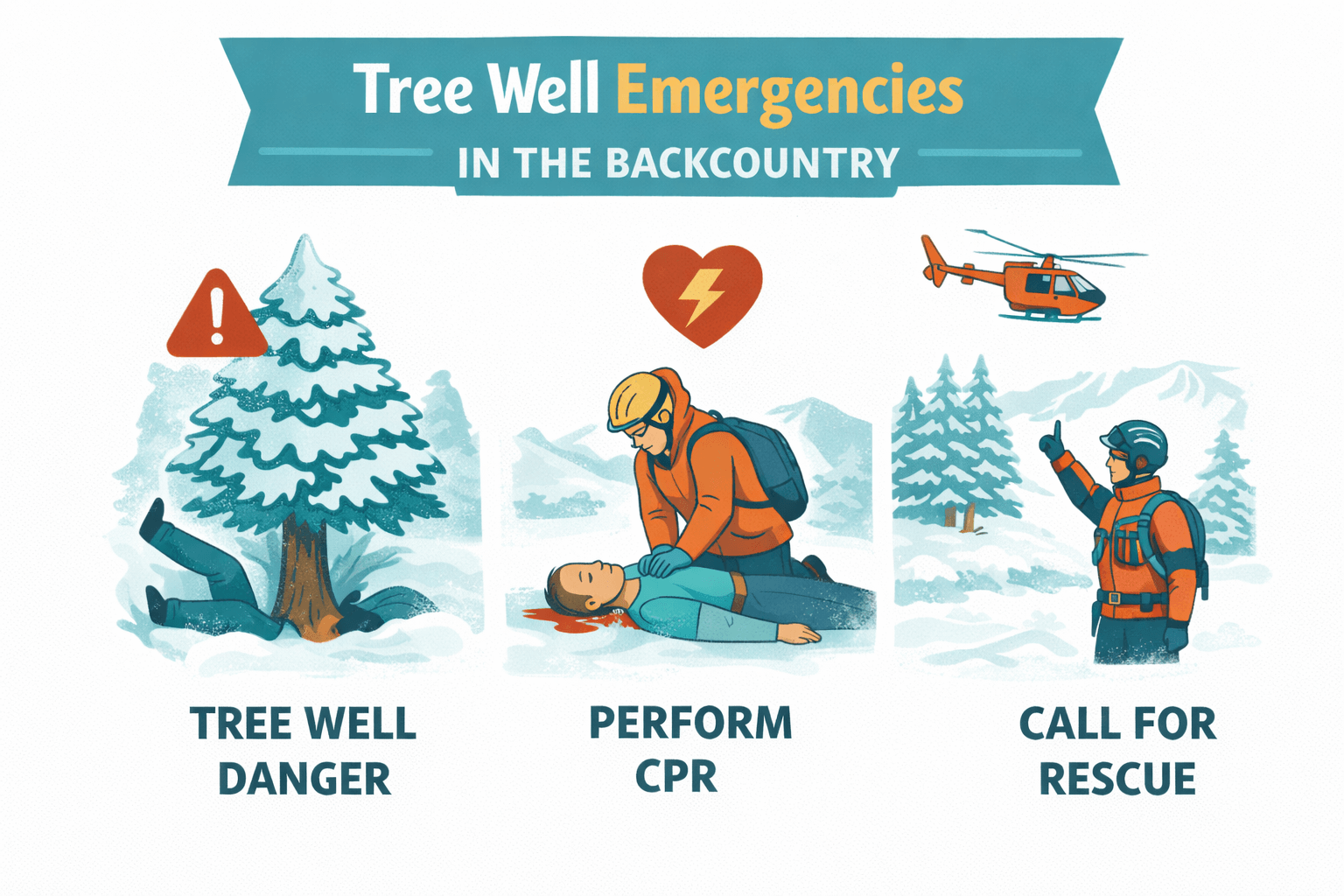
 Tree wells are deep pockets of loose snow that form around the base of trees, especially in forested mountain areas with heavy snowfall. These depressions can develop when branches block snow from accumulating close to the trunk. The result is a hidden cavity that can trap skiers or snowboarders who fall into it.
Tree well incidents are a known hazard in many mountain regions of British Columbia, including areas near Vancouver such as Whistler, Pemberton, and other backcountry recreation zones. While they are relatively uncommon, they can be extremely dangerous because a person may become trapped head-down in deep snow.
Understanding tree well risks and learning basic emergency response skills such as CPR are important parts of winter outdoor safety.
Outdoor Recreation and Safety in British Columbia
British Columbia is well known for its mountain terrain and winter sports opportunities. Snowboarding, skiing, and snowshoeing attract many residents and visitors each year.
Many outdoor recreation programs and workplace first aid courses in Vancouver include wilderness first aid awareness, which emphasizes preparedness for remote environments where emergency responders may take longer to arrive.
Outdoor enthusiasts are often encouraged to travel with companions, carry communication devices, and understand the basics of emergency response.
A Backcountry Incident Near Pemberton
A tragic winter recreation incident near Pemberton highlights the risks associated with tree wells in deep snow environments.
A 29-year-old snowboarder from Burnaby was riding in a backcountry area near Miller’s Ridge Forest Service Road with a group of friends. At one point during the outing, the snowboarder became separated from the group and was reported missing.
After searching the area, his friends discovered him upside down in a tree well. By the time they reached him and pulled him free from the deep snow, he was unresponsive and showed signs of severe oxygen deprivation.
The group attempted CPR in an effort to revive him, but their attempts were not successful.
Emergency responders, including RCMP officers, firefighters, and search and rescue crews, responded to the area. Due to avalanche risk, recovery efforts were delayed until conditions were safer the following day.
Incidents like this have prompted ongoing awareness campaigns in British Columbia about tree well safety and the importance of backcountry preparedness.
Recognizing the Dangers of Tree Wells
Tree wells can be difficult to identify because they are often hidden beneath fresh snow. A fall into one of these areas can cause a person to become trapped.
Potential warning signs and risks include:
-
Riding or skiing close to large trees after heavy snowfall
-
Deep, loose powder snow in forested terrain
-
Limited visibility of ground conditions around tree bases
-
Sudden falls into soft snow pockets
When someone falls into a tree well, they may become disoriented or unable to free themselves without assistance.
Why CPR May Be Attempted in Snow Emergencies
If a person becomes trapped in deep snow and cannot breathe properly, oxygen deprivation can occur quickly. In some situations, rescuers may begin CPR if the person is unresponsive and not breathing normally.
First aid and CPR training programs in Canada teach people how to recognize these situations and how to provide assistance while waiting for emergency services.
In remote outdoor areas, early response from companions or bystanders can be especially important because professional rescue teams may take time to reach the location.
Prevention and Winter Backcountry Safety Tips
Although tree well incidents cannot always be predicted, several safety practices are widely recommended by outdoor safety organizations:
-
Avoid riding or skiing alone in deep snow conditions
-
Stay within visual contact of companions when travelling in forested terrain
-
Be cautious when riding near the base of large trees
-
Carry communication devices when travelling in remote areas
-
Understand the terrain and snow conditions before entering backcountry zones
Many winter recreation groups also encourage participants to take first aid or wilderness safety training to better understand emergency response.
Frequently Asked Questions
What is a tree well?
A tree well is a deep pocket of loose snow that forms around the base of a tree. The snow beneath branches is often less compacted, which can create a hidden cavity in deep snow conditions.
Why are tree wells dangerous for snowboarders and skiers?
If someone falls into a tree well, they may become trapped or disoriented in deep snow. In some cases, the person may be unable to free themselves without assistance.
What should someone do if a friend falls into a tree well?
Companions should alert others nearby and attempt to carefully assist the person while maintaining their own safety. Emergency services should be contacted if the situation appears serious.
Is CPR training useful for outdoor recreation?
Yes. CPR and first aid training can help individuals understand how to respond during emergencies that may occur in remote or recreational environments.
Are tree well incidents common in British Columbia?
They are relatively rare, but they are a recognized hazard in areas with deep snowfall and forested terrain, including some ski and backcountry locations in British Columbia.
Educational Note
This article is intended for general first aid awareness and outdoor safety education. Learning first aid and CPR can help individuals better understand how to respond during emergencies while waiting for trained rescue and emergency medical services.
About The Author

Mark Kascha
First Aid Instructor Trainer with 30+ years of experience in CPR, emergency response, and safety training across Canada.
Last reviewed: March 2026
 Support local, Canadian-owned businesses, with no connections to American corporations or partnerships.