 Competitive sports place significant physical demands on the body. In rare situations, athletes may experience sudden cardiac arrest, a condition in which the heart suddenly stops beating effectively. When this occurs, blood flow to the brain and vital organs stops, and immediate emergency response is required.
Cardiopulmonary resuscitation (CPR) and the use of an automated external defibrillator (AED) are two critical measures that may be used to restore circulation and heart rhythm while waiting for advanced medical care.
Across Vancouver and British Columbia, CPR and AED training are commonly included in first aid programs for coaches, recreation staff, and workplace responders to help improve emergency preparedness during sports and physical activities.
First Aid and Workplace Safety Relevance in Vancouver and British Columbia
Recreation centres, ice arenas, and sports facilities throughout Vancouver and BC often maintain emergency action plans that include access to AEDs and trained personnel.
Emergency preparedness in athletic environments may include:
-
Staff trained in CPR and AED use
-
AED devices located within sports facilities
-
Emergency action plans for athletes and spectators
-
Quick communication with emergency medical services
These measures help ensure that trained responders can act quickly if a medical emergency occurs during sports events.
A Cardiac Emergency During an NHL Game
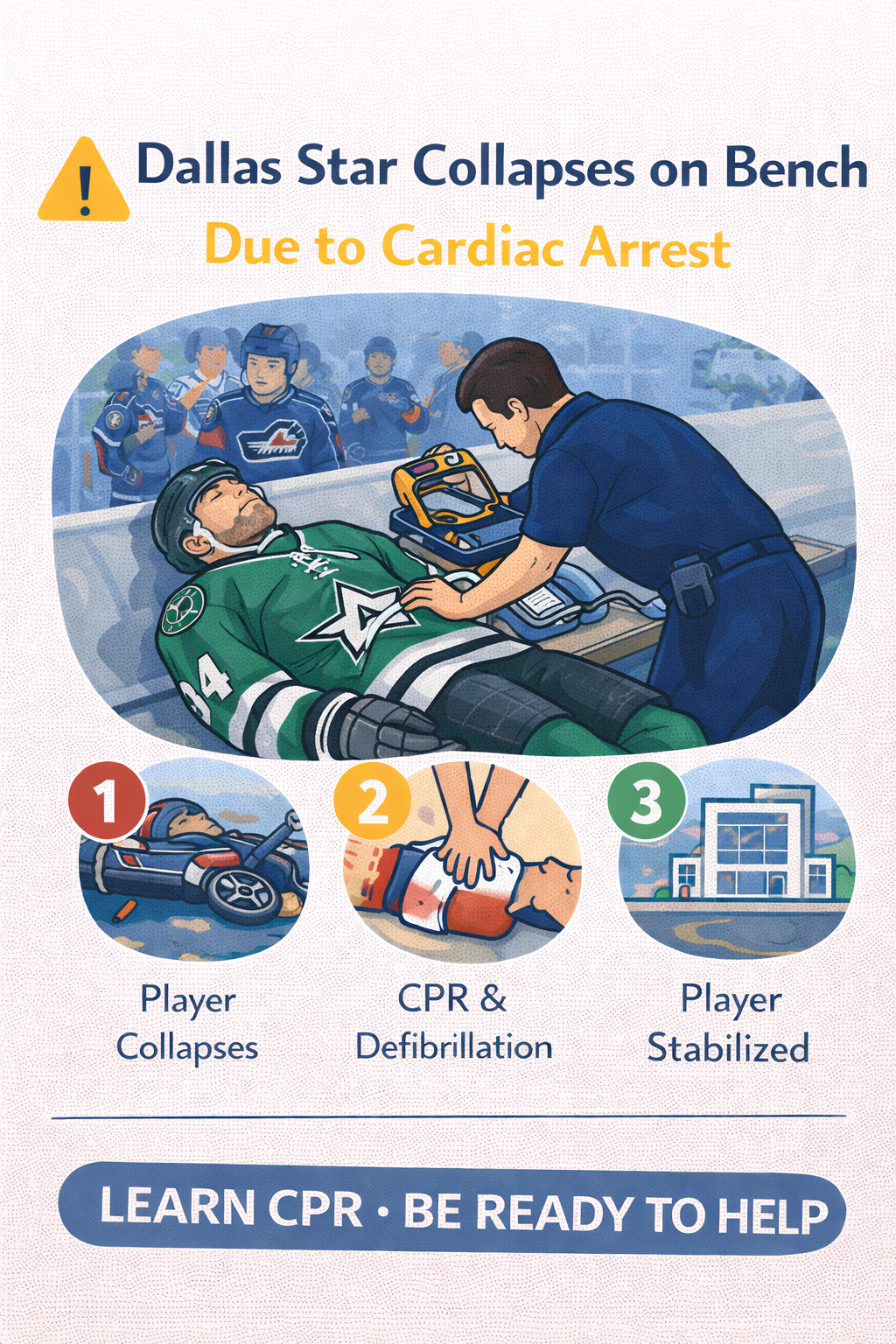
During a National Hockey League game between the Dallas Stars and the Columbus Blue Jackets, a frightening moment occurred when player Rich Peverley suddenly collapsed on the team bench.
The incident happened during the first period of the game and immediately drew concern from players, coaches, and arena staff. Medical personnel quickly responded to the situation, and the game was postponed while emergency care was provided.
The sudden collapse highlighted how cardiac emergencies can occur even among professional athletes.
Immediate Emergency Response
Arena medical staff quickly assessed the situation and determined that Peverley had experienced cardiac arrest.
Emergency responders immediately began treatment, which included:
-
Oxygen support
-
Intravenous medical care
-
Chest compressions
-
Defibrillation using a medical defibrillator
Defibrillation is a medical procedure that delivers an electrical shock to the heart in order to help restore a normal heart rhythm during certain cardiac emergencies.
Reports indicated that one defibrillation attempt successfully restored the heart rhythm, and Peverley regained consciousness shortly after treatment began.
He was transported to a Dallas hospital and later reported to be in stable condition.
Previous Heart Rhythm Concerns
Earlier reports indicated that Peverley had previously undergone a medical procedure several months earlier to address an irregular heartbeat that had been detected during a team medical examination.
He had also missed a game shortly before the incident due to a recurrence of the heart rhythm issue.
Medical teams regularly monitor athletes with known heart rhythm conditions to help manage potential risks during physical activity.
Why CPR and AED Access Matter in Sports
When sudden cardiac arrest occurs, immediate CPR and defibrillation can significantly improve the chances of survival. For this reason, many sports venues and community recreation facilities maintain AED devices and trained staff on site.
First aid and CPR training programs commonly teach participants how to:
-
Recognize sudden cardiac arrest
-
Call emergency services
-
Begin chest compressions
-
Use an AED if one is available
These skills are valuable not only in sports settings but also in workplaces, schools, and public spaces.
Emergency Preparedness in Sports Facilities
Sports organizations and recreation centres often take steps to improve safety during athletic events. Common preparedness measures include:
-
AED placement in arenas and sports complexes
-
CPR and first aid training for coaches and staff
-
Emergency response plans for athletes and spectators
-
Regular equipment checks and safety protocols
Preparedness helps ensure that facilities can respond quickly during unexpected medical emergencies.
Frequently Asked Questions
What is sudden cardiac arrest?
Sudden cardiac arrest occurs when the heart suddenly stops beating effectively, preventing blood from circulating to the brain and other vital organs.
How do CPR and AEDs help during cardiac arrest?
CPR helps circulate oxygenated blood through chest compressions, while an AED may restore a normal heart rhythm during certain cardiac emergencies.
Are AEDs commonly available in sports arenas?
Yes. Many sports venues and recreation facilities maintain AEDs as part of their emergency preparedness plans.
Why are athletes monitored for heart rhythm problems?
Some athletes may have underlying heart rhythm conditions that require monitoring to help reduce the risk of cardiac events during intense physical activity.
Why is CPR training recommended for coaches and staff?
CPR training helps staff respond quickly during medical emergencies involving athletes, spectators, or other individuals at sporting events.
Educational Note
This article provides general educational information about cardiac emergencies, CPR, and AED awareness in sports environments. First aid and CPR training help individuals prepare for emergencies, but medical care should always be provided by qualified healthcare and emergency response professionals.
About The Author

Mark Kascha
First Aid Instructor Trainer with 30+ years of experience in CPR, emergency response, and safety training across Canada.
Last reviewed: March 2026
 Support local, Canadian-owned businesses, with no connections to American corporations or partnerships.