
Outdoor education programs, camps, and field courses often include activities near lakes, rivers, or other natural environments. While these experiences provide valuable learning opportunities, natural water settings can also present safety risks.
Drowning can occur when a person is unable to breathe due to submersion in water. If a person is removed from the water and is not breathing normally, cardiopulmonary resuscitation (CPR) may be attempted to help maintain blood circulation and oxygen flow until emergency responders arrive.
Across Canada, including Vancouver and British Columbia, outdoor programs and workplaces that operate near lakes or rivers often emphasize water safety and first aid training. Knowing how to recognize an emergency and begin CPR can help bystanders respond quickly in unexpected situations.
A Real-World Scenario
 A tragic incident occurred during an engineering survey camp at Gull Lake, Ontario, involving a student attending a university field program.
According to reports released by the faculty of engineering, an 18-year-old civil engineering student from Mississauga was participating in activities at the camp when he became separated from others who were in the water.
Members of the group realized he was missing and began searching the surrounding area. When they located him in the water, they quickly brought him to shore and began first aid and CPR while contacting emergency services.
Ontario Provincial Police confirmed that emergency responders arrived at the scene and continued providing care. The student was transported to a healthcare facility but was later declared deceased.
Authorities indicated that alcohol or other substances were not believed to be factors in the incident.
Situations like this highlight the importance of water safety awareness during outdoor programs, where participants may spend time near lakes and other natural bodies of water.
Signs of a Drowning Emergency
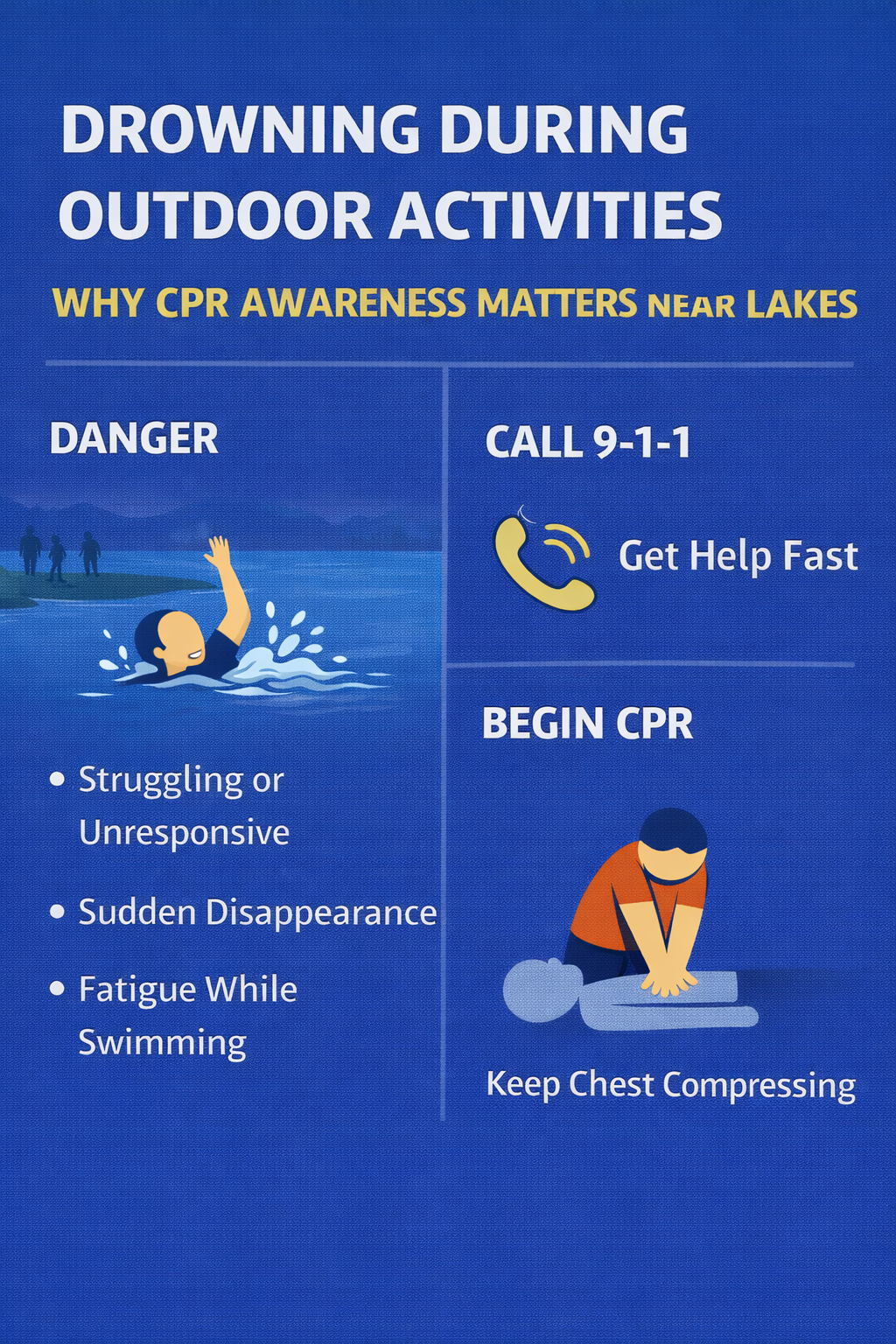
Drowning incidents can happen quickly and may not always involve visible splashing or calls for help.
Possible warning signs include:
-
Sudden disappearance beneath the water
-
Weak or uncoordinated swimming movements
-
Floating face-down or appearing unresponsive
-
Struggling to stay above water
-
Lack of movement after being removed from the water
If someone is removed from the water and is not breathing normally, CPR may be attempted while waiting for emergency responders.
Risk Factors During Outdoor Water Activities
Water-related emergencies may occur for several reasons during outdoor programs or recreational activities.
Possible risk factors include:
-
Fatigue while swimming
-
Sudden changes in water depth
-
Cold water temperatures
-
Limited supervision in open water
-
Inexperience with swimming in natural lakes
Natural bodies of water can have conditions that differ significantly from pools or controlled swimming environments.
First Aid Awareness During Water Emergencies
First aid training teaches general steps that may help when someone is pulled from the water.
Typical response steps include:
-
Call emergency services (9-1-1 in Canada).
-
Ensure the area is safe before attempting a rescue.
-
Once the person is removed from the water, check responsiveness and breathing.
-
If breathing is absent or abnormal, begin CPR if it is safe to do so.
-
Continue CPR until emergency responders arrive.
Early CPR may help maintain circulation while advanced medical care is on the way.
Prevention and Outdoor Water Safety
Outdoor programs and recreational groups often encourage several precautions when activities take place near water.
Safety practices may include:
-
Swimming only in designated or supervised areas
-
Staying close to group members while in the water
-
Wearing lifejackets when required
-
Being aware of changing lake conditions
-
Learning basic first aid and CPR skills
Across British Columbia and Vancouver, many outdoor workplaces and recreation programs promote CPR training to improve emergency preparedness.
FAQ
Why is CPR important during drowning emergencies?
If a person stops breathing after being submerged, CPR may help maintain circulation and oxygen flow until emergency responders arrive.
Can drowning occur even when people are swimming in groups?
Yes. A person can become separated or experience distress quickly, especially in open water environments such as lakes.
What should someone do if a swimmer suddenly disappears underwater?
Emergency services should be contacted immediately. Rescue attempts should only be made if the situation is safe for the rescuer.
Are natural lakes more dangerous than swimming pools?
Lakes may have uneven bottoms, colder temperatures, and reduced visibility, which can create additional risks compared to controlled swimming environments.
Why is CPR training recommended for students and outdoor groups?
Training helps individuals recognize emergencies and respond safely while waiting for professional emergency responders.
Educational Note
This article is intended for general first aid awareness and water safety education. Learning CPR and first aid through certified training programs can help individuals recognize emergencies and respond safely until emergency services arrive.
About The Author

Mark Kascha
First Aid Instructor Trainer with 30+ years of experience in CPR, emergency response, and safety training across Canada.
👉 [View full credentials]🔗 View LinkedIn Profile
Last reviewed: March 2026