
Horseback riding is a popular recreational activity across British Columbia, including Delta, Ladner, and the greater Vancouver region. While generally safe when proper precautions are followed, falls from horses can sometimes lead to serious injuries. In rare situations where a person becomes unresponsive or stops breathing after a fall, cardiopulmonary resuscitation (CPR) may be used as an emergency first aid measure until paramedics arrive.
First aid and CPR awareness are important not only in workplaces but also in community and recreational settings. Outdoor activities such as horseback riding, cycling, or hiking can occur in rural areas where emergency responders may take time to arrive, making early recognition of medical emergencies especially important.
Horseback Riding Incident in Ladner
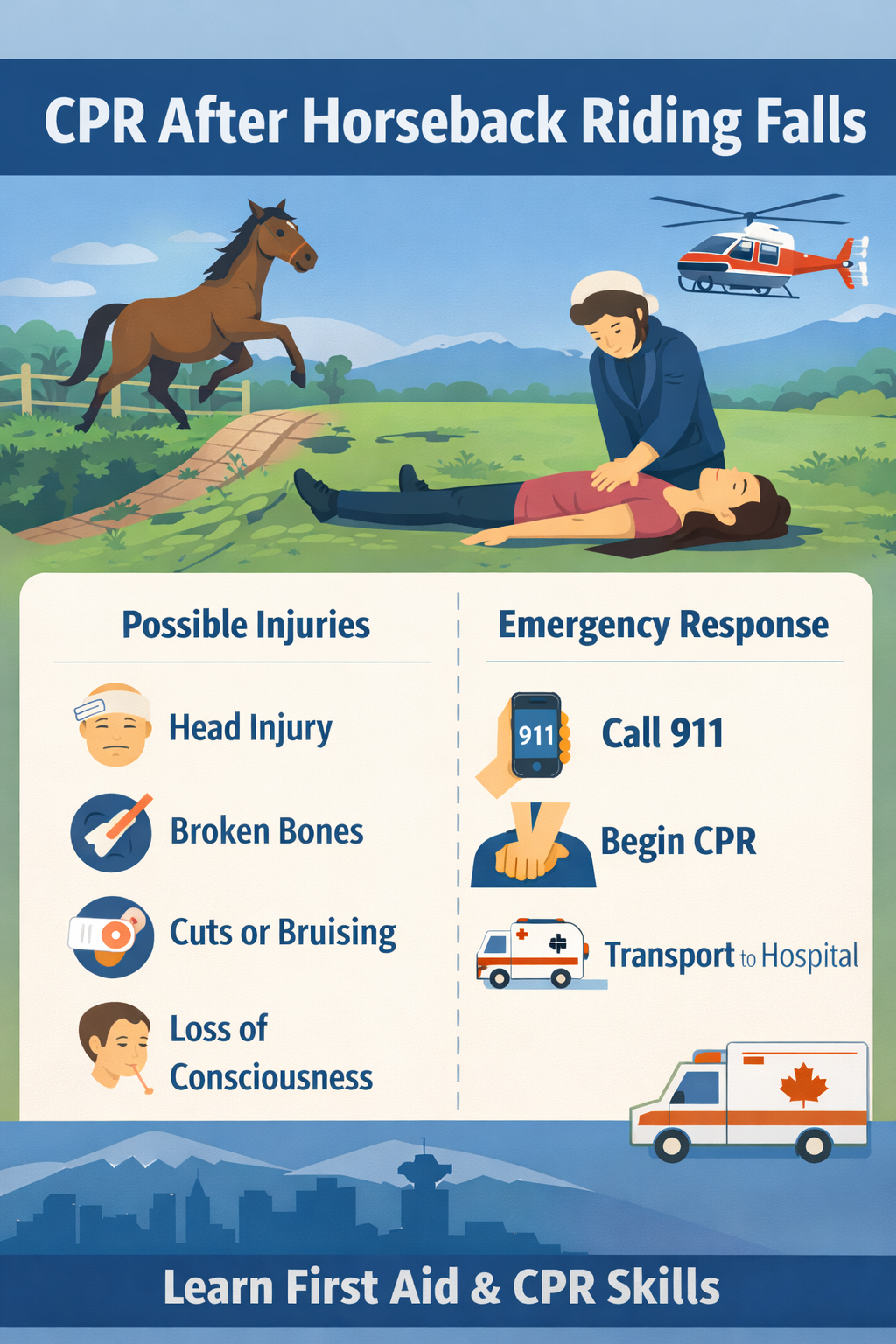 A tragic horseback riding incident in Ladner, British Columbia, involved a mother and daughter who were thrown from their horses during a ride.
The incident occurred in the 3600-block of 34th Street while 43-year-old Roseanne Guerin of Ladner and her 18-year-old daughter were riding together.
According to reports, Guerin’s horse became startled after being spooked by a nearby dog. The horse began galloping suddenly, which caused Guerin to be thrown from the saddle.
Her daughter’s horse followed behind and, while attempting to jump a ditch, the teenager was also thrown from her horse.
Witnesses at the scene quickly moved to assist. When Guerin was found unresponsive, bystanders began performing CPR while waiting for emergency responders.
Rescue crews arrived shortly afterward and transported her by air ambulance to Vancouver General Hospital for advanced medical care. Sadly, she later passed away due to severe head injuries.
The teenager was transported to Delta Hospital, where she received treatment for facial scrapes and bruising to her leg.
One of the horses involved in the incident ran through a fence and became stuck in a ditch, where it was later assisted by a nearby farm tractor.
Incidents such as this highlight how quickly outdoor activities can change and why bystander response and emergency preparedness remain important in many settings.
Injuries That Can Occur from Horseback Riding Falls
Falls from horses can result in a range of injuries depending on the speed of the fall, terrain, and how a rider lands.
Possible injuries may include:
-
Head injuries or concussions
-
Broken bones or fractures
-
Cuts and scrapes
-
Bruising or soft tissue injuries
-
Neck or spinal injuries
-
Loss of consciousness
In severe situations, trauma may affect breathing or circulation, which is when emergency medical response becomes critical.
When CPR May Be Used After a Fall
CPR may be performed if a person becomes unresponsive and is not breathing normally following a serious injury.
The purpose of CPR is to:
-
Help circulate blood through the body
-
Support oxygen delivery to the brain and organs
-
Maintain vital functions until paramedics arrive
Emergency dispatchers across British Columbia can provide instructions by phone to guide callers through CPR steps until emergency crews reach the scene.
Emergency Response in Outdoor Incidents
Outdoor or rural incidents often require coordinated response from several emergency services.
Typical emergency response actions may include:
-
Assessing the safety of the area
-
Calling emergency services
-
Checking responsiveness and breathing
-
Providing first aid or CPR if required
-
Transporting injured individuals to hospital
In more remote locations, air ambulances or specialized rescue teams may be used to transport injured individuals quickly to medical facilities such as Vancouver General Hospital.
Prevention and Recreational Safety
Horseback riding safety involves preparation, awareness, and proper equipment. Riders and event organizers often follow several safety practices to reduce risks.
Common precautions include:
-
Wearing properly fitted riding helmets
-
Ensuring horses are trained and suited to the rider’s experience
-
Riding in controlled environments when possible
-
Staying aware of animals or distractions that could startle horses
-
Riding with others who can assist in an emergency
Learning first aid and CPR can also improve preparedness during outdoor activities where professional medical assistance may not be immediately available.
Frequently Asked Questions
Can CPR be used after a fall from a horse?
CPR may be required if a person becomes unresponsive and is not breathing normally after a fall or other traumatic injury. Emergency responders assess the situation and provide life-saving care when necessary.
Why can horseback riding falls be dangerous?
Horses are large animals and can move quickly. A sudden fall from height or speed can lead to injuries such as head trauma, fractures, or loss of consciousness.
What should bystanders do if someone is seriously injured outdoors?
Bystanders should focus on contacting emergency services and following dispatcher instructions. They may provide basic first aid or CPR if the person is not breathing and the situation is safe.
Why is CPR training useful for outdoor activities?
Outdoor recreation sometimes occurs in areas where emergency responders may take longer to arrive. CPR awareness can help people recognize life-threatening situations and provide initial assistance.
Are helmets important for horseback riding?
Protective riding helmets are widely recommended because they help reduce the risk of serious head injuries during falls.
Educational Note
This article is intended for general first aid awareness and community safety education. First aid and CPR training help individuals recognize emergencies and provide initial assistance until professional emergency responders arrive.
About The Author

Mark Kascha
First Aid Instructor Trainer with 30+ years of experience in CPR, emergency response, and safety training across Canada.
👉 [View full credentials]🔗 View LinkedIn Profile
Last reviewed: March 2026