
Understanding Sudden Cardiac Arrest and Defibrillation
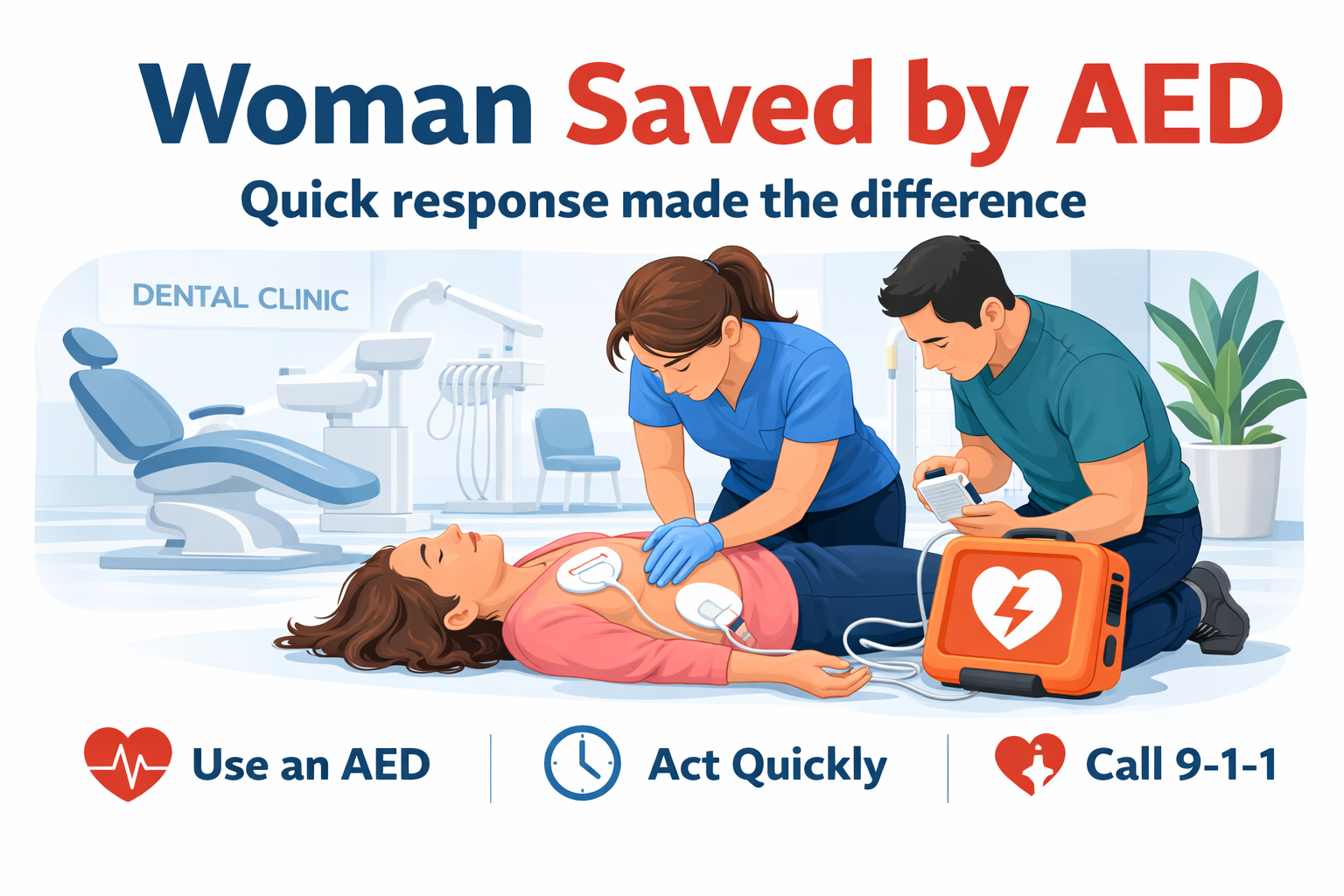 Sudden cardiac arrest occurs when the heart unexpectedly stops pumping blood effectively. When this happens, oxygen cannot circulate to the brain and other vital organs. Immediate response—particularly cardiopulmonary resuscitation (CPR) and the use of an automated external defibrillator (AED)—can help restore heart rhythm and support survival until emergency medical professionals arrive.
Across Canada, including British Columbia and the Vancouver region, CPR and AED awareness are commonly included in workplace safety and first aid training. Medical emergencies can occur in many everyday locations such as offices, clinics, workplaces, and community facilities. Having trained staff and accessible emergency equipment can help support rapid response during these situations.
First Aid and Workplace Relevance in Vancouver and British Columbia
Many healthcare offices, dental clinics, and workplaces in British Columbia maintain AED devices as part of their emergency preparedness planning. These portable defibrillators allow trained individuals to respond quickly if someone experiences cardiac arrest.
First aid training programs often teach participants how to recognize cardiac emergencies, perform CPR, and safely operate an AED. This preparation can help employees and community members act quickly during unexpected medical incidents.
Scenario: Cardiac Emergency at a Dental Appointment
Melissa Dunlay attended a routine dental appointment at River Valley Dental Clinic in Saint John with her daughter. Snowy weather that day prompted her husband to drive them to the appointment.
Shortly after arriving at the dental office, Dunlay suddenly collapsed in the clinic. Staff members recognized that she was experiencing a serious medical emergency and began assisting immediately.
The dental team retrieved the clinic’s automated external defibrillator (AED) and applied it while waiting for paramedics to arrive. AED devices analyze the heart’s rhythm and determine whether a shock may help restore a normal heartbeat.
Following the device prompts, the staff delivered several shocks while continuing emergency care. Emergency medical responders soon arrived and transported Dunlay to hospital for further treatment.
Later reports indicated that she recovered following the incident and expressed gratitude for the quick response of the dental staff and the availability of the AED in the clinic.
Situations like this demonstrate how prepared workplaces and accessible AED devices can support rapid emergency response.
Signs of Sudden Cardiac Arrest
Cardiac arrest can occur suddenly and may include several warning signs:
-
Sudden collapse
-
Unresponsiveness
-
No normal breathing or gasping breaths
-
Absence of a pulse
-
Pale or bluish skin due to reduced oxygen circulation
These symptoms indicate a medical emergency requiring immediate assistance.
How AEDs Help During Cardiac Emergencies
An automated external defibrillator (AED) is designed to analyze the heart’s electrical rhythm. If the device detects a rhythm that may respond to treatment, it can deliver a controlled electrical shock intended to help restore a normal heartbeat.
AED devices provide step-by-step audio instructions that guide responders through the process. When used quickly during cardiac arrest, AEDs can significantly improve survival chances.
Importance of Timely Emergency Response
Emergency responders and first aid instructors often emphasize that minutes matter during cardiac arrest. Quick recognition of the emergency, calling for help, starting CPR, and using an AED can all contribute to improved outcomes.
Workplaces that maintain emergency equipment and trained staff may be better prepared to respond during sudden medical events.
Prevention and Workplace Safety Considerations
Organizations and community facilities can strengthen emergency preparedness by taking several steps:
-
Installing AED devices in workplaces and public areas
-
Encouraging staff to complete CPR and AED training
-
Clearly marking AED locations with visible signage
-
Practicing workplace emergency response procedures
-
Promoting awareness of cardiac arrest signs
Prepared environments help ensure that life-saving assistance is available during critical situations.
Frequently Asked Questions
What does an AED do during a cardiac emergency?
An AED analyzes the heart’s rhythm and may deliver an electrical shock to help restore a normal heartbeat during cardiac arrest.
Why are AEDs often found in workplaces and clinics?
Public-access AEDs allow trained staff or bystanders to respond quickly during cardiac emergencies before paramedics arrive.
Can cardiac arrest happen in everyday locations like clinics or offices?
Yes. Cardiac emergencies can occur in many settings, including workplaces, healthcare offices, community centres, and public spaces.
Do AEDs require medical training to use?
AEDs provide voice instructions to guide responders through each step. First aid and CPR training often include instruction on how to use these devices.
Why is rapid response important during cardiac arrest?
Early CPR and defibrillation can help maintain circulation and restore heart rhythm, improving the chances of survival.
Educational Note
This article is intended for general education about cardiac arrest awareness and the role of CPR and AEDs in emergency response. Learning these skills can help individuals respond more confidently during medical emergencies in workplaces and community settings.
About The Author

Mark Kascha
First Aid Instructor Trainer with 30+ years of experience in CPR, emergency response, and safety training across Canada.
👉 [View full credentials]🔗 View LinkedIn Profile
Last reviewed: March 2026