
Understanding Cardiac Arrest and Defibrillators
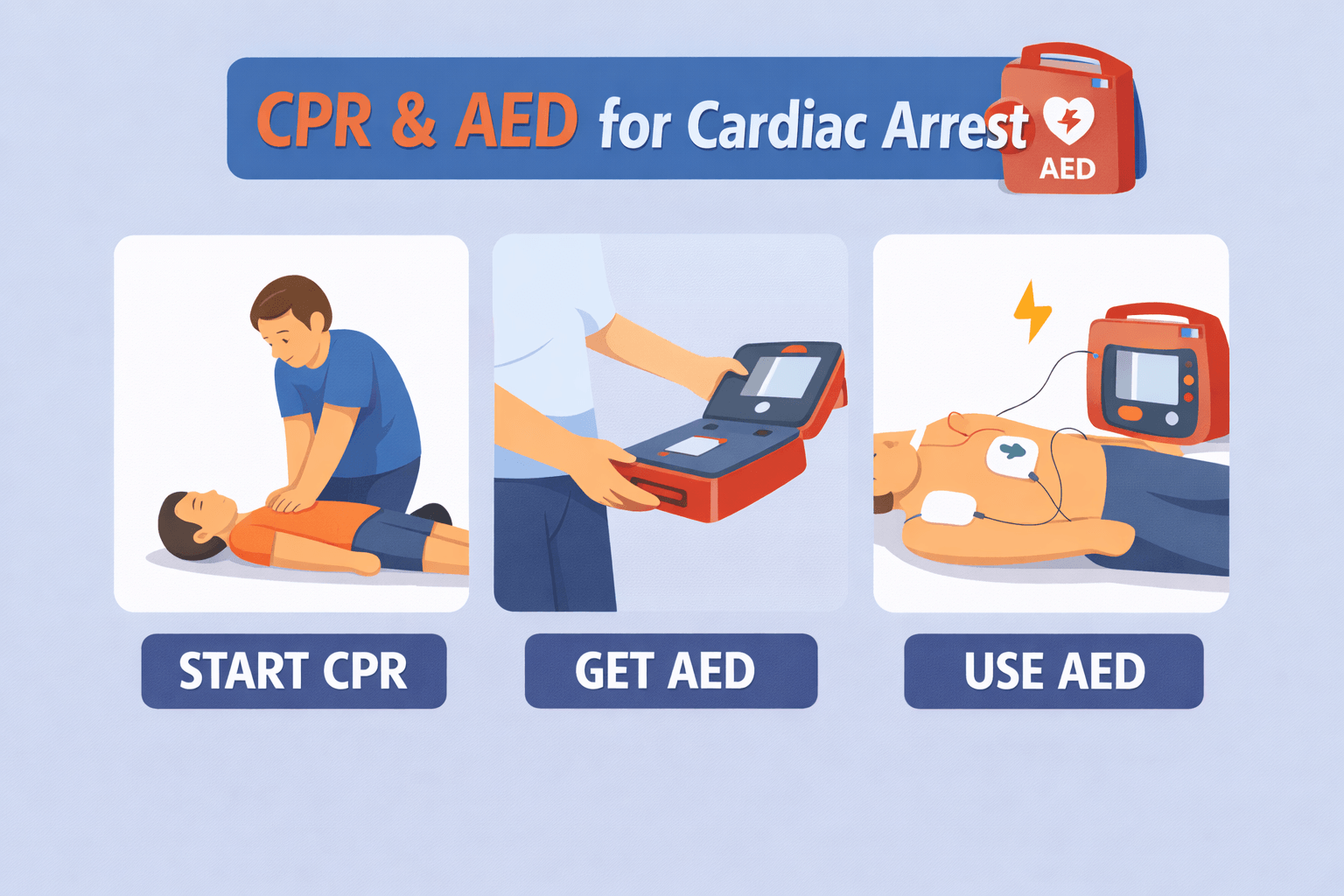 Cardiac arrest happens when the heart suddenly stops beating due to an electrical malfunction. Without immediate help, blood flow to the brain and body stops. Quick action—especially CPR (cardiopulmonary resuscitation) and the use of an automated external defibrillator (AED)—can significantly improve the chances of survival.
An AED is a portable device designed for public use. It provides simple voice instructions and can deliver a controlled shock to help restore a normal heart rhythm.
First Aid & Workplace Relevance in Vancouver and the Lower Mainland
Across Vancouver, Richmond, Burnaby, Coquitlam, and the Lower Mainland, recreational centres, hockey arenas, gyms, and workplaces are encouraged to have accessible AEDs and trained staff. Cardiac emergencies can happen during physical activity, making sports facilities and public venues important locations for emergency preparedness.
Having people nearby who understand CPR and AED use can make a critical difference before paramedics arrive.
A Realistic Scenario
During a recreational hockey game at a community arena in Burnaby, a player suddenly collapses on the bench after a shift. Teammates quickly recognize something is wrong. One calls 911, while others begin CPR. A staff member retrieves the arena’s AED, and they follow its prompts until emergency responders arrive. Their quick response helps provide essential support in those first moments.
Signs and Symptoms of Cardiac Arrest
Cardiac arrest often occurs without warning. Key signs include:
-
Sudden collapse
-
Unresponsiveness
-
No normal breathing
-
No signs of circulation
Immediate recognition is essential for a fast response.
Common Causes and Risk Factors
Cardiac arrest can be linked to:
-
Underlying heart conditions
-
Intense physical activity
-
Electrical disturbances in the heart
-
Previous heart disease or risk factors
It can affect individuals in both public and workplace environments, including recreational settings.
First Aid Response: CPR and AED Use
If someone collapses and is unresponsive:
-
Call 911 immediately
-
Begin CPR (chest compressions) if trained
-
Send someone to get an AED nearby
-
Turn on the AED and follow its instructions
-
Continue CPR and AED use until help arrives
AEDs are designed to be easy to use and guide responders step-by-step.
Prevention and Workplace Safety Considerations
While not all cardiac events can be prevented, preparedness can improve outcomes:
-
Install AEDs in visible, accessible areas (arenas, gyms, workplaces)
-
Train staff and community members in CPR and AED use
-
Clearly mark AED locations
-
Include emergency response planning in workplace safety programs
Quick access and confident response are key factors in cardiac emergencies.
Frequently Asked Questions
What does an AED do during a cardiac emergency?
An AED analyzes the heart’s rhythm and, if needed, delivers a shock to help restore a normal heartbeat.
Can someone without training use an AED?
Yes. AEDs provide clear voice and visual instructions, making them accessible to bystanders.
Why are AEDs important in sports facilities?
Physical activity can increase the risk of cardiac events, so having AEDs nearby allows for faster response.
Is CPR still needed if an AED is available?
Yes. CPR helps maintain blood circulation while the AED addresses the heart’s rhythm.
How can workplaces improve emergency readiness?
By training staff, installing AEDs, and ensuring clear emergency procedures are in place.
Educational Note
This article is intended for general first aid awareness and workplace safety education in Canada. Learning CPR and AED use can help individuals respond more effectively in cardiac emergencies.
About The Author

Mark Kascha
First Aid Instructor Trainer with 30+ years of experience in CPR, emergency response, and safety training across Canada.
👉 [View full credentials]🔗 View LinkedIn Profile
Last reviewed: March 2026