
 A heart attack occurs when blood flow to part of the heart muscle becomes blocked, usually because of a buildup of plaque in the coronary arteries. Without enough oxygen, the heart muscle can begin to suffer damage. In some cases, a heart attack can lead to cardiac arrest, where the heart suddenly stops beating effectively.
Across Vancouver and British Columbia, CPR (cardiopulmonary resuscitation) training is widely promoted in workplaces, schools, and community programs. Learning CPR helps bystanders respond quickly during cardiac emergencies while waiting for paramedics to arrive.
Quick action during the first few minutes of a cardiac emergency can be critical, and many emergency survival stories highlight the importance of bystanders who recognize the signs and begin CPR immediately.
First Aid and Workplace Safety Relevance in Vancouver and British Columbia
In British Columbia, many organizations encourage or require employees to complete CPR and first aid certification as part of workplace safety preparedness.
Training programs commonly include:
-
Recognizing heart attack symptoms
-
Responding to sudden cardiac arrest
-
Performing CPR
-
Using an automated external defibrillator (AED)
-
Coordinating with emergency services
These skills are particularly valuable in public environments such as parks, recreation trails, workplaces, and community spaces throughout the Metro Vancouver region.
A Cardiac Emergency on a Coquitlam Trail
One incident in Coquitlam, British Columbia, demonstrated how a trained bystander can make a difference during a medical emergency.
Tanya Leibel, a 66-year-old woman, was visiting a popular trail in the area when she suddenly experienced intense pressure in her chest that spread down her left arm. Recognizing something was wrong, she signalled to her son-in-law for help and sat down on a nearby rock.
Shortly afterward, she collapsed.
The next memory Leibel had was waking up two days later in hospital, where doctors informed her she had experienced a major heart attack caused by a blockage in her coronary arteries.
Rapid Action from a Bystander
Fortunately, help was nearby.
Tammy Bryant, a school bus driver from Coquitlam, had been walking along the trail with her friend Celia Newton when they noticed the collapse. Bryant had recently completed a CPR recertification course through her job transporting children with special needs.
Recognizing that Leibel needed immediate assistance, Bryant moved quickly to help.
Witnesses reported that Leibel was gasping and unresponsive. Bryant began performing chest compressions while Leibel’s son-in-law called emergency services.
Bryant continued CPR for approximately 10 minutes, following instructions from the emergency dispatcher over the phone. At one point she paused briefly, but when she noticed changes in Leibel’s breathing and colour, she resumed compressions until paramedics arrived.
When emergency responders reached the scene, they took over care and used a defibrillator before transporting Leibel to hospital.
Doctors later confirmed that early CPR likely helped maintain blood flow to the brain and vital organs during the emergency.
Recognizing Heart Attack Warning Signs
Heart attack symptoms can vary from person to person, but common warning signs include:
-
Pressure, tightness, or pain in the chest
-
Discomfort spreading to the arm, neck, jaw, or back
-
Shortness of breath
-
Nausea or lightheadedness
-
Sudden fatigue or weakness
These symptoms may appear suddenly or develop gradually.
Recognizing these signs and seeking emergency medical help quickly can improve outcomes.
What CPR Does During Cardiac Arrest
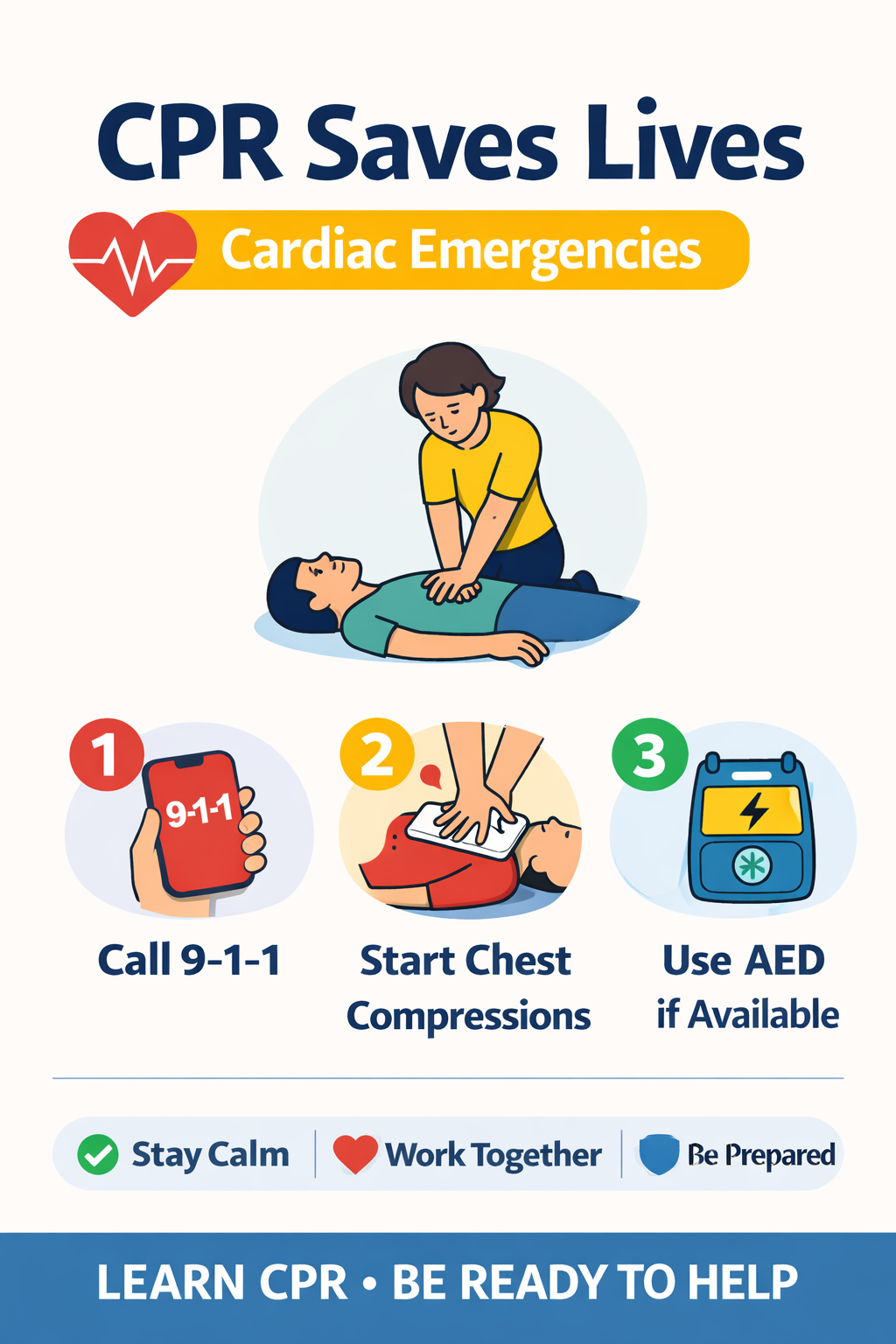
CPR helps circulate blood through the body when the heart is not pumping effectively. Chest compressions help maintain blood flow to vital organs such as the brain until advanced medical care becomes available.
Many CPR courses teach participants how to:
-
Recognize cardiac arrest
-
Call emergency services
-
Perform chest compressions
-
Use an automated external defibrillator (AED) when available
These actions are designed to support circulation and breathing while waiting for professional medical responders.
Prevention and Workplace Safety Considerations
While cardiac emergencies cannot always be predicted, preparedness and awareness can improve emergency response.
Safety practices that support cardiac emergency preparedness include:
-
Workplace CPR and AED training
-
Public access to defibrillators
-
Emergency response planning in workplaces and public spaces
-
Encouraging community members to learn basic life-saving skills
In cities like Vancouver and Coquitlam, CPR training programs help increase the number of people who are prepared to assist during emergencies.
Frequently Asked Questions
What is the difference between a heart attack and cardiac arrest?
A heart attack occurs when blood flow to the heart muscle becomes blocked. Cardiac arrest occurs when the heart suddenly stops beating effectively. A heart attack can sometimes lead to cardiac arrest.
Why is CPR important during cardiac emergencies?
CPR helps maintain blood flow to vital organs until emergency medical responders arrive and provide advanced treatment.
Can bystanders safely perform CPR?
Many CPR training programs teach simple techniques that allow bystanders to assist during emergencies. Emergency dispatchers can also provide instructions over the phone until paramedics arrive.
What is an AED?
An automated external defibrillator (AED) is a portable device that can help restore a normal heart rhythm during certain cardiac emergencies.
Do workplaces in British Columbia encourage CPR training?
Yes. Many workplaces in British Columbia encourage or require CPR and first aid certification to support employee safety and emergency preparedness.
Educational Note
This article provides general educational information about cardiac emergencies and CPR awareness. First aid and CPR training help individuals learn how to respond during emergencies, but medical care should always be provided by qualified healthcare and emergency response professionals.
About The Author

Mark Kascha
First Aid Instructor Trainer with 30+ years of experience in CPR, emergency response, and safety training across Canada.
👉 [View full credentials]🔗 View LinkedIn Profile
Last reviewed: March 2026
 Support local, Canadian-owned businesses, with no connections to American corporations or partnerships.