
Understanding Cardiac Arrest During Physical Activity
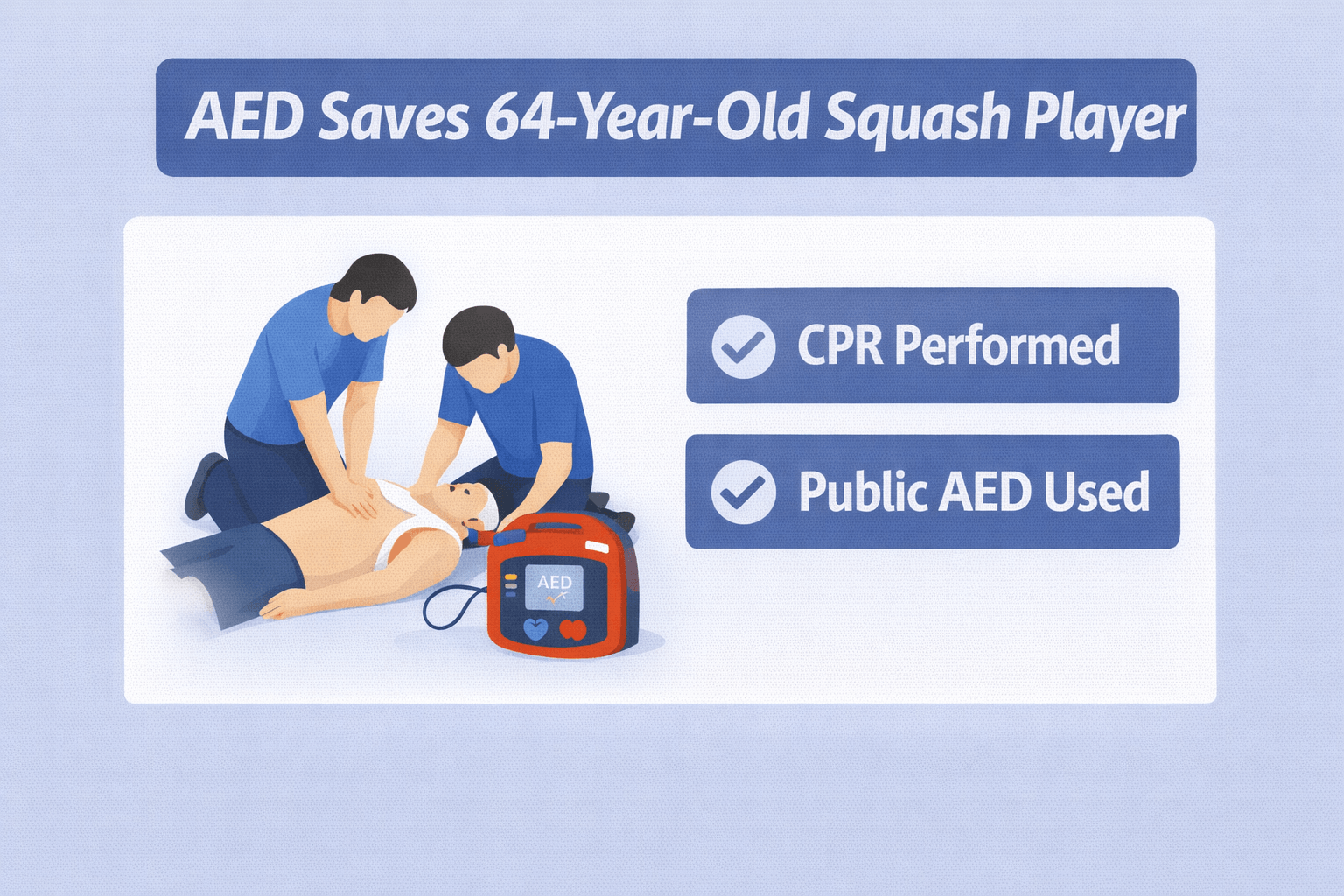 Cardiac arrest occurs when the heart suddenly stops beating due to an electrical problem. It can happen without warning, including during or after physical activity such as sports. Immediate response—especially CPR (cardiopulmonary resuscitation) and the use of an automated external defibrillator (AED)—is critical in helping restore circulation and improving survival.
AEDs are designed for public use and provide simple step-by-step instructions, making them accessible to bystanders in emergency situations.
First Aid & Workplace Relevance in Vancouver and the Lower Mainland
Across Vancouver, Burnaby, Coquitlam, Richmond, and the Lower Mainland, many people participate in recreational sports at gyms, community centres, and fitness facilities. These environments can benefit from accessible AEDs and staff trained in CPR, as cardiac emergencies can occur during exercise.
Workplace and recreational safety planning in British Columbia often includes first aid readiness, AED placement, and emergency response procedures.
A Realistic Scenario
At a community recreation centre in Richmond, a man finishes a game of squash and suddenly collapses near the court. Staff quickly respond—one calls 911, while others begin CPR. A nearby AED is brought to the scene, and responders follow its prompts. Within minutes, the coordinated effort helps stabilize the individual until paramedics arrive.
Signs and Symptoms of Cardiac Arrest
Cardiac arrest may present with:
-
Sudden collapse
-
Unresponsiveness
-
No normal breathing
-
No pulse or signs of circulation
Recognizing these signs quickly allows for faster intervention.
Why AED Access in Facilities Matters
Public facilities such as sports complexes often:
-
Have high levels of physical activity
-
Serve a wide range of age groups
-
Host large numbers of people
Having AEDs readily available and clearly marked allows for rapid response during emergencies, especially in the first few minutes before paramedics arrive.
First Aid Response: CPR and AED Use
If someone collapses and is unresponsive:
-
Call 911 immediately
-
Begin CPR (chest compressions) if trained
-
Have someone retrieve an AED nearby
-
Turn on the AED and follow instructions
-
Continue CPR and AED use until emergency responders arrive
AEDs guide users through each step and are safe for public use.
Prevention and Workplace Safety Considerations
Improving safety in recreational and workplace settings includes:
-
Installing AEDs in visible and accessible locations
-
Training staff and regular users in CPR and AED use
-
Clearly marking AED locations within facilities
-
Including emergency procedures in safety plans
Awareness and preparation can help improve outcomes in cardiac emergencies.
Frequently Asked Questions
Can cardiac arrest happen during exercise?
Yes. Although physical activity is generally beneficial, cardiac arrest can occur during or after exertion, especially in individuals with underlying conditions.
What should I do if someone collapses at a gym or sports facility?
Call 911, begin CPR if trained, and have someone bring an AED as quickly as possible.
Are AEDs commonly available in recreation centres?
Many public facilities in Canada have AEDs, but it is helpful to know their location when you enter a building.
Is CPR still needed if an AED is available?
Yes. CPR helps maintain circulation while the AED addresses heart rhythm.
Why is training important for staff and the public?
Training improves confidence and response time, which can make a meaningful difference during emergencies.
Educational Note
This article is intended for general first aid awareness and workplace safety education in Canada. Learning CPR and AED use can help individuals respond more effectively in cardiac emergencies.
About The Author

Mark Kascha
First Aid Instructor Trainer with 30+ years of experience in CPR, emergency response, and safety training across Canada.
👉 [View full credentials]🔗 View LinkedIn Profile
Last reviewed: March 2026
 Support local, Canadian-owned businesses, with no connections to American corporations or partnerships.