
Understanding Cardiac Arrest and CPR
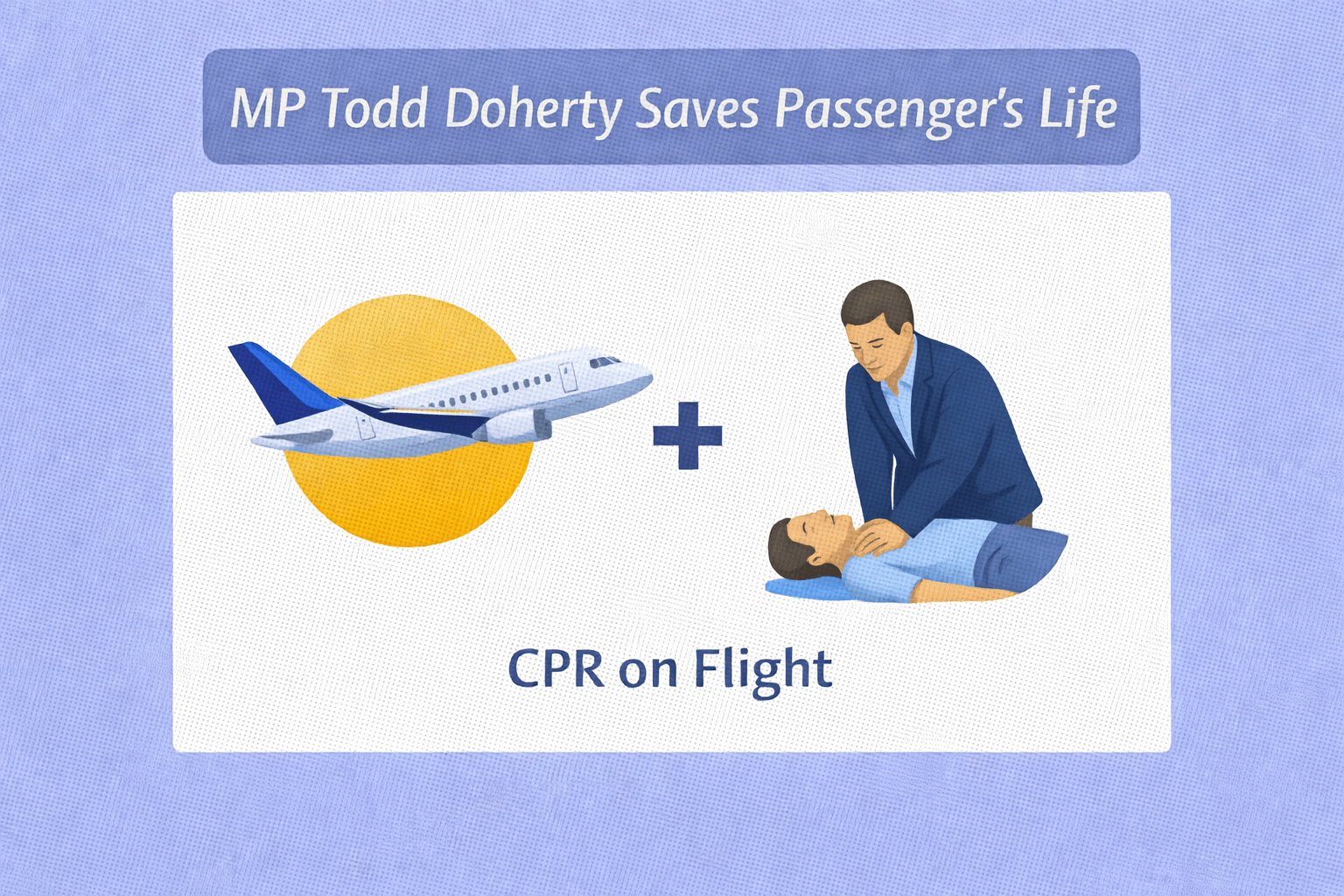 Cardiac arrest occurs when the heart suddenly stops beating, preventing blood from circulating to the brain and vital organs. When this happens, immediate CPR (cardiopulmonary resuscitation) can help maintain blood flow until normal heart function is restored or emergency care arrives.
CPR is a critical life-saving skill that can be used in many environments—including confined spaces like airplanes.
First Aid & Workplace Relevance in Vancouver and the Lower Mainland
Across Vancouver, Richmond, Burnaby, Surrey, and the Lower Mainland, cardiac emergencies can happen anywhere—at work, in public spaces, or even during travel.
Airplanes, offices, and transportation settings all rely on trained individuals and quick response. Many workplaces encourage CPR training so employees can act confidently during unexpected emergencies.
Real Incident Overview
During a late-night flight from Vancouver to Prince George, British Columbia, a medical emergency occurred shortly after takeoff. A passenger in the front row suddenly collapsed onto another individual after a loud thud was heard.
Member of Parliament Todd Doherty quickly responded and moved to assist. Upon checking the man, he found no pulse and immediately began chest compressions. Within a few minutes, the man’s condition began to improve—his colour returned, and he started breathing again.
During the response, Doherty realized he knew the individual and his family, adding a personal connection to the situation. The pilot made the decision to turn the aircraft around and return to Vancouver.
Throughout the return flight, Doherty remained with the man, monitoring his condition and ensuring his pulse stayed stable. Once the plane landed, emergency crews transported the man to a healthcare facility for further care.
Doherty was later recognized for his actions but emphasized that he simply responded as anyone trained in emergency care would.
Signs That CPR May Be Needed
CPR should be started if a person:
-
Is unresponsive
-
Is not breathing normally
-
Has no detectable pulse or signs of circulation
Quick recognition is essential for early intervention.
Common Causes of Sudden Collapse
A person may collapse due to:
-
Cardiac arrest
-
Heart rhythm disturbances
-
Medical conditions affecting breathing or circulation
Regardless of the cause, immediate first aid response is critical.
First Aid Response: CPR in Public Settings
If someone collapses and is unresponsive:
-
Call for help and notify emergency services (or onboard crew)
-
Check responsiveness and breathing
-
Begin CPR (chest compressions) if trained
-
Continue CPR until the person shows signs of recovery or help arrives
-
Use an AED if available and follow instructions
In environments like airplanes, trained passengers and crew work together to manage the situation.
Prevention and Workplace Safety Considerations
To improve emergency readiness:
-
Encourage CPR and first aid training
-
Ensure AEDs are available in public and workplace settings
-
Promote awareness of emergency response steps
-
Include emergency planning in workplace safety programs
Preparedness can make a meaningful difference in critical situations.
Frequently Asked Questions
Can CPR be performed safely on an airplane?
Yes. CPR can be performed in confined spaces with assistance from crew and passengers.
What should I do if someone collapses during a flight?
Alert the flight crew immediately and assist if you are trained.
How quickly should CPR be started?
As soon as the person is unresponsive and not breathing normally.
Do airplanes carry AEDs?
Many commercial aircraft are equipped with AEDs for onboard emergencies.
Why is CPR training important for the public?
It prepares individuals to act quickly in emergencies, regardless of location.
Educational Note
This article is intended for general first aid awareness and workplace safety education in Canada. CPR training helps individuals respond more effectively and confidently during emergencies.
About The Author

Mark Kascha
First Aid Instructor Trainer with 30+ years of experience in CPR, emergency response, and safety training across Canada.
👉 [View full credentials]🔗 View LinkedIn Profile
Last reviewed: March 2026