
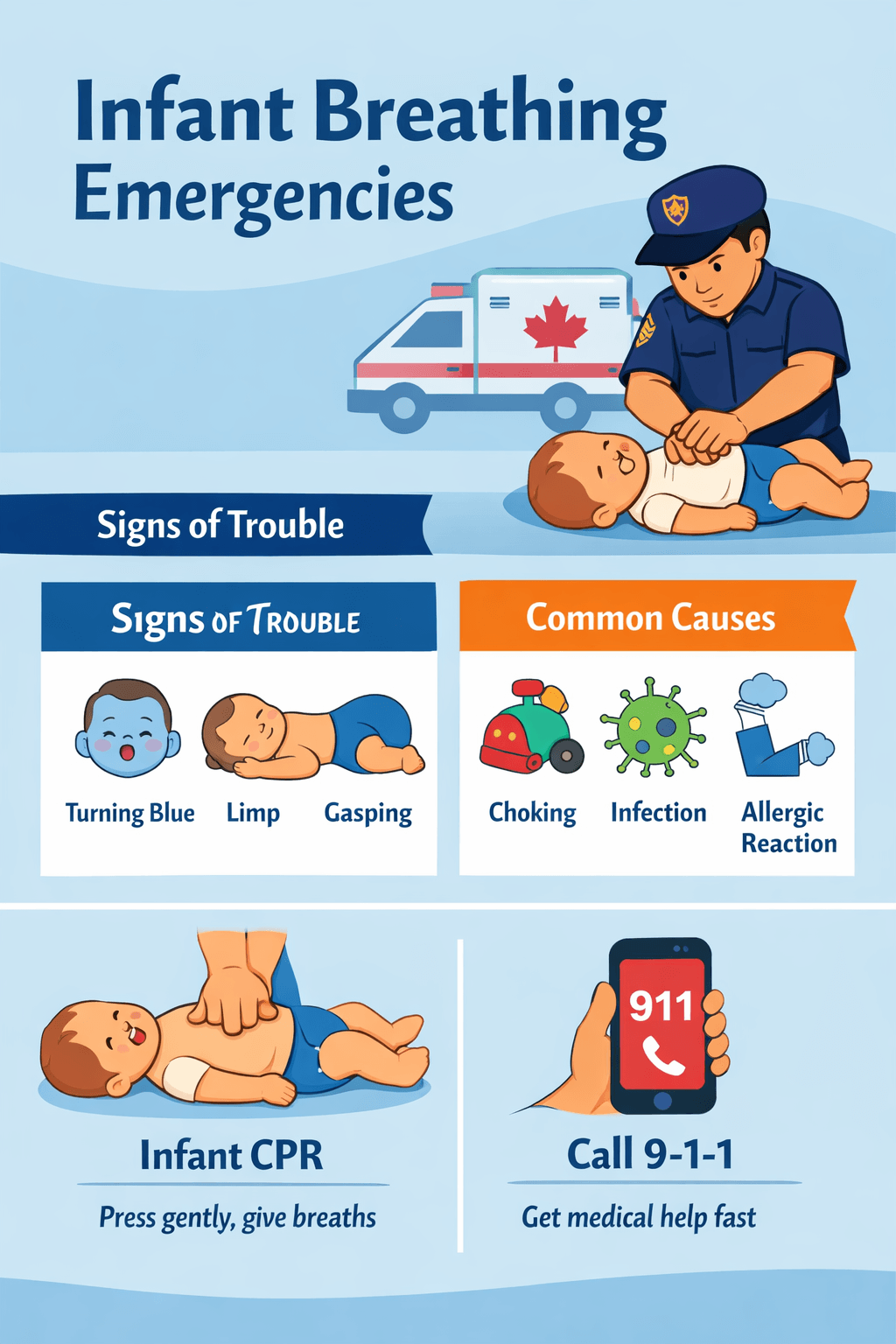
 An infant breathing emergency occurs when a baby stops breathing normally or shows signs that breathing has become severely restricted. This can happen for a variety of reasons, including airway obstruction, illness, or sudden breathing difficulties. When breathing stops or becomes ineffective, oxygen levels in the body can quickly fall, making rapid recognition and immediate first aid response critical.
In communities across Vancouver, Burnaby, Richmond, and the Lower Mainland of British Columbia, parents, caregivers, and workplace staff who interact with families benefit from learning infant CPR and basic first aid skills. Training helps people respond calmly and effectively when an infant shows signs of breathing distress.
First Aid and Workplace Relevance in British Columbia
Many workplaces in British Columbia, particularly those that serve the public—such as retail spaces, transportation hubs, recreation centres, and childcare environments—train staff in first aid and CPR. Even outside formal childcare settings, employees may encounter infants and young children during daily operations.
Understanding infant CPR and airway emergency response is an important part of public safety education in the Vancouver and Lower Mainland region, where busy travel areas, border crossings, and community facilities often serve families with young children.
Scenario: A Rapid Response at a Border Crossing
A real-life incident near the Blaine, Washington border crossing, just south of British Columbia, demonstrates the importance of prompt first aid. A mother waiting in line with her baby noticed that her infant daughter suddenly stopped breathing and appeared to be turning blue.
Recognizing that something was wrong, the mother called for help. Border officers nearby responded immediately and began providing first aid. Using emergency response techniques, including cardiopulmonary resuscitation (CPR) appropriate for an infant, the officers worked quickly to help restore the baby’s breathing.
After the intervention, the infant began breathing again and regained responsiveness. Emergency services transported the mother and child to medical care in British Columbia for further evaluation.
Officials later noted that the officers’ rapid response reflected their training and commitment to protecting the travelling public. Situations like this highlight how first aid knowledge can make a critical difference while waiting for medical professionals to arrive.
Signs an Infant May Be Having a Breathing Emergency
Recognizing early warning signs can help caregivers respond quickly. Signs that an infant may be experiencing a serious breathing problem can include:
-
Little or no visible breathing
-
Bluish or pale skin, especially around the lips or face
-
Limp or unresponsive body
-
Weak or absent crying sounds
-
Sudden quietness after distress
-
Difficulty breathing or unusual breathing patterns
Any change in an infant’s normal breathing pattern should be treated as a serious situation requiring immediate attention.
Possible Causes of Sudden Breathing Problems in Infants
Infant breathing emergencies can occur for several reasons. These may include:
-
Airway blockage, such as choking on food or small objects
-
Respiratory infections affecting the lungs or airway
-
Allergic reactions that affect breathing
-
Sudden illness or medical conditions
-
Accidental suffocation or airway obstruction
-
Breathing irregularities related to infancy
Because infants have small airways and developing respiratory systems, even minor blockages or illnesses can affect breathing quickly.
First Aid Response and Emergency Management
When an infant stops breathing or becomes unresponsive, immediate action is important. People trained in first aid may respond by:
-
Quickly checking for breathing and responsiveness
-
Calling for emergency medical assistance
-
Beginning infant CPR if the infant is not breathing normally
-
Continuing care until breathing returns or professional responders arrive
Infant CPR involves specialized techniques that differ from adult CPR due to the baby’s smaller body and developing airway. Proper training ensures that caregivers understand how to respond safely and appropriately.
The goal of first aid in these situations is to support breathing and circulation until advanced medical care becomes available.
Prevention and Workplace Safety Considerations
While not all breathing emergencies can be prevented, awareness and training help reduce risks and improve response.
Helpful prevention and safety measures include:
-
Keeping small objects out of reach of infants
-
Supervising infants during feeding
-
Maintaining safe sleep environments
-
Ensuring caregivers understand choking prevention
-
Encouraging first aid and CPR training for parents, staff, and caregivers
In busy public environments such as transportation hubs, community facilities, and workplaces across Vancouver and the Lower Mainland, trained staff can play an important role in early emergency response.
Frequently Asked Questions
What is infant CPR and how is it different from adult CPR?
Infant CPR uses gentler techniques designed for babies under one year of age. Because infants are smaller and more delicate, trained responders use specific hand placements and compression methods appropriate for an infant’s body.
Why is quick first aid important during breathing emergencies?
When breathing stops, oxygen levels in the body can drop quickly. Immediate first aid helps maintain circulation and breathing support until emergency medical services arrive.
What are early warning signs that a baby may not be breathing properly?
Signs can include bluish lips, unusual silence, weak crying, limpness, or visible pauses in breathing. Caregivers should treat these signs seriously and seek immediate help.
Should parents and caregivers learn infant first aid?
Learning infant first aid and CPR can help caregivers respond more confidently if a breathing emergency occurs. Training focuses on recognition, response steps, and safe techniques for infants.
Where might infant emergencies occur outside the home?
Infant emergencies can happen in many everyday settings, including vehicles, childcare environments, community centres, public transportation areas, and travel locations such as border crossings.
Educational Note
This article is provided for general first aid awareness and public education purposes. Learning recognized first aid and CPR techniques through certified training helps individuals respond more confidently to breathing emergencies involving infants and young children.
About The Author

Mark Kascha
First Aid Instructor Trainer with 30+ years of experience in CPR, emergency response, and safety training across Canada.
👉 [View full credentials]🔗 View LinkedIn Profile
Last reviewed: March 2026