
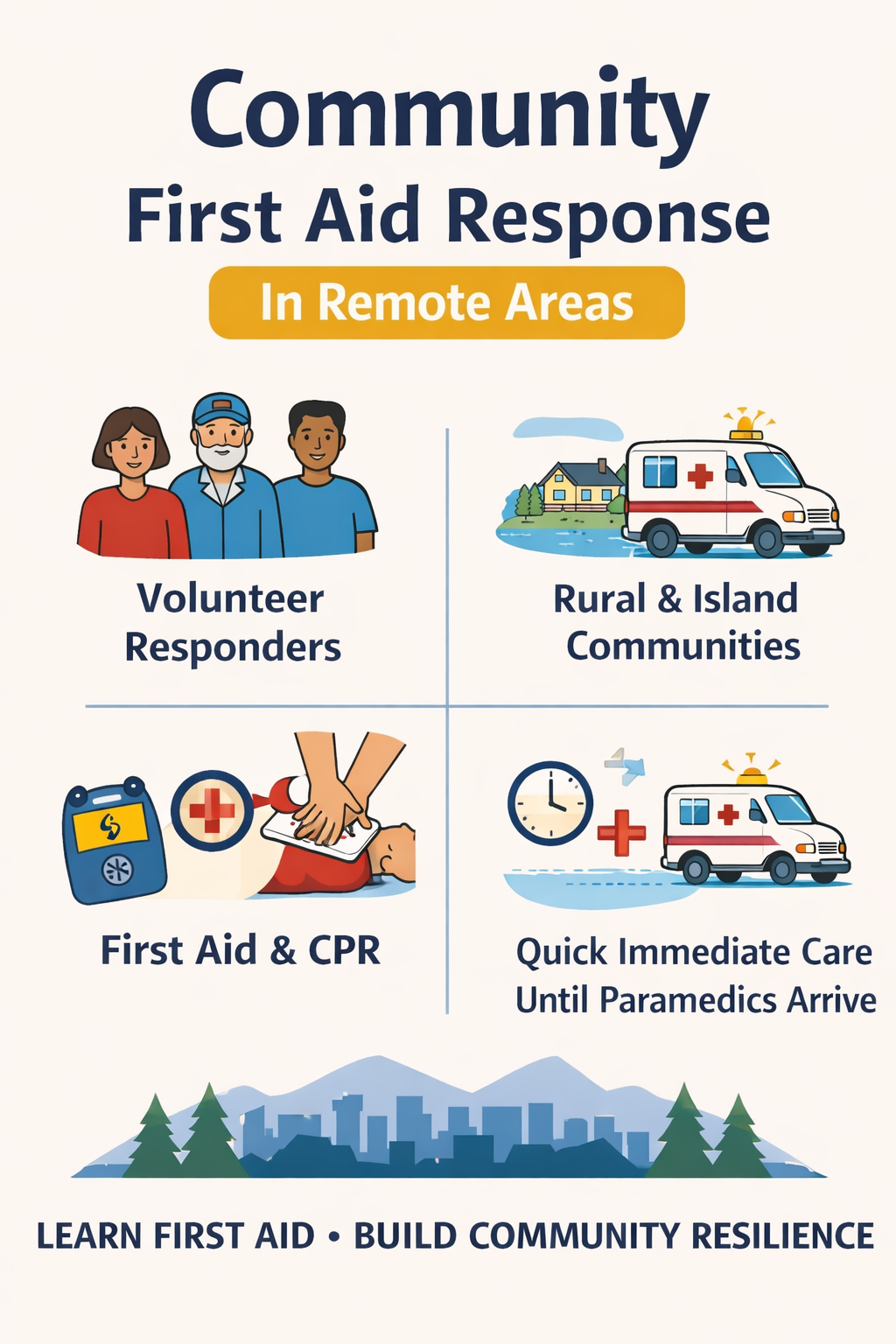
 In many rural or isolated communities, professional emergency medical services may take longer to arrive due to geography, transportation, or population size. In these situations, community members trained in first aid and CPR often play an important role in providing immediate care until paramedics or hospital services become available.
Across Canada, including British Columbia and the Vancouver region, first aid training helps individuals prepare for emergencies in workplaces, schools, and communities. Whether in remote coastal villages or busy urban environments, the ability to recognize an emergency and provide basic care can make a meaningful difference while waiting for professional medical help.
First Aid and Workplace Safety Relevance in Vancouver and British Columbia
British Columbia has many remote communities, coastal areas, and island regions where emergency response times can vary. Because of this, workplace safety programs often encourage employees to maintain current first aid and CPR training.
Organizations throughout Vancouver and BC commonly emphasize:
-
First aid and CPR certification for staff
-
Emergency preparedness planning
-
Access to automated external defibrillators (AEDs)
-
Clear procedures for contacting emergency services
These safety practices are not only relevant for workplaces such as construction sites, offices, and schools, but also for smaller communities that may rely on trained volunteers during emergencies.
A Community Response on Big Tancook Island, Nova Scotia
Big Tancook Island is a small island community located off the south coast of Nova Scotia, with a population of roughly 120 residents. Because of its remote location, reaching the mainland requires a ferry trip of approximately one hour. This means that during medical emergencies, local volunteers often provide the first response before paramedics can take over.
To help address this challenge, residents created the Big Tancook Island Emergency Response Association, a volunteer group trained to provide basic medical assistance when emergencies occur on the island.
The volunteer team includes several local residents who respond to emergency calls using a decommissioned ambulance that was purchased through community fundraising efforts, including bottle drives. While the vehicle is older, it allows responders to reach injured or ill residents more quickly across the island.
When an emergency call is made, the process typically works as follows:
-
The emergency call is received by dispatch services.
-
A volunteer dispatcher on the island is notified.
-
Local medical first responders are contacted by phone.
-
Volunteers respond to the location and begin first aid care.
If a patient requires hospital treatment, responders focus on keeping the person stable while preparing for transportation. The patient is then taken by ferry to the mainland community of Chester, Nova Scotia, where paramedics assume care and transport the patient to hospital.
The Role of Volunteer First Responders
Volunteer medical first responders typically have less extensive training than professional paramedics, but they are trained to provide important early care in emergencies.
Their training may include:
-
CPR and AED use
-
Managing bleeding injuries
-
Treating minor wounds and illnesses
-
Monitoring a person’s condition while awaiting further care
On Big Tancook Island, the volunteer team responds to approximately 14 emergency calls per year, and many involve non-life-threatening situations. However, the ability to respond quickly remains important for the safety of the community.
Local firefighters on the island also contribute to emergency response efforts, as many members have first aid and CPR training.
Community Challenges and Rewards
Responding to emergencies in a small community can be emotionally challenging. Volunteers may be assisting people they know personally, including neighbours, friends, or family members.
According to members of the emergency response association, providing help in these moments can also be meaningful. Supporting neighbours during emergencies helps strengthen community resilience and ensures that residents are not alone while waiting for additional medical care.
The Big Tancook Island response system demonstrates how training, teamwork, and preparedness can help remote communities manage emergencies more effectively.
Why First Aid Training Matters
Whether in a remote island community or a large city like Vancouver, emergencies can happen anywhere. First aid training helps individuals:
-
Recognize signs of medical emergencies
-
Provide immediate assistance when needed
-
Support injured or ill individuals until professionals arrive
-
Respond calmly during stressful situations
These skills are valuable in many environments, including workplaces, schools, recreation facilities, and community organizations.
Frequently Asked Questions
Why are volunteer first responders important in remote communities?
In isolated areas, professional medical services may take longer to arrive due to distance or transportation barriers. Volunteer responders can provide immediate care and help stabilize patients until paramedics become available.
What types of emergencies can trained volunteers respond to?
Volunteer responders often assist with a variety of situations, including minor injuries, sudden illness, breathing emergencies, or situations where CPR or basic first aid may be needed.
What is an AED and why is it used in emergencies?
An automated external defibrillator (AED) is a device designed to help restore a normal heart rhythm during certain cardiac emergencies. Many first aid training programs include instruction on how to use AEDs safely.
Do workplaces in Canada require first aid training?
Many Canadian workplaces encourage or require first aid training depending on the type of work and the number of employees. Training helps improve preparedness and supports safer work environments.
Can first aid knowledge help before paramedics arrive?
Yes. First aid training focuses on providing immediate assistance and stabilizing a person’s condition while waiting for professional medical care.
Educational Note
This article provides general educational information about community emergency response and first aid awareness. First aid training helps individuals understand how to respond during emergencies, but medical care should always be provided or supervised by qualified healthcare and emergency response professionals.
About The Author

Mark Kascha
First Aid Instructor Trainer with 30+ years of experience in CPR, emergency response, and safety training across Canada.
👉 [View full credentials]🔗 View LinkedIn Profile
Last reviewed: March 2026