Why CPR and First Aid Training Matter
 CPR (cardiopulmonary resuscitation) and basic first aid skills help people respond quickly during medical emergencies such as choking, cardiac arrest, or breathing difficulties. These skills are commonly taught in community programs, schools, and workplace safety training across Canada.
In British Columbia and throughout the Lower Mainland, including Vancouver, Burnaby, Richmond, and Abbotsford, CPR and first aid training are often encouraged for employees, families, and community members. Emergencies can occur unexpectedly at home, at work, or in public places, and having people nearby who understand basic first aid techniques can make an important difference while waiting for emergency services.
Stories of everyday people helping others during emergencies often highlight how preparedness, training, and teamwork can help communities respond effectively.
First Aid Awareness in Homes and Workplaces in British Columbia
Many workplaces in Vancouver and across British Columbia require trained first aid attendants and emergency response plans. However, first aid knowledge is equally valuable in everyday settings such as homes, neighbourhood gatherings, and recreational activities.
Training programs teach participants how to recognize emergencies, respond calmly, and provide assistance until professional medical help arrives. These skills are not limited to healthcare professionals—many people learn them through workplace safety programs or community first aid courses.
A Family Responds When a Neighbour Needs Help
The Keats family from Dover—Tony, Donna, and their children Cole and Toni—were recognized with a Life-Saving Award from a humanitarian organization after working together to help save a neighbour’s life.
Each member of the family had previously completed CPR and first aid training through the organization. Their training helped them respond confidently when a medical emergency occurred in their home.
During a visit, the neighbour began choking while eating snacks. Tony Keats immediately recognized that the man was struggling to breathe and began providing first aid to help clear the obstruction. He performed abdominal thrusts (commonly known as the Heimlich maneuver) in an effort to dislodge the blockage.
Shortly afterward, the man became unconscious and unresponsive.
A Coordinated Emergency Response
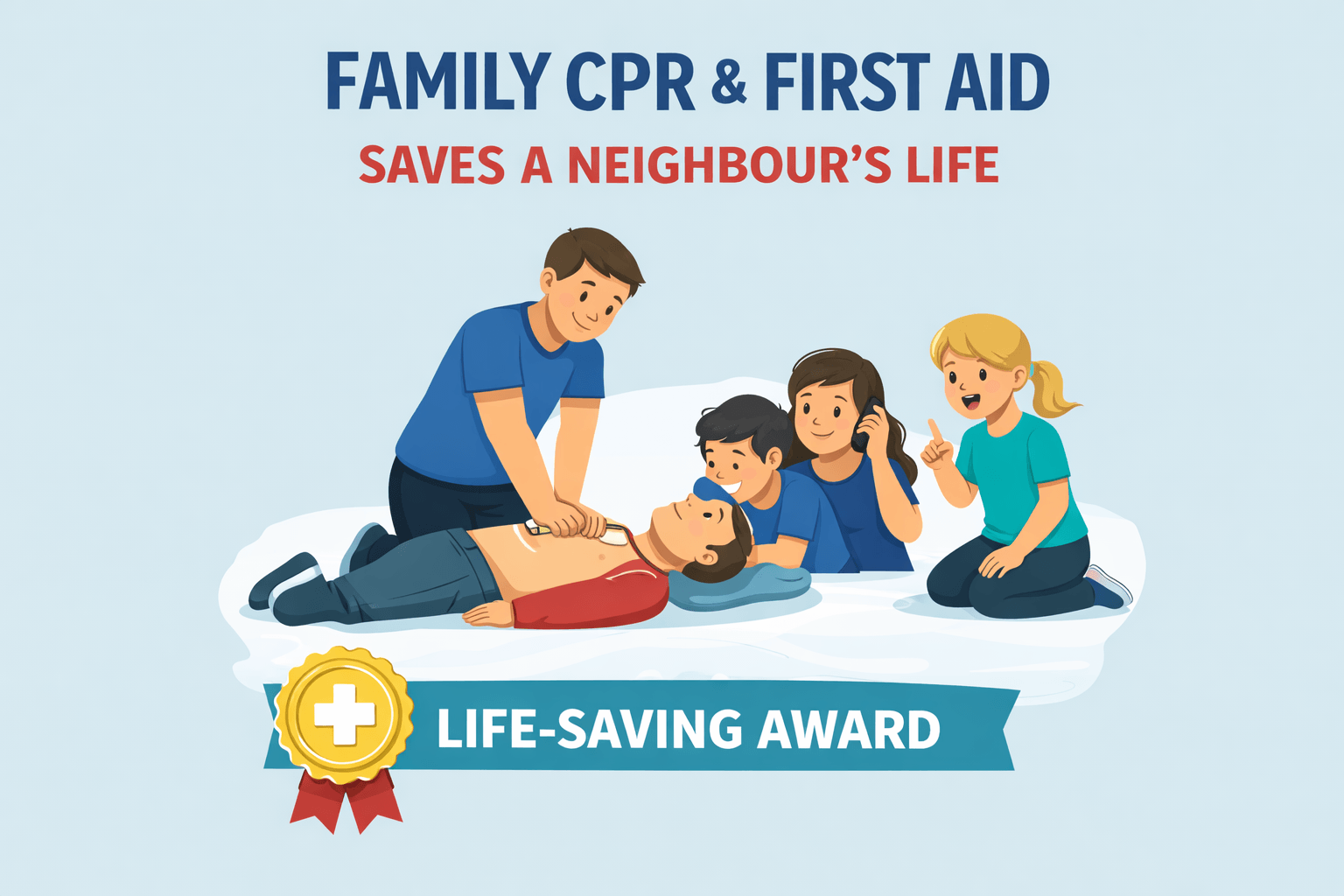
As the situation developed, each member of the Keats family took on a role:
-
Donna Keats called emergency services and stayed on the phone with the operator, providing updates and receiving instructions.
-
Tony Keats began chest compressions when the neighbour stopped responding.
-
Cole assisted with rescue breaths during CPR.
-
Toni helped by counting compressions and helping guide the process so the response remained organized.
Because the family lived in a rural area, emergency services required additional time to reach their location. The family continued CPR together until paramedics arrived.
When emergency responders reached the scene, they continued treatment, provided oxygen, and transported the man to hospital for further care. The next day, Tony Keats learned that the neighbour had recovered and was able to return home.
Recognition for Community Preparedness
The humanitarian organization later honoured the Keats family with a Life-Saving Award, recognizing their quick response and teamwork during the emergency.
In a statement from the organization’s community relations team, the story was described as a memorable example of how first aid training can empower families and communities to respond during unexpected emergencies.
Tony Keats later encouraged others to consider learning CPR and first aid skills, noting that emergencies can happen at any time and preparation can help people respond with confidence.
Signs of Choking and Breathing Emergencies
Choking occurs when food or another object blocks the airway, preventing normal breathing. Signs may include:
-
Difficulty breathing or speaking
-
Clutching the throat
-
Weak or ineffective coughing
-
High-pitched breathing sounds
-
Loss of consciousness if the airway remains blocked
Recognizing these signs quickly can help bystanders respond promptly.
First Aid Response for Choking Emergencies
First aid training programs often teach several steps for responding to choking, including:
-
Encouraging the person to cough if they are able
-
Providing back blows or abdominal thrusts when appropriate
-
Calling emergency services if the obstruction cannot be cleared
-
Beginning CPR if the person becomes unresponsive
Training courses provide practical instruction so participants can learn how to respond safely during these situations.
Prevention and Preparedness at Home and Work
While choking emergencies can occur unexpectedly, several steps may help reduce risk and improve emergency readiness:
-
Learning CPR and basic first aid skills
-
Supervising children during meals
-
Eating slowly and chewing food thoroughly
-
Keeping emergency contact numbers easily accessible
-
Ensuring workplaces have trained first aid attendants
Across Vancouver and the Lower Mainland, many organizations include CPR training as part of workplace safety programs, helping ensure that trained responders are available during emergencies.
Preparedness and training help build safer homes, workplaces, and communities.
Frequently Asked Questions
Why is CPR training useful for families?
CPR training helps families learn how to respond if someone experiences a breathing emergency or cardiac arrest at home. Because emergencies often happen in everyday environments, having trained family members nearby can improve preparedness.
What should someone do if a person is choking?
First aid training teaches people how to recognize choking and respond using techniques designed to help clear the airway. Emergency services should be contacted if the obstruction cannot be cleared or if the person becomes unresponsive.
Can teenagers learn CPR and first aid?
Yes. Many training programs include CPR and first aid instruction for teenagers and youth. Learning these skills early can help build confidence and emergency awareness.
Why is teamwork important during emergencies?
In many situations, multiple people can assist by taking different roles—such as calling emergency services, performing CPR, retrieving equipment, or guiding the response.
Do workplaces in Canada require first aid training?
Many workplaces in Canada, including those in British Columbia, follow occupational safety regulations that require trained first aid attendants and accessible emergency equipment.
Educational Note
This article is intended for general public education about first aid awareness and emergency preparedness. Participating in certified CPR and first aid training programs helps individuals learn practical skills for recognizing emergencies and responding safely.
About The Author

Mark Kascha
First Aid Instructor Trainer with 30+ years of experience in CPR, emergency response, and safety training across Canada.
Last reviewed: March 2026
 Support local, Canadian-owned businesses, with no connections to American corporations or partnerships.