 Medical emergencies can occur in many environments, including workplaces, schools, public facilities, and institutional settings. When a person becomes unresponsive or stops breathing normally, trained staff may begin cardiopulmonary resuscitation (CPR) and first aid while emergency medical services are contacted.
Across Canada, including Vancouver and British Columbia, CPR and first aid training are widely encouraged for employees who work in environments where people are supervised or cared for. These skills help staff recognize emergencies quickly and provide immediate assistance until paramedics arrive.
While CPR cannot always prevent a fatal outcome, it remains an important part of emergency response and patient support.
First Aid and Workplace Safety Relevance in Vancouver and British Columbia
Workplace safety programs throughout Vancouver and BC often require or encourage staff to complete first aid and CPR training. This is especially important in environments where individuals may require supervision, such as:
-
Community centres and recreational facilities
-
Schools and educational institutions
-
Healthcare and care facilities
-
Correctional or custodial environments
-
Public service workplaces
Training helps ensure that staff can respond quickly when someone experiences a medical emergency.
A Medical Emergency at the Elgin-Middlesex Detention Centre
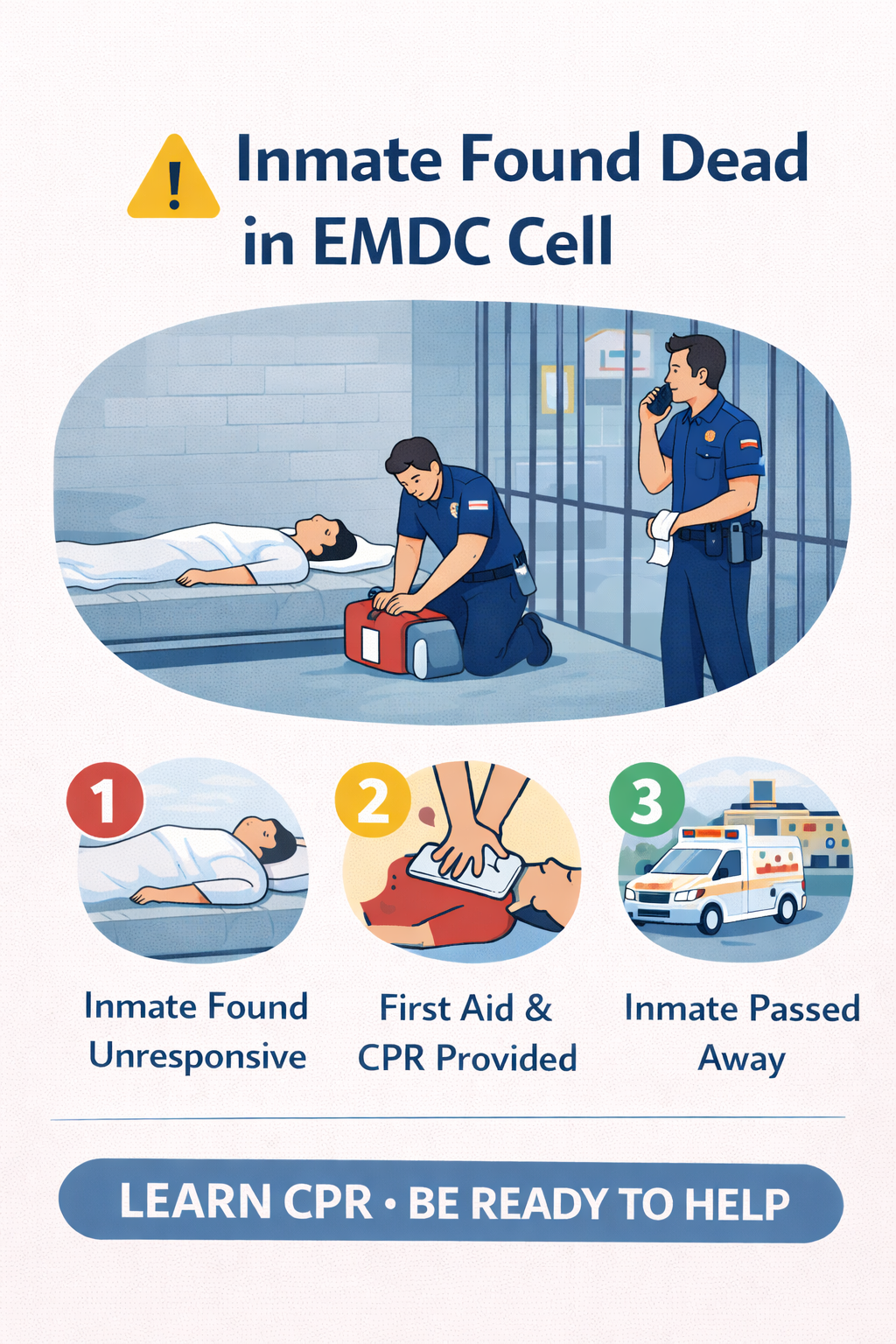
An incident reported in Ontario involved a medical emergency at the Elgin-Middlesex Detention Centre (EMDC). According to the Ontario Ministry of Community Safety and Correctional Services, an inmate was found unresponsive inside a cell.
Correctional staff quickly began first aid and CPR while emergency medical services were contacted.
Paramedics arrived at the facility and transported the individual to hospital for further medical care. Despite these efforts, the inmate was later declared deceased.
Officials noted that the incident contributed to the number of inmate deaths recorded at the facility in recent years. Authorities stated that investigations are conducted whenever a death occurs in custody in order to determine the cause and circumstances.
Emergency Response Procedures in Institutional Settings
Facilities such as detention centres typically have emergency response procedures designed to address medical incidents quickly. Staff members are often trained to respond when someone appears unresponsive or in medical distress.
Emergency response procedures may include:
-
Assessing the individual for responsiveness
-
Calling emergency medical services
-
Beginning CPR or first aid when appropriate
-
Monitoring the individual until paramedics arrive
In many cases, institutional staff are the first people available to provide assistance before emergency responders reach the location.
Ongoing Investigations and Safety Measures
When a death occurs in a custodial setting, authorities typically conduct investigations to determine the cause and identify any contributing factors.
Reports have noted that detention facilities may also implement safety measures designed to protect the health and safety of individuals within the institution. These measures can include:
-
Medical monitoring procedures
-
Contraband detection programs
-
Staff training for emergency response
-
Security inspections and screening processes
Investigations help authorities evaluate existing procedures and identify opportunities to improve safety within institutional environments.
Why CPR Training Is Important
CPR training prepares individuals to respond when someone experiences cardiac arrest or stops breathing normally. Immediate action can help maintain circulation and oxygen flow to vital organs while waiting for professional medical care.
First aid and CPR courses commonly teach participants how to:
-
Recognize signs of cardiac arrest
-
Contact emergency services
-
Perform chest compressions
-
Continue care until responders arrive
These skills can be valuable in many settings, including workplaces, public facilities, and supervised environments.
Workplace Safety and Emergency Preparedness
Organizations across Canada often promote emergency preparedness to help ensure staff are ready to respond during unexpected situations.
Preparedness strategies may include:
-
First aid and CPR certification for staff
-
Emergency response planning
-
Access to automated external defibrillators (AEDs)
-
Clear procedures for contacting emergency services
When more people are trained in emergency response, communities and workplaces become better prepared to support individuals during medical emergencies.
Frequently Asked Questions
What is CPR and when is it used?
CPR is an emergency procedure that uses chest compressions to help circulate blood when a person’s heart stops beating effectively.
Why are staff trained in CPR in institutional settings?
Staff in supervised environments may be the first to notice a medical emergency. CPR training allows them to provide immediate assistance while emergency responders are on the way.
What happens when someone becomes unresponsive?
Emergency responders are contacted and trained individuals may begin first aid or CPR depending on the situation.
Why are investigations conducted after deaths in custody?
Investigations help determine the cause of death and review whether safety procedures were followed.
Is CPR training useful outside professional environments?
Yes. CPR and first aid skills are useful in homes, workplaces, public spaces, and community settings.
Educational Note
This article provides general educational information about CPR awareness and emergency response in institutional settings. First aid and CPR training help individuals learn how to respond during emergencies, but medical care should always be provided by qualified healthcare and emergency response professionals.
About The Author

Mark Kascha
First Aid Instructor Trainer with 30+ years of experience in CPR, emergency response, and safety training across Canada.
Last reviewed: March 2026
 Support local, Canadian-owned businesses, with no connections to American corporations or partnerships.