 Outdoor recreation in remote areas can expose individuals to unexpected emergencies, including injuries, wildlife encounters, and environmental hazards. When injuries occur far from immediate medical care, basic first aid knowledge can help individuals stabilize themselves or others until help becomes available.
Across Vancouver and British Columbia, outdoor safety programs often encourage hikers, cyclists, and backcountry workers to learn first aid skills before travelling into remote areas. These skills can help manage injuries such as bleeding wounds, fractures, or trauma while waiting for rescue or reaching assistance.
Preparedness and awareness are important components of safe outdoor exploration.
First Aid and Workplace Safety Relevance in Vancouver and British Columbia
British Columbia is known for its extensive wilderness areas, mountain trails, and forested landscapes. Many people work or recreate in remote environments where emergency response times may be longer.
Because of this, first aid and emergency preparedness training are commonly recommended for outdoor workers and recreation enthusiasts throughout BC and the Vancouver region.
Training programs may include instruction on:
-
Managing bleeding injuries
-
Stabilizing traumatic wounds
-
Communicating with emergency services in remote areas
-
Wilderness safety awareness
These skills can help individuals respond effectively during unexpected incidents in backcountry settings.
A Backcountry Encounter Near Powell River
An incident near Powell River, British Columbia, highlighted the risks associated with remote wilderness travel and wildlife encounters.
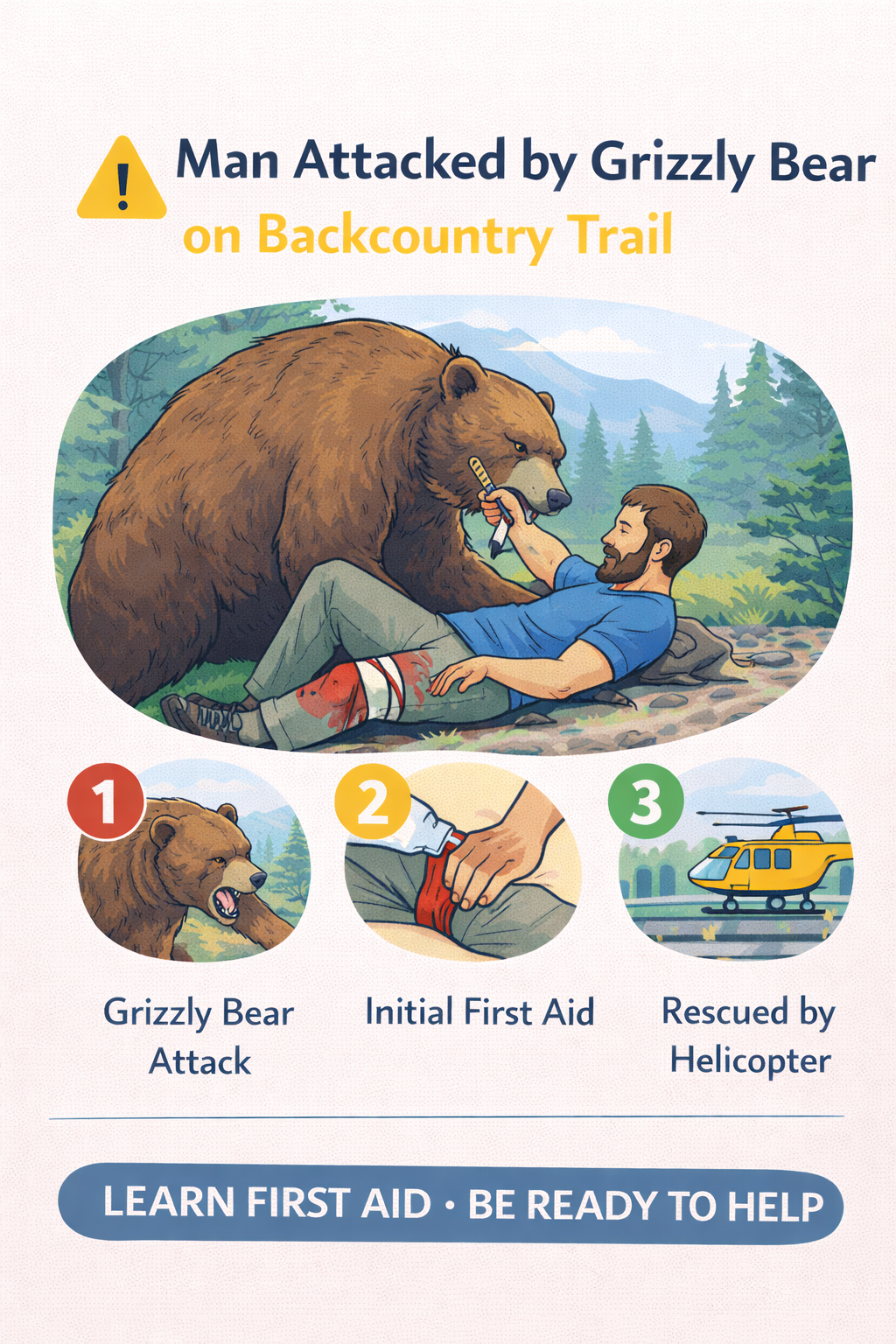
Colin Dowler, an experienced outdoor enthusiast, was riding his mountain bike while scouting backcountry trails approximately seven kilometres from the nearest logging camp. The trip took place the day before his birthday, during what began as a routine ride through the forested area.
While descending a hill toward a logging road, Dowler noticed a large grizzly bear approaching from a distance.
According to reports of the incident, the bear continued moving toward him despite attempts to discourage it.
The Wildlife Encounter
Dowler reportedly attempted to keep distance between himself and the bear while holding a hiking pole. The bear continued advancing and eventually struck his mountain bike.
The encounter escalated quickly, and Dowler sustained serious injuries during the struggle. Despite the danger, he managed to access a small knife he carried and used it defensively.
The bear eventually disengaged, allowing Dowler the opportunity to move away from the area.
Self-Administered First Aid in the Wilderness
After the encounter, Dowler realized that his leg had been severely injured and bleeding heavily. With no immediate access to medical help, he began providing initial first aid on himself.
He used part of his clothing to wrap the injured leg and apply pressure in an attempt to reduce bleeding. Improvised bandaging techniques are sometimes used in emergency situations when medical supplies are unavailable.
Despite the injury, Dowler managed to reach his mountain bike and carefully continued down the trail toward a nearby logging camp.
Assistance from Logging Camp Workers
After travelling several kilometres along the logging road, Dowler eventually reached a remote worksite. Exhausted and injured, he collapsed outside the camp’s mess hall.
Workers at the site quickly responded:
-
Some workers called emergency services
-
Others began providing first aid while waiting for help
Emergency responders later arranged for a helicopter evacuation, transporting Dowler to Vancouver General Hospital for further medical treatment.
Following the incident, Dowler’s family expressed gratitude to the logging camp workers whose quick response helped provide care before the air ambulance arrived.
Wilderness Safety and Wildlife Awareness
Encounters with wildlife are rare but possible in remote forested regions of British Columbia. Outdoor safety programs often encourage individuals travelling in bear habitat to follow recommended precautions.
These may include:
-
Making noise while travelling on trails to avoid surprising wildlife
-
Carrying safety equipment appropriate for wilderness travel
-
Travelling with others when possible
-
Being aware of surroundings and wildlife activity
Understanding wildlife behaviour and maintaining awareness can help reduce the risk of dangerous encounters.
Why First Aid Training Matters in Remote Environments
In remote settings where professional medical care may take time to arrive, first aid training can help individuals manage injuries until help becomes available.
First aid courses often teach participants how to:
-
Control bleeding with pressure and bandaging
-
Respond to traumatic injuries
-
Communicate with emergency responders
-
Stabilize injured individuals while awaiting rescue
These skills are valuable for people who work or recreate in wilderness environments.
Frequently Asked Questions
Why is first aid training important for outdoor activities?
In remote environments, emergency responders may take longer to reach an injured person. First aid knowledge can help manage injuries until professional help arrives.
What is wilderness first aid?
Wilderness first aid focuses on responding to injuries and emergencies in remote locations where medical resources and equipment may be limited.
Are wildlife encounters common in British Columbia?
Wildlife encounters are relatively rare but can occur in forested or backcountry areas. Awareness and preparation help reduce risks.
What should someone do after a serious injury in a remote area?
If possible, contact emergency services and attempt to reach a safe location where assistance can be provided.
Why is bleeding control important in traumatic injuries?
Heavy bleeding can lead to serious complications if not controlled quickly. Applying pressure and bandaging can help slow blood loss until medical care is available.
Educational Note
This article provides general educational information about wilderness safety and first aid awareness. First aid training helps individuals prepare for emergencies, but medical care should always be provided by qualified healthcare and emergency response professionals whenever possible.
About The Author

Mark Kascha
First Aid Instructor Trainer with 30+ years of experience in CPR, emergency response, and safety training across Canada.
Last reviewed: March 2026
 Support local, Canadian-owned businesses, with no connections to American corporations or partnerships.